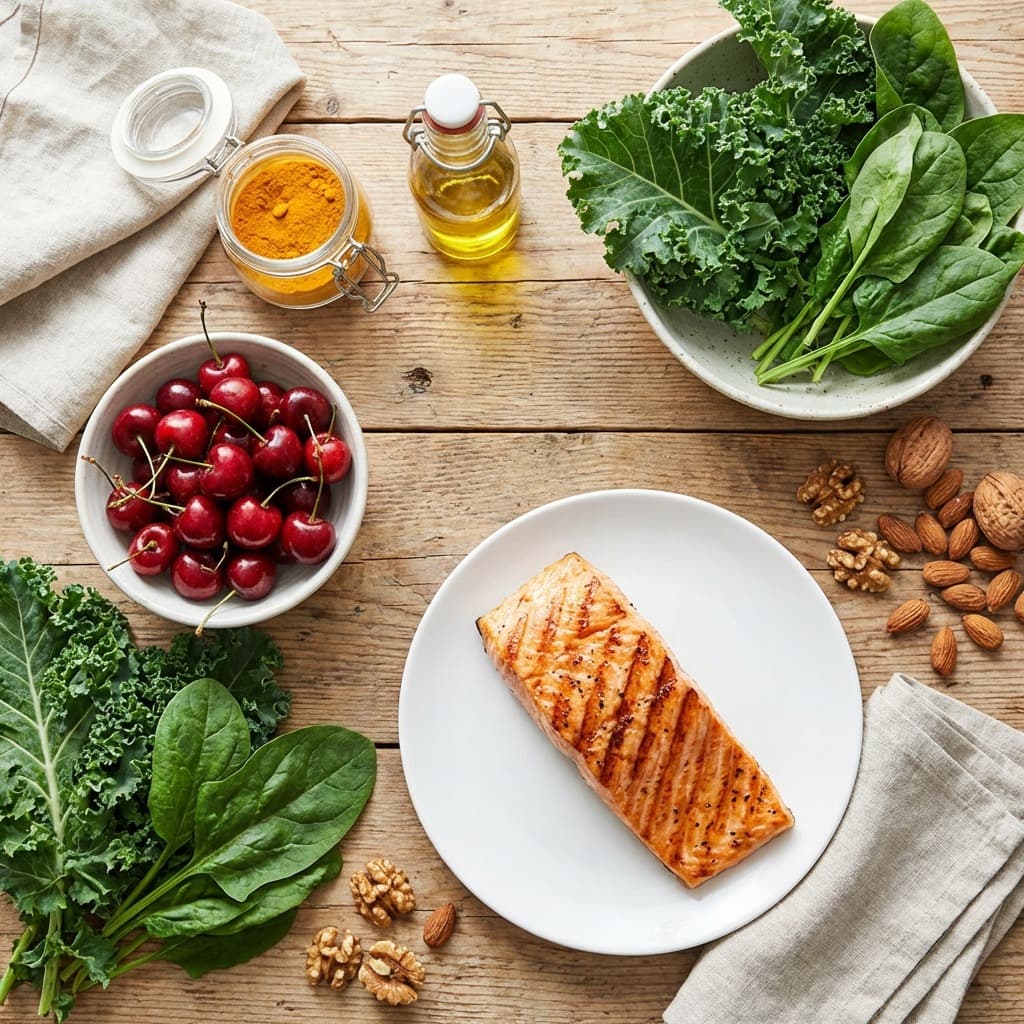
Knee pain is among the most common chronic pain complaints. Whether you are dealing with osteoarthritis, a sports injury, patellar tendinitis, or general wear and tear, inflammation is almost always part of the picture.
The knee is the largest joint in the body and bears tremendous mechanical load with every step. When inflammatory processes accelerate cartilage breakdown or cause the synovial membrane to produce excess fluid, the result is the swelling, stiffness, and aching that millions of people manage every day. Diet can influence those inflammatory processes directly.
How Food Affects Knee Inflammation
The inflammatory response in knee joints is driven by cytokines like IL-1 beta and TNF-alpha, which trigger chondrocytes (cartilage cells) to produce matrix metalloproteinases that degrade cartilage. At the same time, the synovial membrane becomes hyperactivated and produces excess joint fluid.
Diet influences this process at multiple levels. Pro-inflammatory foods drive systemic cytokine production that amplifies local joint inflammation. Anti-inflammatory foods supply bioactive compounds that interrupt these signaling pathways, protect cartilage from oxidative damage, and support the structural integrity of tendons and ligaments.
A 2020 systematic review in Nutrients analyzed 12 studies on dietary patterns and knee osteoarthritis outcomes. It found consistent associations between anti-inflammatory diets (particularly Mediterranean-style patterns) and lower pain scores, reduced disability, and slower radiographic progression.
Best Anti-Inflammatory Foods for Knee Health
Fatty Fish
Wild salmon, sardines, mackerel, and trout provide EPA and DHA, the omega-3 fatty acids with the strongest evidence for reducing joint inflammation. In knee-specific research, a randomized trial published in Rheumatology found that patients with knee osteoarthritis who consumed fish oil showed significant reductions in joint pain and improved function over 24 weeks compared to controls.
EPA and DHA work by competing with arachidonic acid in the cyclooxygenase and lipoxygenase pathways, reducing the production of PGE2 and leukotriene B4, two of the main mediators of knee joint inflammation. Aim for two to three servings of fatty fish per week.
Tart Cherries and Other Dark Berries
Anthocyanins in tart cherries, blueberries, and blackberries inhibit COX-2 activity and reduce NF-kB-mediated inflammatory gene expression in joint tissue. A study in the Journal of Nutrition found that women who consumed tart cherry juice twice daily for 3 weeks showed significant reductions in serum inflammatory markers, including CRP and uric acid.
Uric acid is particularly relevant because elevated uric acid levels, which are driven partly by diet, contribute to crystal deposition in joints and can worsen both gout and standard osteoarthritis.
Olive Oil
Extra virgin olive oil contains oleocanthal, a natural phenolic compound that inhibits both COX-1 and COX-2 enzymes. Oleocanthal has drawn substantial research interest because it provides NSAID-like anti-inflammatory effects without the gastrointestinal risks associated with pharmaceutical NSAIDs.
Beyond oleocanthal, olive oil consumption is associated with better outcomes in knee osteoarthritis in multiple observational studies. The Mediterranean diet, which uses olive oil as its primary fat, consistently outperforms typical Western diets on joint pain and function measures.
Broccoli and Cruciferous Vegetables
Sulforaphane from broccoli and other cruciferous vegetables activates Nrf2 signaling, which upregulates the body's endogenous antioxidant enzymes in cartilage tissue. A laboratory study at the University of East Anglia found that sulforaphane slowed the degradation of knee cartilage by blocking the enzymes that cause the damage. The researchers subsequently launched a clinical trial based on this mechanism.
Broccoli, Brussels sprouts, cauliflower, kale, and cabbage all provide sulforaphane. Chopping or chewing these vegetables before cooking maximizes sulforaphane formation by allowing myrosinase enzyme contact.
Ginger and Turmeric
These two kitchen spices are among the most studied natural anti-inflammatory compounds for joint pain. As noted earlier, curcumin from turmeric has been found equivalent to diclofenac for knee osteoarthritis pain in randomized controlled trials. Ginger root similarly reduces pain and stiffness scores in knee osteoarthritis research.
Add both liberally to cooking. A golden milk preparation (turmeric and ginger in warm plant or dairy milk with a fat source) is a practical daily vehicle for both.
Garlic and Onions
Quercetin in onions inhibits mast cell activation and reduces inflammatory signaling in joint tissue. Allicin from garlic has antimicrobial properties that matter for joints, since some cases of accelerated joint inflammation have a microbial inflammatory component.
Quercetin also has structural benefits for tendons and ligaments. Research in tenocytes (tendon cells) shows that quercetin reduces inflammatory cytokine expression and may support tendon healing.
Citrus Fruits and Bell Peppers
Vitamin C is essential for collagen synthesis. The cartilage, tendons, and ligaments of the knee are primarily collagen structures. Adequate vitamin C intake is directly linked to cartilage volume maintenance and lower risk of cartilage loss on MRI in long-term studies.
Bell peppers, particularly red ones, provide more vitamin C per serving than oranges. Citrus fruits, strawberries, and kiwi are also excellent sources. Given that cartilage has essentially no regenerative capacity, maintaining existing cartilage through adequate nutrient support is far more effective than trying to rebuild it.
Inflammation Score Breakdown for Knee Health
| Food | DII Direction | Why It Helps Your Knees | |------|---------------|------------------------| | Wild Salmon | Strongly anti-inflammatory | EPA/DHA reduce PGE2 and LTB4 in joint fluid | | Tart Cherries | Anti-inflammatory | Anthocyanins inhibit COX-2, reduce uric acid | | Olive Oil | Anti-inflammatory | Oleocanthal = natural COX inhibitor | | Broccoli | Anti-inflammatory | Sulforaphane protects cartilage from degradation | | Bell Peppers | Anti-inflammatory | Vitamin C essential for cartilage collagen | | Ginger Root | Anti-inflammatory | 5-LOX and COX inhibition, reduces stiffness |
Foods That Make Knee Pain Worse
Sugar and refined carbohydrates are the primary dietary drivers of elevated AGEs (advanced glycation end products), which cross-link collagen fibers in cartilage and tendons, making them stiffer and more prone to damage. High fructose corn syrup is particularly problematic because it also drives uric acid production, which is a direct risk factor for gout and crystal-induced joint inflammation.
Omega-6-heavy vegetable oils in fried foods, processed snacks, and commercial baked goods shift the prostaglandin balance toward the pro-inflammatory side. For the full picture on seed oils and inflammation, see our article on seed oils and inflammation.
Excess red meat and processed meats are high in arachidonic acid, the omega-6 precursor to pro-inflammatory eicosanoids. They also contain purines that are metabolized to uric acid. Read our nuanced guide to red meat and inflammation for context.
Alcohol in excess elevates uric acid levels and impairs sleep, both of which worsen joint inflammation. See our breakdown of alcohol and inflammation.
Practical Meal Plan for Knee Health
Breakfast: Greek yogurt with tart cherries, walnuts, and a drizzle of honey. The yogurt provides calcium and phosphorus for bone density. Tart cherries deliver anthocyanins first thing in the morning.
Lunch: Large salad with spinach, roasted bell peppers, canned sardines, avocado, and olive oil lemon dressing. This combination covers omega-3s, vitamin C, magnesium, and oleocanthal.
Dinner: Salmon fillet with roasted broccoli and sweet potato, seasoned with turmeric, ginger, and black pepper, finished with olive oil. The textbook anti-inflammatory meal.
Snacks: Tart cherry juice, handful of blueberries, or walnuts.
For a complete structured plan, see our 7-day anti-inflammatory meal plan or browse our collection of anti-inflammatory dinner recipes.
Collagen and Gelatin: Worth Considering
Collagen peptides and gelatin are increasingly studied for joint health. A study from Stanford published in the American Journal of Clinical Nutrition found that athletes who took 15g of gelatin with vitamin C before training had greater cartilage collagen synthesis, as measured by a validated cartilage turnover biomarker.
While supplemental collagen has better evidence than food-form collagen for joints (since dietary collagen is mostly digested before reaching target tissues), eating bone broth and collagen-rich animal foods alongside adequate vitamin C represents a reasonable strategy for supporting cartilage maintenance.
FAQ
What is the best diet for knee osteoarthritis?
The Mediterranean diet has the most robust evidence for knee osteoarthritis specifically. It emphasizes olive oil, fatty fish, vegetables, legumes, and whole grains while limiting processed foods and red meat. Multiple studies show Mediterranean diet adherence is associated with lower knee pain scores and slower cartilage loss on imaging.
Can foods reduce knee swelling?
Yes. Foods that lower systemic and local inflammatory markers can reduce the excess synovial fluid production that causes knee swelling. Omega-3 fatty acids, oleocanthal, and polyphenols from berries and vegetables all have demonstrated effects on inflammatory cytokines that drive synovial inflammation. The effect builds over weeks of consistent dietary change.
Is dairy good or bad for knee inflammation?
Evidence is mixed and likely individual. Some people with knee arthritis report worsening after dairy consumption, potentially related to A1 casein or saturated fat content. Population studies are inconsistent. If you suspect dairy worsens your knee symptoms, a 4-week elimination is a reasonable test. See our deep dive on dairy and inflammation.
Do nightshades (tomatoes, peppers, eggplant) cause knee inflammation?
The nightshade-arthritis connection is a common folk belief without strong scientific support. Tomatoes, peppers, and eggplant actually contain anti-inflammatory compounds including lycopene and vitamin C. However, a small subset of people may have individual sensitivities. If you consistently notice worsened knee pain after nightshades, an elimination trial is worth trying.
How does the Dietary Inflammatory Index (DII) relate to knee health?
The DII quantifies how pro- or anti-inflammatory an overall diet is across 45 food parameters. Studies using the DII specifically in knee osteoarthritis populations find that higher DII scores (more inflammatory diets) correlate with more knee pain, faster cartilage loss, and higher CRP levels. Moving your diet toward a lower DII score is associated with better knee outcomes. Track your daily score with the Inflamous app.
Bottom Line
Your diet cannot reverse cartilage damage or rebuild a damaged knee overnight, but it directly influences the inflammatory environment in which your knees function every day. Consistent anti-inflammatory eating reduces the cytokine burden in joint fluid, protects remaining cartilage from oxidative damage, and supports the connective tissues that stabilize the joint.
Focus on the proven interventions: fatty fish two to three times per week, olive oil as your primary fat, a wide variety of colorful vegetables, and regular inclusion of tart cherries, ginger, and turmeric. Cut back on sugar, processed foods, and excessive alcohol.
The Inflamous app helps you track your dietary inflammatory load in real time. See your DII score improve as you make changes, and understand which specific foods are helping or hurting your joints. Learn more about the science behind DII at inflamous.com/science.