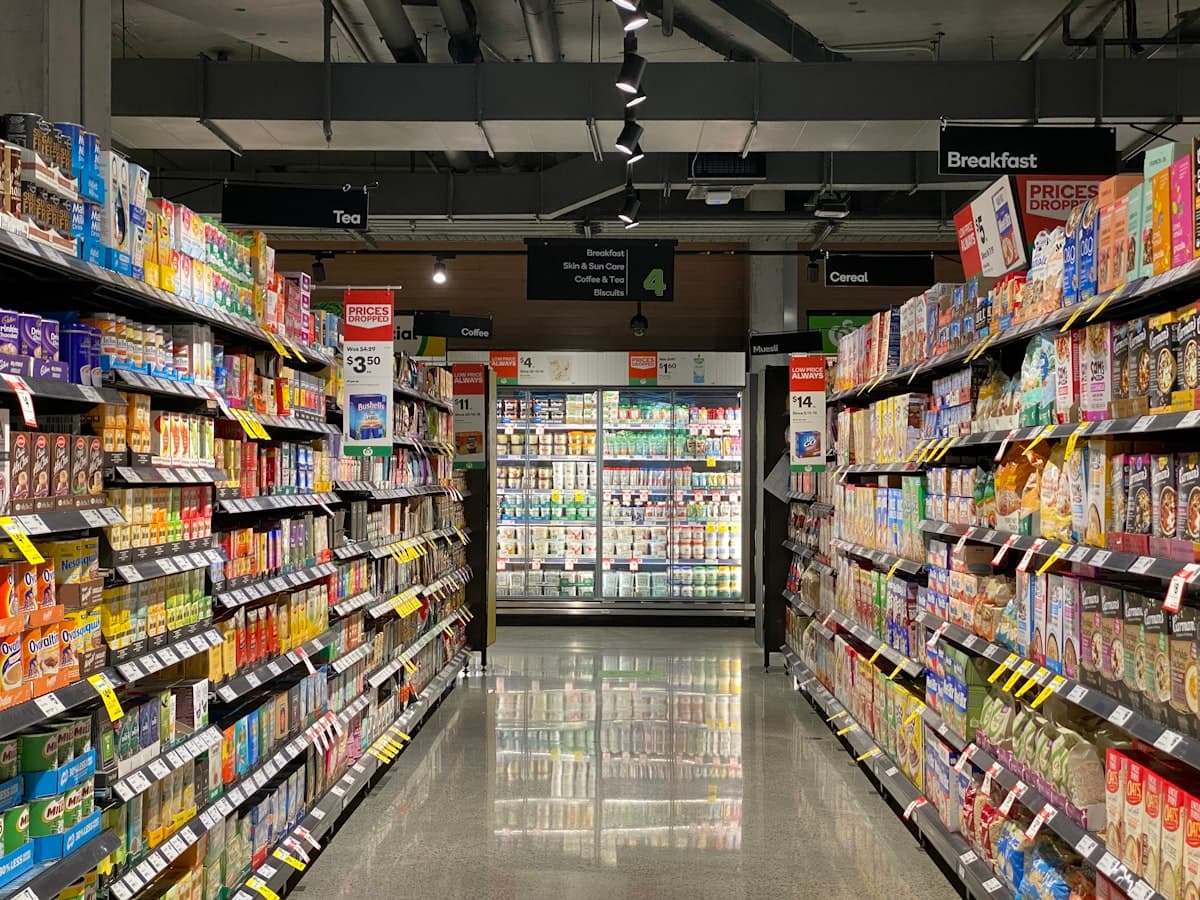
Food labels are supposed to help us make informed choices, but they've become a minefield of confusing claims and hidden inflammatory ingredients. If you've ever stood in the grocery aisle squinting at tiny print, trying to figure out if something is actually healthy or just marketed that way, you're not alone.
The food industry has gotten incredibly good at disguising inflammatory ingredients behind scientific names and misleading health claims. But once you know what to look for, reading labels becomes second nature. This guide will teach you exactly how to identify the red flags that signal an inflammatory food and make better choices for your health.
Why Food Labels Matter for Inflammation
Your body's inflammatory response doesn't just react to obvious junk food. Many products marketed as "healthy" or "natural" contain ingredients that can trigger chronic inflammation. A 2020 study published in the British Medical Journal found that ultra-processed foods, which make up about 58% of calories in the average American diet, are strongly associated with increased inflammatory markers.
The key is knowing how to decode labels quickly and effectively. Let's break down exactly what to look for and what to avoid.
The Ingredient List: Where the Truth Lives
Forget the front of the package for now. The ingredient list is where manufacturers have to tell the truth, even if they don't want to. Ingredients are listed in descending order by weight, so the first few items tell you what the product is really made of.
Red Flag Ingredients That Promote Inflammation
Trans Fats and Hydrogenated Oils
Even though the FDA banned artificial trans fats in 2018, products manufactured before that date can still be on shelves, and loopholes remain. Look for anything labeled "partially hydrogenated" or "hydrogenated" oil. These damaged fats are among the most inflammatory substances you can consume.
Research published in the American Journal of Clinical Nutrition shows that trans fats increase inflammatory markers like C-reactive protein (CRP) and interleukin-6 (IL-6) more than any other macronutrient. Even small amounts (1-3% of total calories) significantly increase cardiovascular risk.
High-Fructose Corn Syrup and Added Sugars
High-fructose corn syrup deserves special attention because it's metabolized differently than regular sugar and appears particularly inflammatory. A 2015 study in the Journal of Nutrition found that high-fructose consumption specifically increased inflammatory markers and oxidative stress compared to glucose.
But don't just look for "high-fructose corn syrup." Sugar hides under at least 60 different names on labels, including agave nectar, brown rice syrup, dextrose, maltose, fruit juice concentrate, and anything ending in "-ose." As covered in Sugar and Inflammation: The Complete Breakdown, all added sugars contribute to inflammation, but some are worse than others.
Refined Seed Oils
Soybean oil, corn oil, cottonseed oil, sunflower oil, safflower oil, and canola oil appear in most processed foods because they're cheap. The problem is their high omega-6 content and the inflammatory compounds formed during high-heat processing.
These oils often appear as "vegetable oil" on labels. Research in the Journal of the American College of Nutrition indicates that the typical Western diet has an omega-6 to omega-3 ratio of about 16:1, when the optimal ratio is closer to 4:1 or even 1:1. This imbalance promotes chronic inflammation. For more on this topic, check out Omega-6 vs Omega-3: The Inflammation Ratio Explained.
Inflammatory Emulsifiers
Emulsifiers help mix oil and water in processed foods, but certain ones damage your gut lining and microbiome. The biggest culprits are carboxymethylcellulose (CMC) and polysorbate 80.
A groundbreaking 2015 study in Nature showed that these emulsifiers alter gut bacteria composition, promote intestinal inflammation, and contribute to metabolic syndrome in mice. While human studies are still emerging, the evidence suggests avoiding these additives when possible.
You'll find them in ice cream, salad dressings, coffee creamers, and baked goods. Other emulsifiers to watch for include mono and diglycerides, DATEM, and soy lecithin (though soy lecithin appears less problematic than synthetic emulsifiers).
Artificial Colors and Preservatives
Artificial colors (Red 40, Yellow 5, Yellow 6, Blue 1) and certain preservatives have been linked to inflammatory responses, particularly in sensitive individuals. A 2012 review in Clinical Reviews in Allergy & Immunology noted that artificial food additives can trigger inflammatory and allergic reactions in susceptible people.
Common inflammatory preservatives include BHA (butylated hydroxyanisole), BHT (butylated hydroxytoluene), sodium benzoate (especially when combined with vitamin C, forming benzene), and sulfites.
The "Natural Flavors" Loophole
"Natural flavors" sounds harmless, but this term can hide monosodium glutamate (MSG) and other excitotoxins. While MSG sensitivity is debated, some research suggests it may promote inflammation in sensitive individuals.
The bigger issue is that "natural flavors" can include dozens of chemicals, and manufacturers aren't required to specify which ones. If a product relies heavily on natural flavors rather than real food ingredients, that's a red flag.
Similarly, "spices" can hide MSG or hydrolyzed proteins, which contain free glutamic acid (the active component of MSG). If a product lists "spices" along with other flavor enhancers, be skeptical.
Decoding the Nutrition Facts Panel
The nutrition facts panel gives you quantitative data about what's in the food. Here's what matters for inflammation:
Added Sugars: The New Label Requirement
Since 2020, labels must distinguish between naturally occurring sugars (like those in fruit or milk) and added sugars. This is huge for identifying inflammatory foods.
The American Heart Association recommends limiting added sugars to 25 grams per day for women and 36 grams for men. Even these levels may be too high for optimal inflammation control. Research published in JAMA Internal Medicine found that people who got 17-21% of calories from added sugar had a 38% higher risk of cardiovascular death compared to those who got 8% or less.
Watch out for products with multiple servings per container. That innocent-looking bottle of tea might have 2.5 servings, meaning the 20 grams of sugar per serving actually totals 50 grams if you drink the whole thing.
The Serving Size Deception
Manufacturers often manipulate serving sizes to make nutritional values look better. A bag of chips might claim 150 calories per serving, but the "serving size" is 10 chips, and the bag contains 2.5 servings. Who eats exactly 10 chips?
For inflammation purposes, look at the added sugar, sodium, and saturated fat per realistic portion, not the arbitrary serving size. If you're going to eat the whole container (and be honest with yourself), multiply accordingly.
Sodium Content
While sodium doesn't directly cause inflammation in most people, excessive salt intake can promote water retention and worsen inflammatory conditions. The FDA recommends less than 2,300mg per day, but the average American consumes over 3,400mg.
Processed foods account for about 70% of our sodium intake. A single frozen meal can contain over 1,000mg. If sodium is one of the first few ingredients (listed as salt, sodium chloride, monosodium glutamate, sodium benzoate, or sodium nitrite), the product is probably too salty.
Fiber: The Anti-Inflammatory Indicator
High fiber content is generally a good sign because fiber feeds beneficial gut bacteria and reduces inflammation. A 2018 meta-analysis in the Journal of Chiropractic Medicine found that higher fiber intake was associated with lower levels of C-reactive protein.
Look for at least 3-5 grams of fiber per serving in grain products. If a bread or cereal has less than 2 grams per serving, it's probably made from refined grains, which are inflammatory.
Front-of-Package Claims: Marketing vs. Reality
Now that you know how to read the back of the package, let's tackle the misleading claims on the front.
"All Natural"
This phrase is essentially meaningless. The FDA has no formal definition for "natural" in food labeling. High-fructose corn syrup is technically "natural" because it comes from corn. Arsenic is natural too, but you wouldn't want it in your food.
A 2016 Consumer Reports survey found that 60% of shoppers look for "natural" labels, believing they indicate healthier products. They don't. Always check the actual ingredients.
"Made with Whole Grains"
This claim requires only 51% whole grain content. The other 49% could be refined white flour. A truly whole grain product will list a whole grain (whole wheat, whole oats, brown rice) as the first ingredient and contain at least 3 grams of fiber per serving.
"No Trans Fat" or "0g Trans Fat"
Thanks to labeling laws, products can claim "0g trans fat" if they contain less than 0.5 grams per serving. But if the serving size is tiny, and the ingredient list includes "partially hydrogenated oil," the product contains trans fats.
Eat three servings of something with 0.4g trans fat per serving, and you've consumed 1.2g of trans fat, which is enough to increase cardiovascular risk.
"Low Fat" or "Fat Free"
When manufacturers remove fat, they usually add sugar and sodium to maintain flavor. Many "low fat" products are more inflammatory than their full-fat counterparts because of added sugars and fillers.
A 2006 study in The American Journal of Medicine found that low-fat diets weren't superior to Mediterranean-style diets (which include healthy fats) for reducing inflammation or cardiovascular risk. Focus on the type of fat, not the amount. Olive oil and avocado are anti-inflammatory despite being high in fat.
"Multigrain" or "Seven Grain"
Multiple grains doesn't mean whole grains. "Multigrain" bread often contains several refined grains, which are no better than white bread. Look for "100% whole grain" and check that the first ingredient is a whole grain.
"Lightly Sweetened" or "Less Sugar"
These terms are relative and unregulated. "Lightly sweetened" compared to what? A can of regular soda has 39g of sugar, so a "lightly sweetened" version with 25g is still way too much.
"Less sugar" or "reduced sugar" means the product has at least 25% less sugar than the original version, but that doesn't make it low in sugar overall.
Your Step-by-Step Label Reading Checklist
Here's a practical checklist you can use in the grocery store:
Step 1: Start with the ingredient list
- Are there 5 ingredients or fewer? (Generally better, though not a hard rule)
- Can you recognize and pronounce all ingredients?
- Are whole foods listed first, or processed ingredients?
Step 2: Scan for automatic disqualifiers
- Any form of "partially hydrogenated" or "hydrogenated" oil? Put it back.
- High-fructose corn syrup in the first 5 ingredients? No thanks.
- Multiple types of added sugars scattered throughout? That's a trick to keep sugar from appearing first.
- Carboxymethylcellulose, polysorbate 80, or other emulsifiers? Skip it.
- Artificial colors (Red 40, Yellow 5, etc.)? Pass.
Step 3: Check the nutrition facts
- Added sugars: Less than 5-8g per serving is ideal. Above 10g is concerning.
- Sodium: Less than 300mg per serving for most foods. Less than 600mg for entrees.
- Fiber: At least 3g per serving for grains and grain products.
- Look at realistic serving sizes, not the manipulated ones.
Step 4: Evaluate the front claims
- Ignore "natural," "made with whole grains," and other vague marketing.
- Look for specific claims you can verify (like "organic" or "100% whole grain").
- If health claims sound too good to be true, they probably are.
Step 5: Consider the overall food quality
- Is this a whole food with minimal processing?
- If processed, are the ingredients things you'd use at home?
- Could you make a similar version yourself with real ingredients?
Practical Shopping Strategies
Beyond label reading, here are some broader strategies for avoiding inflammatory foods:
Shop the Perimeter
Most grocery stores place whole foods (produce, meat, dairy) around the perimeter and processed foods in the center aisles. Spend 80% of your time and budget on the perimeter.
Buy Foods Without Labels
Wild salmon, kale salad, sweet potatoes, and steel-cut oats don't need ingredient lists because they are the ingredient. The more single-ingredient foods you buy, the less label reading you need to do.
When Buying Packaged Foods, Choose Minimally Processed Options
Some processed foods are fine. Canned tomatoes, frozen berries, dried beans, and plain Greek yogurt are processed but not ultra-processed. They retain nutritional value and don't contain inflammatory additives.
The difference is the degree and type of processing, as detailed in How Ultra-Processed Foods Drive Chronic Inflammation.
Use Apps for Quick Scanning
Several apps let you scan barcodes and get instant ingredient analysis. While not perfect, they can help you quickly identify problematic ingredients. However, nothing beats learning to read labels yourself.
Common Label Reading Mistakes
Focusing Only on Calories
Calorie counting ignores food quality entirely. 200 calories from Greek yogurt with berries is completely different from 200 calories from a processed granola bar with 15 ingredients.
Trusting "Organic" or "Non-GMO" Blindly
These labels indicate certain production methods but don't guarantee anti-inflammatory properties. Organic cane sugar is still sugar. Organic cookies are still cookies. The same principles apply.
Ignoring Ingredient Order
If sugar appears three times in an ingredient list (as cane sugar, brown rice syrup, and fruit juice concentrate), it might be the primary ingredient by weight, even if no single form is listed first.
Not Considering Your Total Daily Intake
One product with 8g of added sugar isn't terrible, but if you eat five products like that in a day, you've consumed 40g of added sugar. Think about your cumulative exposure to inflammatory ingredients across all meals and snacks.
Label Reading for Specific Products
Bread and Grain Products
First ingredient should be whole grain. Look for at least 3g fiber per serving. Avoid if sugar or high-fructose corn syrup appears in the first 5 ingredients. Watch for hidden sugars and conditioners.
Salad Dressings and Condiments
These are major sources of seed oils and added sugars. Look for dressings made with olive oil or avocado oil. Added sugar should be minimal (under 2g per serving). Make your own when possible.
Yogurt and Dairy
Plain yogurt should have two ingredients: milk and live cultures. Flavored yogurts often contain 15-20g of added sugar per serving. Buy plain and add your own fruit.
Plant-Based Alternatives
Plant-based doesn't mean healthy. Many plant-based meats, cheeses, and milks are ultra-processed with long ingredient lists full of emulsifiers, gums, and inflammatory oils. Read labels carefully and look for simpler formulations.
Snack Bars and Protein Bars
Most are candy bars in disguise. Look for bars with whole food ingredients (nuts, seeds, dried fruit) and minimal added sugars (under 8g). Avoid soy protein isolate, artificial sweeteners, and seed oils.
The Bottom Line
Reading food labels for inflammation becomes intuitive once you know what to look for. The key is focusing on the ingredient list first, then the nutrition facts, and ignoring most front-of-package marketing claims.
When in doubt, ask yourself: Is this something my great-grandmother would recognize as food? Could I make this at home with real ingredients? If the answer is no, it's probably best left on the shelf.
Remember, the goal isn't perfection. It's about making better choices most of the time. Once you train yourself to spot red flags, you'll breeze through the grocery store with confidence, filling your cart with truly anti-inflammatory foods that support your health.
For more guidance on building an anti-inflammatory diet, check out The Complete List of Anti-Inflammatory Foods 2026 and Anti-Inflammatory Grocery List on a Budget.
Sources
-
Monteiro CA, et al. Ultra-processed foods, diet quality, and health using the NOVA classification system. British Medical Journal. 2019. https://www.bmj.com/content/365/bmj.l2289
-
Bendsen NT, et al. Effect of industrially produced trans fat on markers of systemic inflammation: evidence from a randomized trial in women. American Journal of Clinical Nutrition. 2011. https://pubmed.ncbi.nlm.nih.gov/21367944/
-
Taskinen MR, et al. Adverse effects of fructose on cardiometabolic risk factors and hepatic lipid metabolism in subjects with abdominal obesity. Journal of Nutrition. 2015. https://pubmed.ncbi.nlm.nih.gov/25833778/
-
DiNicolantonio JJ, O'Keefe JH. Omega-6 vegetable oils as a driver of coronary heart disease: the oxidized linoleic acid hypothesis. Journal of the American College of Nutrition. 2021. https://pubmed.ncbi.nlm.nih.gov/33459086/
-
Chassaing B, et al. Dietary emulsifiers impact the mouse gut microbiota promoting colitis and metabolic syndrome. Nature. 2015. https://www.nature.com/articles/nature14232
-
Vojdani A, Vojdani C. Immune reactivity to food coloring. Clinical Reviews in Allergy & Immunology. 2015. https://pubmed.ncbi.nlm.nih.gov/25359225/
-
Yang Q, et al. Added sugar intake and cardiovascular diseases mortality among US adults. JAMA Internal Medicine. 2014. https://pubmed.ncbi.nlm.nih.gov/24493081/
-
Shivappa N, et al. Association between inflammatory potential of diet and risk of depression in middle-aged women: the Australian Longitudinal Study on Women's Health. Journal of Chiropractic Medicine. 2018. https://pubmed.ncbi.nlm.nih.gov/30166969/
-
Shai I, et al. Weight loss with a low-carbohydrate, Mediterranean, or low-fat diet. The American Journal of Medicine. 2008. https://pubmed.ncbi.nlm.nih.gov/18589049/
-
American Heart Association. Added Sugars. https://www.heart.org/en/healthy-living/healthy-eating/eat-smart/sugar/added-sugars