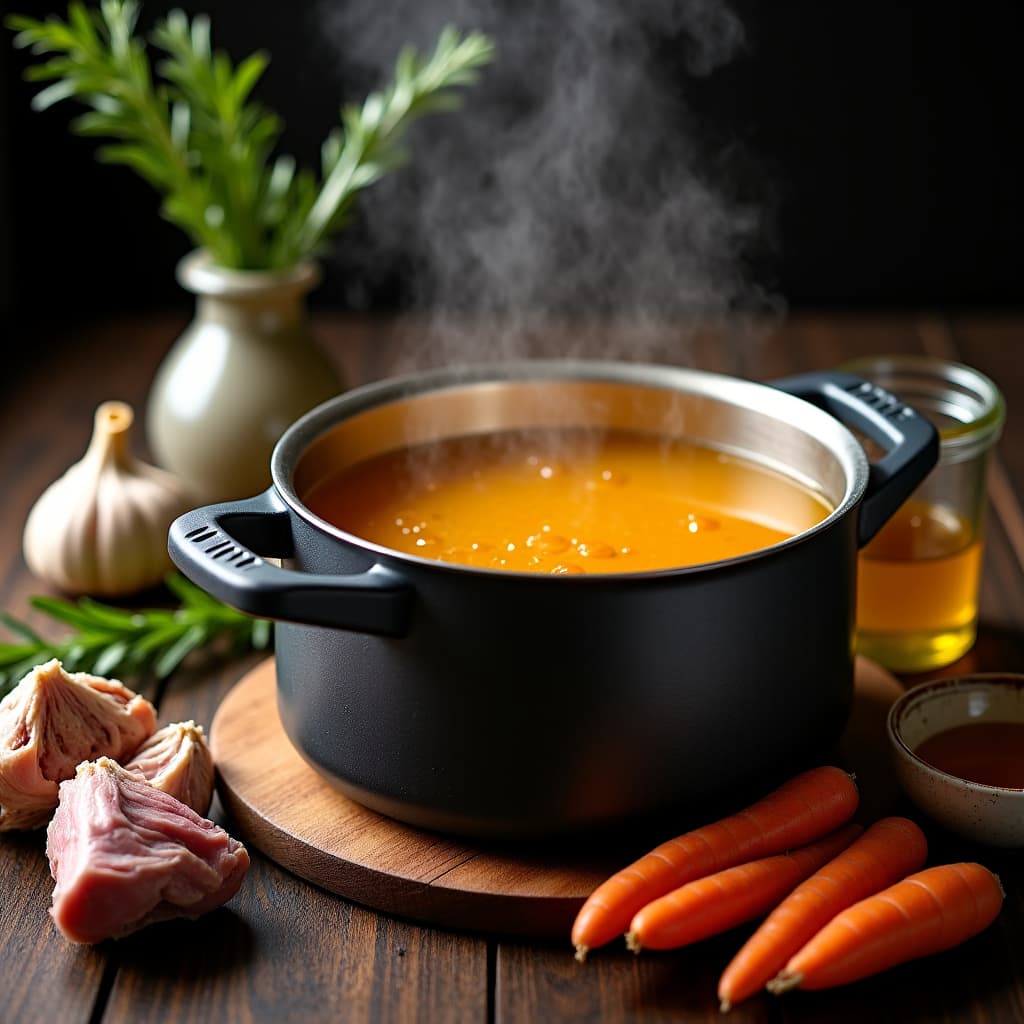
Bone broth has been promoted as a cure for everything from leaky gut to arthritis to aging skin. The anti-inflammatory claims are everywhere. But does the science support the hype?
The short answer: bone broth contains several compounds with documented anti-inflammatory properties (glycine, proline, glutamine, and gelatin), and the overall nutritional profile supports gut health and connective tissue repair. However, the direct clinical evidence for bone broth as a complete food is more limited than the marketing suggests. Most studies have examined the individual amino acids and compounds found in bone broth rather than bone broth itself.
Here is what we know, what we do not, and how to use bone broth within an evidence-based anti-inflammatory diet.
What Is in Bone Broth That Could Be Anti-Inflammatory?
Bone broth is made by simmering animal bones (typically beef, chicken, or pork) in water with vinegar (to help extract minerals) for 12 to 48 hours. This long cooking process extracts several bioactive compounds:
Glycine
Glycine is the most abundant amino acid in bone broth, and it has the strongest anti-inflammatory evidence of any bone broth component.
A 2023 review in Amino Acids found that glycine inhibits NF-kB activation, reduces TNF-alpha and IL-6 production, and suppresses the inflammatory activation of macrophages. Glycine also activates glycine-gated chloride channels on immune cells, which dampens their inflammatory response.
The effective anti-inflammatory dose in human studies ranges from 3 to 5 grams of glycine per day. A cup of homemade bone broth provides approximately 2 to 3 grams of glycine, meaning 1 to 2 cups daily reaches the therapeutic range.
Proline and Hydroxyproline
Proline and hydroxyproline are amino acids derived from collagen breakdown during cooking. They are essential for collagen synthesis in the body, supporting the repair of gut lining, joint cartilage, and skin.
A 2022 study in Nutrients found that collagen-derived peptides (containing proline and hydroxyproline) reduced intestinal inflammation and improved gut barrier function in an animal model of colitis. The mechanism involved reduced expression of inflammatory cytokines in intestinal epithelial cells.
Glutamine
Glutamine is the primary fuel source for intestinal epithelial cells (enterocytes). During inflammation, gut lining cells have increased glutamine demand. Bone broth provides glutamine in a form that is easily absorbed and utilized.
A 2021 meta-analysis in Clinical Nutrition found that glutamine supplementation reduced intestinal permeability ("leaky gut") and lowered inflammatory markers in critically ill patients. While this research used supplemental glutamine at higher doses than bone broth provides, the directional benefit is consistent.
Gelatin
Gelatin is partially hydrolyzed collagen that forms the characteristic gel of well-made bone broth. It coats the intestinal lining and may help seal gaps in the gut barrier. A 2023 animal study in Journal of Functional Foods found that dietary gelatin reduced intestinal inflammation and improved tight junction protein expression in a colitis model.
Minerals
Bone broth provides calcium, magnesium, phosphorus, and potassium in forms that are easily absorbed. However, the mineral content varies enormously based on cooking time, bone type, and acidity. A 2017 analysis in Food and Nutrition Research found that bone broth mineral content was often lower than expected, sometimes comparable to tap water. Do not rely on bone broth as your primary mineral source.
Glucosamine and Chondroitin
Cartilage-rich bones (chicken feet, knuckles, joints) release glucosamine and chondroitin sulfate during cooking. Both have been studied for osteoarthritis, with mixed but generally positive results. A 2018 Cochrane review found that glucosamine provided small but significant improvement in joint pain and function compared to placebo.
The amounts in bone broth vary widely. Homemade bone broth from joint-rich bones provides more glucosamine than broth from marrow bones.
The Evidence: What Studies Actually Show
What We Know
Glycine reduces inflammation. This is well-established across multiple randomized trials and mechanisms are clearly understood. Bone broth is a practical dietary source of glycine.
Collagen peptides support gut lining. Animal and in vitro studies consistently show that collagen-derived peptides improve gut barrier function and reduce intestinal inflammation.
Gelatin may reduce gut permeability. Early evidence suggests gelatin supports tight junction integrity, but human clinical trials are limited.
What We Don't Know
No randomized controlled trial has tested bone broth specifically for anti-inflammatory effects in humans. The existing evidence is for individual components (glycine, collagen peptides, glutamine), not bone broth as a whole food. This is an important distinction.
Nutrient content varies enormously. Commercial bone broth products range from concentrated, gelatin-rich preparations to diluted, low-nutrient liquids. Homemade bone broth varies based on bones used, cooking time, and preparation method. There is no standardized "dose."
Heavy metal concern. A 2013 study in Medical Hypotheses found that bone broth (particularly from chicken) contained measurable lead levels, since bones accumulate heavy metals over an animal's lifetime. Subsequent studies found that the lead levels were generally low and unlikely to cause harm at typical consumption levels (1 to 2 cups daily), but this remains a consideration for daily long-term use.
Bone Broth and Specific Inflammatory Conditions
Gut Inflammation
Bone broth has the strongest rationale for gut inflammation. The combination of glycine, glutamine, gelatin, and collagen peptides directly supports intestinal barrier repair and reduces gut-derived inflammatory signaling. Many functional medicine practitioners recommend bone broth during IBS, GERD, and diverticulitis recovery.
Joint Inflammation
The glucosamine, chondroitin, and collagen in bone broth support cartilage health. A 2023 study in Osteoarthritis and Cartilage found that collagen peptide supplementation reduced joint pain scores in athletes. Bone broth provides these compounds alongside anti-inflammatory amino acids, though at lower and more variable doses than standardized supplements.
For targeted joint support, bone broth is complementary but should not replace proven interventions like omega-3s and evidence-based supplements.
Immune Function
Chicken soup (essentially a chicken bone broth with vegetables) has been studied for upper respiratory infections. A classic 2000 study in Chest found that chicken soup inhibited neutrophil migration, suggesting an anti-inflammatory mechanism for the traditional cold remedy. The researchers attributed the effect to the combination of broth compounds and vegetable ingredients rather than any single component.
How to Maximize the Anti-Inflammatory Benefit
Make Your Own
Homemade bone broth from quality ingredients provides more gelatin, glycine, and collagen than most commercial products. The key indicators of a well-made broth: it gels when refrigerated (indicating high gelatin content) and has a rich, savory flavor.
Basic method:
- 2 to 3 pounds of bones (mix joint/knuckle bones with marrow bones)
- 2 tablespoons apple cider vinegar (helps extract minerals)
- Cover with cold water
- Simmer 12 to 24 hours (chicken) or 24 to 48 hours (beef)
- Add vegetables (onion, celery, carrots) in the last 2 to 3 hours
- Strain and cool
Choose the Right Bones
Joint-rich bones (chicken feet, knuckle bones, oxtails) produce the most gelatin and glucosamine. Marrow bones provide flavor and healthy fats but less collagen. A mix of both gives the most complete nutritional profile.
Grass-fed and pasture-raised bones have a more favorable fatty acid profile (higher omega-3, lower omega-6) and may contain lower heavy metal levels than conventional sources.
Add Anti-Inflammatory Ingredients
Cook bone broth into anti-inflammatory soups and stews with turmeric, ginger, garlic, and leafy greens. This amplifies the anti-inflammatory effect beyond what plain broth provides. Anti-inflammatory chicken soup is a practical daily application.
Consistent Daily Intake
The anti-inflammatory amino acids in bone broth (glycine, glutamine, proline) need consistent daily intake to produce measurable effects. One cup daily provides approximately 2 to 3 grams of glycine and meaningful amounts of collagen peptides. Two cups daily reaches the therapeutic range used in glycine supplementation studies.
Commercial Bone Broth: What to Look For
Not all commercial bone broth is equal. Some products are essentially flavored water with minimal collagen content.
Check for: High protein content (10+ grams per cup indicates meaningful collagen/amino acid content), gelatin-rich consistency, short ingredient list (bones, water, vinegar, salt, vegetables), and organic/grass-fed sourcing.
Avoid: Products with added "flavors," maltodextrin, yeast extract, or sugar. Low protein content (less than 6 grams per cup) suggests diluted broth with minimal bone extraction.
Collagen powders vs. bone broth: Collagen peptide powders provide standardized, higher doses of collagen amino acids than bone broth. They lack the minerals, gelatin texture, and whole-food synergy of bone broth but are more convenient and consistent. Both are valid anti-inflammatory tools.
FAQ
Is bone broth truly anti-inflammatory or is it overhyped?
Bone broth contains compounds (glycine, collagen peptides, glutamine) with documented anti-inflammatory properties. The individual compounds are well-studied. What is overhyped is the idea that bone broth is a miracle food that cures specific diseases. It is a nutritious, anti-inflammatory food that supports gut health and connective tissue repair, but it should be part of a complete anti-inflammatory diet, not treated as medicine.
How much bone broth should I drink for anti-inflammatory benefits?
One to two cups daily is the most commonly recommended amount and aligns with the glycine doses used in clinical research (3 to 5 grams daily). More than two cups has not been shown to provide additional anti-inflammatory benefit.
Is store-bought bone broth as good as homemade?
High-quality commercial bone broth (10+ grams protein per cup, short ingredient list, gels when chilled) can be comparable to homemade. Budget commercial bone broth is often diluted and provides minimal benefit. Check the protein content on the label as a proxy for collagen and amino acid content.
Can bone broth help with leaky gut?
The glycine, glutamine, and gelatin in bone broth support intestinal barrier integrity, which is the cellular basis of "leaky gut" (increased intestinal permeability). Animal studies and mechanistic data support this application. Human clinical trials specifically testing bone broth for intestinal permeability are lacking, but the rationale is sound and the risk is essentially zero.
Is bone broth safe to drink every day?
For most people, yes. The main consideration is lead content from bones, which is generally low in well-sourced bone broth. Grass-fed and organic bones tend to have lower heavy metal levels. If you drink bone broth daily long-term, choosing quality sourcing is worth the investment. People on low-sodium diets should monitor the sodium content of commercial bone broth.
The Bottom Line
Bone broth is anti-inflammatory based on its composition: glycine, collagen peptides, glutamine, and gelatin all have documented anti-inflammatory mechanisms. The strongest evidence is for gut health support, where the combination of these compounds repairs intestinal barrier function and reduces gut-derived inflammation.
The caveat: most research has studied individual bone broth components, not bone broth as a complete food. The evidence is directionally positive but less definitive than for foods like salmon or olive oil where whole-food studies are abundant.
Drink 1 to 2 cups daily, choose quality bones, and use bone broth as a base for anti-inflammatory soups and stews. It is a legitimate anti-inflammatory food, not a miracle cure.
Download the Inflamous app to track bone broth alongside your complete Dietary Inflammatory Index score.