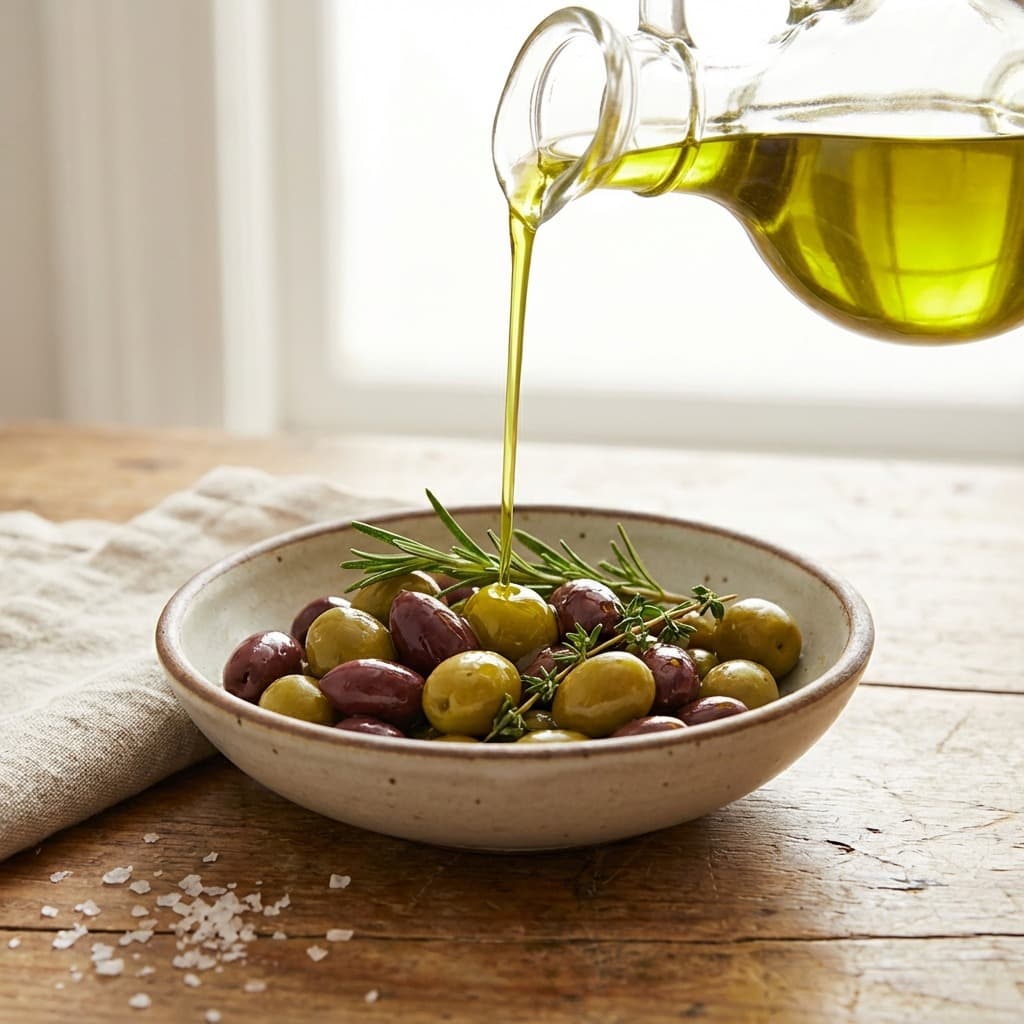
Yes. Extra virgin olive oil is one of the most potent anti-inflammatory foods in the human diet, and it has among the strongest research foundations of any dietary fat. The mechanism is not just that it lacks the pro-inflammatory properties of other oils: it contains active anti-inflammatory compounds that work through the same pathways as pharmaceutical drugs.
The key word is "extra virgin." Not all olive oil is created equal, and the difference matters enormously for anti-inflammatory effect.
What Makes Olive Oil Anti-Inflammatory?
Extra virgin olive oil (EVOO) contains over 200 polyphenolic compounds. Two in particular drive its anti-inflammatory reputation:
Oleocanthal: A phenolic compound that inhibits COX-1 and COX-2 enzymes, the same targets as ibuprofen (a standard nonsteroidal anti-inflammatory drug). The compound responsible for olive oil's distinctive throat sting when tasted fresh, oleocanthal, directly suppresses the biochemical pathways driving acute and chronic inflammation.
A 2005 study in Nature first characterized oleocanthal as an ibuprofen-like compound. The comparison drew attention because the therapeutic dose of oleocanthal in EVOO (about 50mL per day, roughly 3-4 tablespoons) is estimated to provide roughly 10% of the anti-inflammatory effect of a standard ibuprofen dose. That may sound modest, but consumed daily over years, the cumulative anti-inflammatory effect is substantial.
Oleuropein and Hydroxytyrosol: The most abundant polyphenols in olive oil. These compounds scavenge reactive oxygen species, inhibit NF-kB (the master inflammation gene switch), and reduce production of IL-1 beta, IL-6, and TNF-alpha. Hydroxytyrosol specifically protects LDL cholesterol from oxidation, which is relevant to cardiovascular inflammation.
Oleic Acid (Omega-9): The primary fatty acid in olive oil (roughly 70-80% of its fat content). Oleic acid is not strongly anti-inflammatory on its own, but it is notably not omega-6 linoleic acid, which means substituting olive oil for vegetable oils improves the overall omega-6 to omega-3 balance in your diet.
The DII Score for Olive Oil
On the Dietary Inflammatory Index (DII), olive oil, particularly extra virgin olive oil, receives a strongly negative score, meaning it is classified as anti-inflammatory. The score is driven primarily by its polyphenol content and favorable fatty acid profile.
In practical terms, studies measuring CRP (the most common clinical marker of systemic inflammation) consistently find lower levels in people who consume olive oil regularly. A 2021 meta-analysis of 13 randomized controlled trials found that EVOO supplementation significantly reduced CRP, IL-6, and other inflammatory markers compared to control oils.
EVOO vs. Regular Olive Oil: Why the Difference Matters
Extra virgin olive oil is produced by cold mechanical pressing, with no chemical refinement. It retains its full polyphenol content.
Light olive oil, pure olive oil, and refined olive oil all undergo chemical processing that removes the polyphenols, including oleocanthal. You are left with a neutral fat without the anti-inflammatory compounds.
The test: fresh EVOO should sting or burn slightly at the back of your throat when tasted directly. That sensation is oleocanthal. Refined olive oil has none of that sensation because the oleocanthal has been removed.
Other quality signals:
- Harvest date on the label (fresh olive oil has more polyphenols; buy within 18 months)
- Stored in dark glass or tin (light degrades polyphenols)
- Produced in a single country or region (blends often use lower-quality olives)
- Third-party certification (California COOC, NAOOA in the US; PDO/PGI seals in Europe)
How Much Olive Oil for Anti-Inflammatory Benefit?
Research on Mediterranean diet populations and clinical trials points to 2-4 tablespoons (30-60mL) of EVOO per day as the range where anti-inflammatory benefits are consistently measured.
The PREDIMED trial, one of the largest dietary intervention studies ever conducted, tested a Mediterranean diet supplemented with extra virgin olive oil (at least 4 tablespoons per day) versus a low-fat control diet. The EVOO group showed 30% lower rates of major cardiovascular events, significantly lower inflammatory markers, and better metabolic outcomes over 5 years.
For comparison, most Americans consume far less EVOO than this, and often substitute vegetable oils with much higher omega-6 content.
How to Get More EVOO Into Your Diet
Cook with it: EVOO is suitable for most cooking applications. Despite the persistent myth that olive oil cannot withstand heat, its high polyphenol content and oleic acid composition make it stable at temperatures up to about 375-400F. Normal sauteing, roasting, and baking fall well within this range.
Use it as a dressing: Olive oil and lemon or vinegar over salads is one of the simplest daily anti-inflammatory habits. The fat in olive oil also improves absorption of fat-soluble carotenoids from the vegetables.
Dip bread in it: In Mediterranean cuisine, dipping whole grain bread in EVOO with herbs is a common and genuinely beneficial practice, very different from buttering refined white bread.
Drizzle it after cooking: Pouring a small amount of EVOO over finished dishes preserves the more heat-sensitive polyphenols better than cooking at high heat.
Use it in marinades: For fish, chicken, and vegetables before grilling or roasting.
Replace mayonnaise: Making dressings, dips, and sauces with EVOO instead of mayo or vegetable-oil-based products immediately improves the inflammatory profile.
Olive Oil and Key Anti-Inflammatory Conditions
Cardiovascular disease: Oleic acid and polyphenols reduce LDL oxidation, improve endothelial function, and lower CRP. The link between olive oil and cardiovascular protection is among the strongest diet-disease associations in observational data. See inflammation and heart disease.
Rheumatoid arthritis: People with RA who consume high amounts of olive oil show lower disease activity scores in several studies. The COX inhibition from oleocanthal is the likely mechanism.
Alzheimer's disease: The oleocanthal story is particularly relevant for brain health. Research at Temple University showed oleocanthal enhances clearance of amyloid-beta and tau proteins in the brain, the two proteins that accumulate in Alzheimer's. Population studies show lower Alzheimer's incidence in high-olive-oil Mediterranean countries. See inflammation and Alzheimer's prevention.
Gut health: Olive oil polyphenols act as prebiotics, selectively feeding beneficial bacteria including Bifidobacterium and Lactobacillus strains. Better microbiome diversity reduces gut-derived inflammation. See anti-inflammatory foods for gut health.
Skin inflammation: Topical and dietary olive oil polyphenols reduce UV-induced skin inflammation and support skin barrier integrity. Relevant for conditions like psoriasis and eczema discussed in anti-inflammatory foods for skin.
What About Calories?
Olive oil is calorically dense at 120 calories per tablespoon. This leads some people to restrict it, particularly on weight loss plans. The evidence, however, suggests this is a mistake.
Mediterranean diet studies consistently show that high olive oil consumption does not lead to greater weight gain than low-fat diets, and in some analyses, leads to better long-term weight outcomes. The satiety from olive oil, its effect on gut hormones, and the metabolic benefits of its polyphenols appear to offset simple calorie concerns.
That said, 3-4 tablespoons per day adds 360-480 calories, so context matters if total caloric intake is already high.
Olive Oil vs. Other Oils
How does EVOO compare to other cooking fats on inflammatory indices?
| Oil | Omega-6 Content | Key Anti-Inflammatory Compounds | DII Score | |-----|----------------|--------------------------------|-----------| | Extra virgin olive oil | Low (~10%) | Oleocanthal, hydroxytyrosol, oleuropein | Strongly negative | | Coconut oil | Very low | Lauric acid (mild anti-inflammatory) | Neutral to mildly negative | | Avocado oil | Moderate (~13%) | Vitamin E, lutein | Mildly negative | | Butter | Moderate | CLA (small amounts) | Neutral | | Canola oil (refined) | High (~20%) | None significant | Neutral to mildly positive | | Soybean oil | Very high (~54%) | None significant | Mildly positive (pro-inflammatory) | | Corn oil | Very high (~58%) | None significant | Positive (pro-inflammatory) |
For cooking and dressing, EVOO is the clear winner on anti-inflammatory grounds. Avocado oil is a reasonable substitute for high-heat applications where EVOO's flavor is not ideal.
FAQ
Can olive oil reduce inflammation? Yes. Extra virgin olive oil containing oleocanthal, oleuropein, and hydroxytyrosol measurably reduces CRP, IL-6, and other inflammatory markers. Multiple randomized controlled trials confirm this.
How much olive oil per day to reduce inflammation? Research on Mediterranean diet populations uses 2-4 tablespoons (30-60mL) of EVOO per day. The PREDIMED trial used at least 4 tablespoons daily and showed significant anti-inflammatory and cardiovascular benefits over 5 years.
Is cooking with olive oil still anti-inflammatory? Yes, for most cooking applications. EVOO is stable up to around 375-400F, covering most sauteing and roasting. Some heat-sensitive polyphenols are reduced, so drizzling a small amount of raw EVOO over finished dishes provides the most complete polyphenol benefit.
Is olive oil better than coconut oil for inflammation? EVOO has stronger anti-inflammatory evidence than coconut oil. While coconut oil's lauric acid may have some mild anti-inflammatory properties, it lacks oleocanthal and the other bioactive polyphenols that make EVOO particularly potent.
Does olive oil go bad and lose anti-inflammatory properties? Yes. EVOO has a shelf life of 12-18 months from the harvest date, and polyphenol content degrades over time and with light exposure. Buy relatively fresh EVOO (harvest date within 12 months), store in a dark location, and use within a few months of opening.
Bottom Line
Extra virgin olive oil is anti-inflammatory through multiple distinct mechanisms, principally oleocanthal's direct COX inhibition and its polyphenols' suppression of NF-kB. The evidence from both population studies and clinical trials is strong, consistent, and clinically meaningful.
Use it generously. Make it your primary cooking and dressing fat. Buy quality EVOO with a recent harvest date. Two to four tablespoons per day is a realistic and beneficial target.
See how olive oil and your other daily foods score on the inflammation index. Download the Inflamous app for personalized daily tracking.