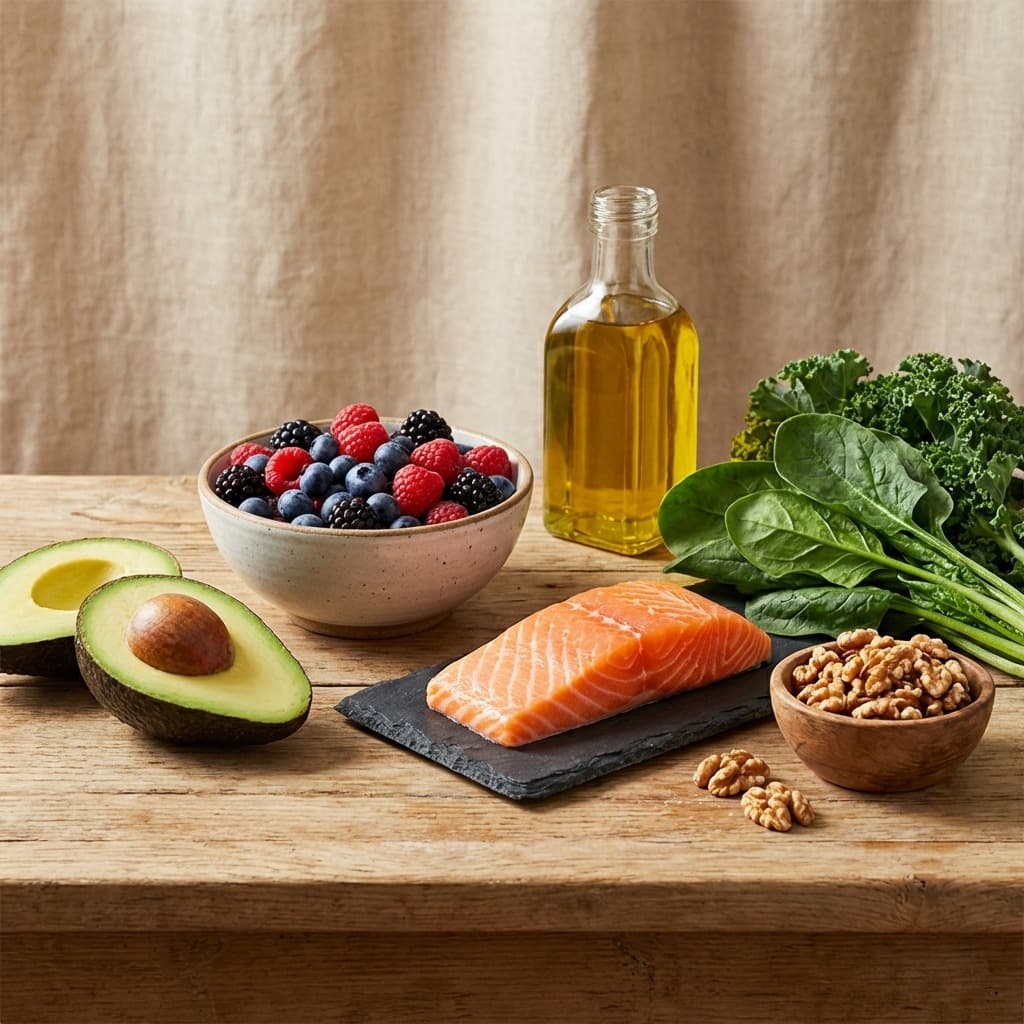
The best anti inflammatory foods for skin are the same foods that support a lower-inflammatory diet overall: fatty fish, berries, leafy greens, olive oil, nuts, seeds, legumes, and minimally processed whole foods. Research suggests that skin conditions such as acne, eczema, psoriasis, and rosacea may be influenced by systemic inflammation, blood sugar regulation, and gut health. Food is not a cure, but it may help shift the environment in a better direction.
If you want skin-friendly nutrition advice that is actually useful, think less about expensive powders and more about meal patterns.
Why inflammation matters for skin
Skin is not separate from the rest of the body. Inflammatory signaling, blood sugar swings, gut health, sleep quality, and stress all show up on the skin in one way or another.
For acne, higher-glycemic diets may worsen breakouts in some people. For eczema and psoriasis, immune activity and barrier function are central. For rosacea, triggers can include alcohol, heat, and spicy foods, though personal responses vary. Across these conditions, a lower-inflammatory diet may not solve everything, but it can help reduce background stress on the system.
This is where the Dietary Inflammatory Index becomes useful. It gives you a way to think about whether your routine is centered on high-fiber, polyphenol-rich foods or on sugar, refined grains, and ultra-processed snacks.
1) Fatty fish for omega-3s
Salmon, sardines, trout, and mackerel are some of the strongest foods for skin-supportive anti-inflammatory eating. Omega-3 fats are associated with better inflammatory balance and may help offset the heavily processed fat patterns common in modern diets.
A few servings a week can make a real difference in the quality of your overall diet. Salmon is a great place to start.
2) Berries and colorful produce
Berries, citrus, tomatoes, peppers, carrots, and leafy greens bring vitamin C, carotenoids, and polyphenols. These compounds help support antioxidant defenses and overall skin health.
Blueberries stand out because they are easy to use in breakfast, snacks, or smoothies. They also work well as a replacement for more processed sweets.
3) Olive oil, avocado, nuts, and seeds
Skin barrier function depends partly on dietary fat quality. Extra virgin olive oil, avocado, walnuts, chia seeds, and flax can all support a more skin-friendly inflammatory profile.
These foods also help make meals more satisfying, which may reduce grazing on snack foods high in sugar and refined flour.
4) Beans, lentils, and whole-food carbohydrates
Blood sugar regulation matters for skin, especially for acne-prone people. Meals centered on beans, lentils, oats, and whole-food starches tend to create steadier energy than highly refined snack foods and sweet drinks.
That matters because repeated high-glycemic eating may be associated with more inflammatory stress and more breakouts in some people. We discuss that broader pattern in sugar and inflammation: the complete breakdown.
5) Fermented and fiber-rich foods for the gut-skin connection
The gut-skin connection gets overhyped sometimes, but it is real enough to matter. Fiber-rich diets support gut microbes, and fermented foods may help some people diversify what they eat.
No, kimchi is not a skin cure. But a diet with yogurt, kefir, beans, oats, vegetables, and fruit generally supports a healthier internal environment than a diet dominated by packaged snacks.
For more, read fermented foods and inflammation: what works and fiber and inflammation: the gut connection.
What foods may make skin inflammation worse?
The biggest patterns to watch are:
- High added sugar intake
- Frequent ultra-processed snacks
- Sugar-sweetened beverages
- Low fiber intake
- Heavy reliance on refined carbohydrates
Some people also notice symptom-specific triggers such as alcohol for rosacea or certain dairy patterns for acne, though those relationships are personal and not universal.
The Inflammation Score Breakdown
For skin, the strongest positive score builders are usually:
- Fatty fish like salmon
- Extra virgin olive oil
- Berries such as blueberries
- Greens and colorful vegetables
- Beans and lentils
- Nuts and seeds
- Green tea and polyphenol-rich foods
Less favorable score patterns include:
- Sugary drinks
- Dessert-heavy snacking
- Ultra-processed convenience foods
- Meals built around refined grains with little protein or fiber
This is one reason a Mediterranean-style diet often overlaps with skin-friendly eating. It emphasizes many of the same foods described in mediterranean diet vs anti-inflammatory diet.
A practical skin-friendly day of eating
A realistic day might look like:
- Oats with berries and walnuts for breakfast
- Salad with salmon, chickpeas, olive oil, and greens for lunch
- Greek yogurt or fruit for a snack
- Lentil curry with vegetables for dinner
- Water or unsweetened tea instead of sugary drinks
That pattern will not guarantee perfect skin, but it does reduce the diet factors most commonly associated with higher inflammatory load.
FAQ
What are the best anti-inflammatory foods for skin?
Fatty fish, berries, olive oil, leafy greens, legumes, nuts, seeds, and high-fiber whole foods are some of the best places to start.
Can diet improve acne and eczema?
It may help some people, especially if blood sugar swings, gut health, or overall dietary inflammatory load are part of the picture. It is not a standalone cure.
Is dairy inflammatory for skin?
It depends. Some people notice acne-related issues with certain dairy foods, while others tolerate dairy well. The response is individual.
How long does diet take to affect skin?
Skin changes usually take weeks, not days. Consistency matters much more than one “clean eating” day.
Bottom line
The best anti inflammatory foods for skin are not fancy. They are the foods that lower your overall inflammatory load and support better blood sugar control, gut health, and nutrient density: fish, olive oil, berries, greens, beans, nuts, and minimally processed meals.
Use the Inflamous app to score your meals, spot high-inflammatory patterns, and build a skin-friendly routine you can actually maintain.
Sleep, stress, and skin are part of the same picture
Skin-friendly eating works better when sleep and stress are not ignored. A person who sleeps poorly, lives on caffeine, and stress-eats sugar every afternoon may struggle with skin symptoms even if they occasionally buy expensive “beauty” foods.
That is why the most useful skin routine is boring but effective: enough sleep, steady meals, lower sugar intake, hydration, and an overall pattern rich in anti-inflammatory foods.
Foods that may support a healthier skin barrier
Skin barrier health depends on more than one nutrient, but diets that include adequate protein, healthy fats, vitamin C-rich produce, and zinc-containing foods are usually a better foundation than diets centered on refined snack foods.
In practical terms, that means meals with fish, eggs, yogurt, beans, nuts, seeds, fruit, and vegetables are usually doing more for your skin than supplements marketed with glossy packaging.
When food logs are actually useful
A short-term food and symptom log can help if you are trying to figure out whether high-sugar weekends, alcohol, spicy foods, or certain dairy patterns line up with flares. The goal is not to become obsessive. It is to identify repeatable patterns you can act on.
Acne, eczema, psoriasis, and rosacea are not the same nutrition problem
It helps to keep expectations realistic because each skin condition has different drivers.
- Acne: blood sugar regulation and some dairy patterns may matter for certain people
- Eczema: barrier function, immune activity, and allergen issues can matter more
- Psoriasis: systemic inflammation and weight status may play a bigger role
- Rosacea: alcohol, heat, and spicy triggers may matter more than general sugar intake for some people
The overlap is that a lower-inflammatory diet tends to support the overall environment, even though it will not work identically for each condition.
Easy upgrades if you do not want to overhaul everything
If a full diet reset feels unrealistic, start with three upgrades:
- Replace one sugary drink a day with water or unsweetened tea
- Add berries or fruit to breakfast instead of a pastry
- Eat fish, beans, or lentils at least three times a week
Those changes alone can improve the inflammatory tone of your routine without turning food into a full-time project.
Why food quality usually matters more than one “skin superfood”
People often ask whether collagen powder, celery juice, or one special seed is the secret for skin. Usually it is not. The bigger win comes from reducing the daily inputs that make the whole diet more inflammatory and replacing them with foods that improve blood sugar stability, nutrient density, and gut support.
That is why a breakfast swap from pastry to oats and berries can matter more than any expensive supplement. It changes the pattern.
A few skin-friendly foods people often overlook
- Beans and lentils for fiber and steadier glucose response
- Eggs for protein and satiety
- Plain yogurt or kefir if tolerated
- Pumpkin seeds and walnuts for minerals and healthy fats
- Green tea for polyphenols with less sugar than juice or soda
These are not glamorous. They are useful.