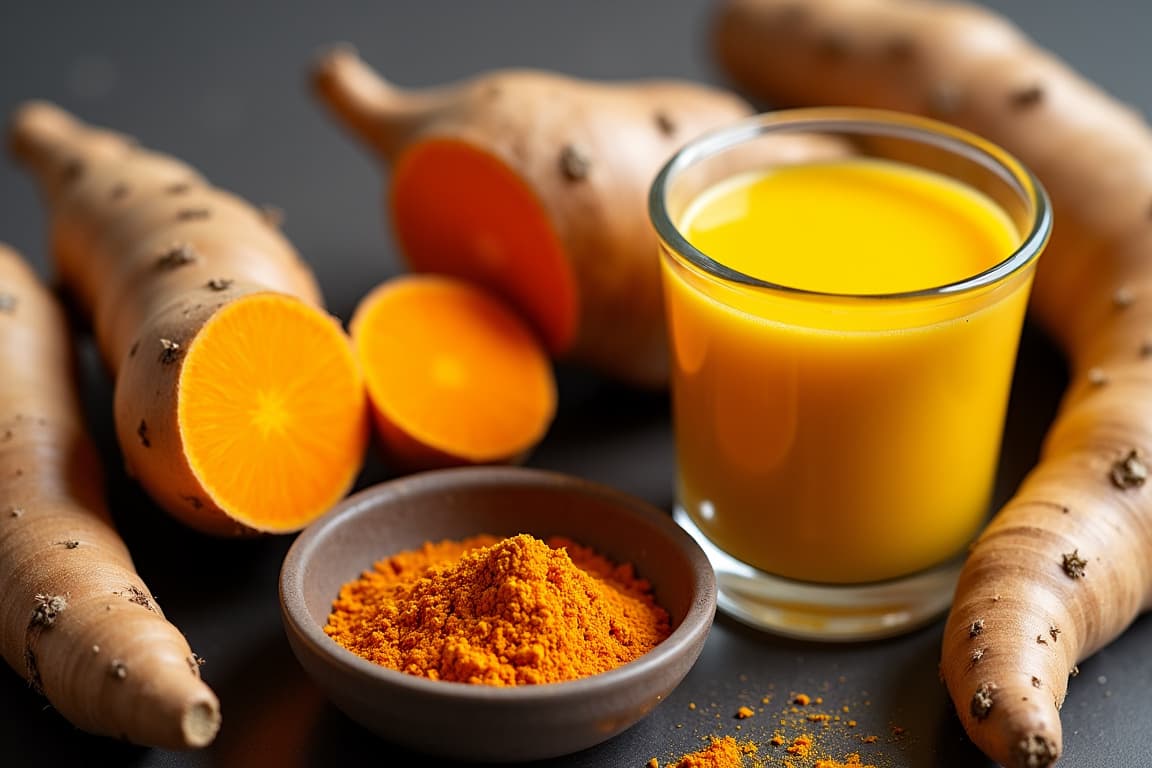
Yes, turmeric is anti-inflammatory, and it is one of the few foods where the scientific evidence is genuinely strong rather than preliminary. The active compound, curcumin, has been studied in hundreds of clinical trials and shown to reduce multiple inflammatory pathways simultaneously. But there is a critical catch: the way most people consume turmeric means very little curcumin reaches their bloodstream.
This article explains what works, what does not, and how to actually get the anti-inflammatory benefit from turmeric.
What Makes Turmeric Anti-Inflammatory?
Turmeric root contains a family of polyphenols called curcuminoids, of which curcumin is the most studied. Curcumin works through several mechanisms that nutritional scientists consider unusually broad for a single compound:
It suppresses NF-kB, the protein complex that acts as a master activator of inflammation genes in the body. NF-kB is like a fire alarm for the immune system, and curcumin helps turn down the alarm when it is sounding unnecessarily.
It inhibits COX-2 and LOX enzymes, the same pathways targeted by ibuprofen and aspirin. This is why turmeric gets compared to NSAIDs in some research, though the effect size is generally smaller.
It reduces cytokines including IL-1, IL-6, and TNF-alpha, the signaling molecules that coordinate the inflammatory response throughout the body.
On the Dietary Inflammatory Index (DII), turmeric receives one of the most strongly negative scores of any food or spice. In a 2016 review in Oncotarget, researchers noted that curcumin modulates at least 97 different molecular targets related to inflammation. No pharmaceutical drug targets that many pathways at once.
The Bioavailability Problem
Here is the issue: curcumin is notoriously poorly absorbed by the human digestive system. When you eat a curry or a golden latte made with plain turmeric powder, very little curcumin makes it past your gut lining into the bloodstream where it can actually do something.
Studies measuring curcumin blood levels after standard consumption find peak concentrations so low they are nearly undetectable. This is why early human trials of turmeric were disappointing. The dose was reaching the gut but not the cells.
Three solutions actually work:
Black pepper (piperine): Piperine, the compound that gives black pepper its bite, inhibits an enzyme that rapidly degrades curcumin in the gut. Adding just 1/20th of a teaspoon of black pepper to your turmeric preparation increases curcumin absorption by up to 2,000 percent according to a widely cited study in Planta Medica. This is the simplest and most practical solution.
Fat: Curcumin is fat-soluble, meaning it absorbs far better when consumed with fat. Cooking turmeric in olive oil, coconut oil, or another fat significantly improves absorption.
Specialized supplements: Formulations like BCM-95, Longvida, and Meriva use phospholipid complexes, nanoparticles, or lipid carriers to dramatically improve curcumin bioavailability. These are used in the clinical trials that show measurable benefit in humans.
The takeaway: a turmeric latte made with turmeric powder and milk (unless you add black pepper and use whole fat milk) is mostly a placebo. A curry with turmeric, black pepper, and oil cooked together is genuinely delivering curcumin to your system.
What Research Shows in Humans
When bioavailability is addressed, the clinical evidence for curcumin's anti-inflammatory effects is compelling.
A 2021 meta-analysis in Phytotherapy Research examined 32 randomized controlled trials and found that curcumin supplementation significantly reduced CRP, IL-6, and TNF-alpha compared to placebo. The effect was comparable to low-dose aspirin for some inflammatory markers.
For arthritis specifically, a 2019 trial published in Trials found that a highly bioavailable curcumin preparation reduced joint pain and stiffness scores equivalently to diclofenac (a prescription anti-inflammatory drug) in knee osteoarthritis patients, with fewer gastrointestinal side effects.
Research in type 2 diabetes, inflammatory bowel disease, and metabolic syndrome shows consistent reductions in inflammatory markers with bioavailable curcumin preparations.
Turmeric's Inflammation Score
The Inflamous inflammation scoring system gives turmeric one of the highest anti-inflammatory ratings of any food. In practical terms:
- Fresh turmeric root: Higher curcumin content than dried powder, but still requires fat and black pepper for good absorption
- Dried turmeric powder: Lower curcumin content by weight, but practical for cooking
- Turmeric with black pepper: Absorption up to 20x higher than turmeric alone
- Curcumin supplements (bioavailable forms): Most potent for therapeutic use
For general daily inflammation management through diet, turmeric appears prominently in the anti-inflammatory spice guide alongside ginger, cinnamon, and oregano.
How Much Turmeric Do You Need?
For turmeric powder in cooking: 1/2 to 1 teaspoon per day, always with black pepper and fat. This provides roughly 50-200mg of curcumin depending on the turmeric quality.
For therapeutic use targeting a specific condition like arthritis or high inflammatory markers: research uses 500-1500mg of bioavailable curcumin per day from supplements, which is difficult to achieve through food alone.
The practical approach for most people: cook with turmeric daily using the fat-and-black-pepper method, and consider a bioavailable curcumin supplement if you have elevated CRP or a specific inflammatory condition.
Easy Ways to Add Turmeric to Your Diet
Golden milk (done right): Warm whole milk or coconut milk with 1 tsp turmeric, a pinch of black pepper, a teaspoon of honey, and half a teaspoon of ginger. The fat in the milk and the piperine in the pepper make this genuinely anti-inflammatory, not just trendy.
Turmeric rice or grains: Add turmeric to the cooking water for rice, quinoa, or lentils. A pinch of black pepper and olive oil drizzled at the end completes the absorption trio.
Roasted vegetables: Toss vegetables with olive oil, turmeric, black pepper, and garlic before roasting. The fat is right there in the preparation.
Scrambled eggs with turmeric: The fat in the eggs and the option to add black pepper make this a quick anti-inflammatory breakfast.
Turmeric in soups and curries: Indian cooking has known about this combination for centuries. A proper curry uses turmeric, black pepper, and oil together, which is precisely the absorption-optimized combination.
Turmeric smoothie: Blend with frozen mango, coconut milk, ginger, a pinch of black pepper, and a teaspoon of olive oil. Surprisingly good.
Turmeric vs. Other Anti-Inflammatory Foods
How does turmeric stack up against other heavy hitters?
Compared to omega-3 fatty acids from salmon, turmeric works through different molecular pathways. They complement each other rather than compete. A diet with both salmon and turmeric addresses inflammation from multiple angles simultaneously.
Compared to dark chocolate, turmeric's evidence base is stronger and more consistent, though dark chocolate has its own polyphenols with distinct benefits.
Compared to olive oil, both score strongly on anti-inflammatory indices, and cooking with turmeric in olive oil gives you both benefits at once.
Who Benefits Most from Turmeric?
Anyone with elevated chronic inflammation benefits from regular turmeric consumption. Specific conditions with the strongest clinical evidence:
Arthritis: Both osteoarthritis and rheumatoid arthritis show meaningful improvements with bioavailable curcumin in multiple trials.
Metabolic syndrome and type 2 diabetes: Curcumin improves insulin sensitivity and reduces inflammatory markers common in these conditions.
Inflammatory bowel disease: Ulcerative colitis patients in several trials showed improved remission rates with curcumin alongside standard treatment.
Post-exercise recovery: Curcumin reduces delayed-onset muscle soreness, relevant for athletes on anti-inflammatory recovery protocols.
Cognitive health: Early research on curcumin's role in Alzheimer's prevention is promising, as neuroinflammation is a key driver of the disease.
FAQ
Is fresh turmeric better than turmeric powder? Fresh turmeric root has a slightly higher curcumin content and additional beneficial compounds. Dried powder is more concentrated but processes may reduce some volatile compounds. Both work. The key is always using fat and black pepper for absorption.
Can you eat too much turmeric? At culinary amounts (up to 1-3g of powder per day), turmeric is extremely safe. Very high doses from supplements may interact with blood thinners or cause gastrointestinal discomfort in sensitive individuals. People on anticoagulants should talk to their doctor before taking curcumin supplements.
Does turmeric tea work for inflammation? Plain turmeric tea in hot water provides minimal curcumin absorption since it lacks fat and black pepper. Adding coconut milk, black pepper, and a fat source makes it genuinely effective.
Is turmeric effective for joint pain? Yes, for joint pain specifically, the evidence is among the strongest for any dietary intervention. Multiple trials show bioavailable curcumin reduces pain and stiffness in arthritis. Standard cooking amounts help; therapeutic doses require supplements.
How long does it take for turmeric to reduce inflammation? Research trials typically measure results at 4-12 weeks of consistent use. Clinical trials showing significant reductions in CRP and joint pain markers usually run for 8-12 weeks.
Bottom Line
Turmeric is genuinely anti-inflammatory, but the hype often skips the critical detail: you need to consume it with fat and black pepper for the curcumin to actually reach your bloodstream. Once you get the absorption right, turmeric delivers real, measurable reductions in the inflammatory markers that matter.
Add it to cooking daily. Include black pepper and a fat source. Consider a bioavailable supplement if you have a specific inflammatory condition. This is one food where the science backs up the reputation.
Want to know how turmeric and your other daily foods affect your personal inflammation score? Download the Inflamous app for instant scoring on everything you eat.