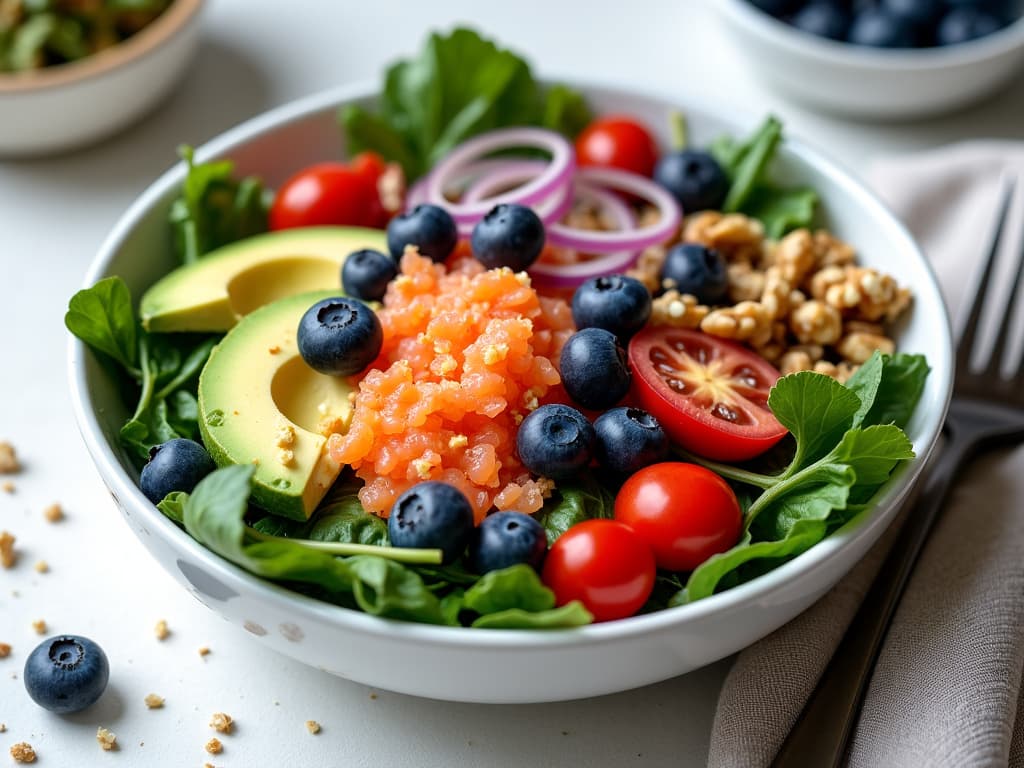
Not all salads are anti-inflammatory. A bowl of iceberg lettuce, shredded carrots, croutons, and store-bought ranch dressing with soybean oil in it might actually be mildly pro-inflammatory. The difference between a genuinely therapeutic salad and just "eating vegetables" comes down to ingredient selection.
This guide walks through the eight best anti-inflammatory salad combinations, the science behind each ingredient choice, and a master dressing formula you can make in five minutes that will do more for your inflammation than any bottled option at the grocery store.
The Anti-Inflammatory Salad Framework
The Dietary Inflammatory Index (DII) scores individual ingredients based on their effect on six inflammatory biomarkers. When you build a salad, you're essentially stacking DII scores. The goal is to maximize DII-negative values across every component:
Greens (the base):
- Spinach: -0.7 (quercetin, kaempferol, beta-carotene)
- Kale: -0.7 (sulforaphane, glucosinolates, vitamin K)
- Arugula: -0.6 (glucosinolates, vitamin C, erucic acid)
- Mixed greens: -0.5 (variety of phytonutrients)
- Romaine: -0.3 (decent but less potent than dark leafy greens)
- Iceberg: -0.1 (mostly water, minimal bioactive compounds)
Proteins:
- Wild salmon: -1.2 (EPA + DHA omega-3s)
- Sardines: -1.1 (similar to salmon, excellent value)
- Tuna (wild-caught): -0.8
- Hard-boiled eggs: -0.3
- Grilled chicken: -0.2
- Chickpeas: -0.5 (fiber + polyphenols)
Toppings:
- Blueberries: -0.9
- Tart cherries: -0.8
- Walnuts: -0.6 (ALA omega-3)
- Pumpkin seeds: -0.5
- Avocado: -0.6 (monounsaturated fat + potassium)
- Beets: -0.5 (betalain pigments)
- Cherry tomatoes: -0.4 (lycopene)
- Red onion: -0.4 (quercetin)
Dressings:
- Olive oil + lemon: -0.9
- Tahini + lemon: -0.7
- Miso + ginger: -0.6
- Apple cider vinegar + olive oil: -0.6
Avoid:
- Bottled dressings with canola, soybean, or corn oil: +0.3 to +0.5
- Croutons: +0.4
- Candied nuts: +0.3
The Master Anti-Inflammatory Dressing
Before the recipes, this dressing works on almost everything:
Olive Oil Lemon Tahini Dressing
- 3 tbsp extra-virgin olive oil
- 2 tbsp tahini
- Juice of 1.5 lemons
- 1 garlic clove, minced or pressed
- 1/2 tsp turmeric
- 1/4 tsp black pepper
- Pinch of salt
- 2-3 tbsp water to thin
Whisk or shake in a jar. Keeps refrigerated for one week.
Why this works: Olive oil oleocanthal + tahini sesamin lignans + turmeric curcumin + black pepper piperine = four distinct anti-inflammatory compounds in every bite.
8 Anti-Inflammatory Salad Recipes
1. The Power Greens Bowl
The benchmark anti-inflammatory salad. High DII-negative score across every component.
Ingredients:
- 3 cups baby spinach + 1 cup arugula
- 1 can wild-caught salmon, drained
- 1/2 avocado, sliced
- 1/2 cup blueberries
- 1/4 cup walnuts, roughly chopped
- 1/4 cup red onion, thinly sliced
- 10 cherry tomatoes
- Olive oil lemon tahini dressing
Why it works: This hits omega-3 (salmon), anthocyanins (blueberries), oleocanthal (olive oil), ALA (walnuts), monounsaturated fat (avocado), quercetin (red onion), lycopene (tomatoes), and kaempferol (spinach) in one bowl.
2. Anti-Inflammatory Tuna Salad (Lettuce Cups)
A reinvented tuna salad that replaces mayonnaise (usually made with soybean oil) with avocado and olive oil.
Ingredients:
- 2 cans wild-caught tuna, drained
- 1 ripe avocado
- 2 tbsp olive oil
- Juice of 1 lemon
- 2 tbsp red onion, finely diced
- 2 tbsp celery, finely diced
- 1 tbsp Dijon mustard
- 1 tbsp capers (optional)
- Black pepper, salt
- Butter lettuce leaves or romaine hearts for serving
- Cherry tomatoes and cucumber on the side
Method: Mash avocado with olive oil, lemon juice, mustard. Fold in tuna, onion, celery, capers. Season. Serve in lettuce cups.
Why it works: Replaces pro-inflammatory seed oil mayo with avocado, adding oleic acid and potassium. Wild tuna still provides omega-3s. The classic presentation is actually better DII-negative in this format.
3. Anti-Inflammatory Chicken Salad
The anti-inflammatory take on the deli counter classic. Turmeric, fresh herbs, and olive oil mayo replace the usual inflammatory ingredients.
Ingredients:
- 2 cups grilled or poached chicken breast, shredded
- 1/2 cup Greek yogurt, plain
- 2 tbsp olive oil
- 1 tsp turmeric
- 1/2 tsp black pepper
- 1/4 tsp ginger powder
- 1/2 cup celery, diced
- 1/4 cup red onion, finely diced
- 1/4 cup walnuts, roughly chopped
- 1/4 cup dried tart cherries or fresh grapes
- Juice of 1 lemon
- Fresh parsley, dill
- Salt to taste
- Serve over spinach or in romaine leaves
Method: Combine Greek yogurt, olive oil, turmeric, pepper, ginger, lemon juice for dressing. Toss with chicken, celery, onion, walnuts, cherries, herbs. Serve cold.
Why it works: Greek yogurt provides probiotics for gut inflammation. Turmeric adds curcumin. Tart cherries bring anthocyanins. Walnuts add ALA. This version scores significantly better than a mayo-based chicken salad.
4. Mediterranean Salmon Salad
The Mediterranean diet is one of the most extensively studied diets for reducing chronic inflammation. This salad is built from its core ingredients.
Ingredients:
- 3 cups kale, massaged with a drop of olive oil
- 1 salmon fillet, cooked and flaked (or 1 can wild salmon)
- 1/2 cup chickpeas, rinsed
- 1/4 cup Kalamata olives, halved
- 1/4 cup sun-dried tomatoes in olive oil, drained
- 1/4 cup cucumber, diced
- 1/4 cup red onion, sliced thin
- 2 tbsp capers
Dressing:
- 3 tbsp olive oil
- 1.5 tbsp red wine vinegar
- 1 tsp dried oregano
- 1/2 tsp garlic powder
- Salt and black pepper
Why it works: Every ingredient in this salad is a Mediterranean diet staple with documented anti-inflammatory activity. Olives add hydroxytyrosol, one of the most potent polyphenols in any food. Capers contain quercetin concentrations that rival most supplements.
5. Beet, Walnut, and Arugula Salad
Beets contain betalain pigments — betacyanin and betaxanthin — that inhibit COX-1 and COX-2, the same enzymes targeted by ibuprofen. Combined with arugula's glucosinolates and walnut's ALA, this is one of the highest-scoring "simple" salads possible.
Ingredients:
- 3 cups arugula
- 2 medium beets, roasted (wrap in foil, 400°F for 45-60 min), sliced or diced
- 1/3 cup walnuts, toasted
- 1/4 cup goat cheese or skip for dairy-free
- 1/4 cup pomegranate arils (or tart cherries)
Dressing:
- 3 tbsp olive oil
- 1 tbsp balsamic vinegar
- 1 tsp honey
- Pinch of salt and pepper
Why it works: Betalains from beets + ALA from walnuts + glucosinolates from arugula + pomegranate ellagitannins = a salad that hits multiple anti-inflammatory pathways with every bite. Prep beets on Sunday for the week.
6. Ginger Miso Edamame Bowl
A Japanese-inspired approach using miso's probiotic base and edamame's isoflavones.
Ingredients:
- 2 cups shredded savoy cabbage or napa cabbage
- 1 cup cooked edamame
- 1 cup shredded carrots
- 1/2 cup brown rice or quinoa, cooked and cooled
- 1/4 cup cucumber, sliced thin
- 2 tbsp sesame seeds
- 2 green onions, sliced
Miso-Ginger Dressing:
- 2 tbsp white miso
- 1 tbsp rice vinegar
- 1 tbsp toasted sesame oil
- 1 tbsp fresh ginger, grated
- 1 tsp honey
- 2 tbsp water to thin
Why it works: Miso provides probiotics that reduce gut permeability. Edamame isoflavones have documented anti-inflammatory activity, particularly for women in perimenopause. Ginger gingerols directly inhibit COX-2. The grain base makes this a full meal.
7. Blueberry Spinach Salad With Candied Pecans (Anti-Inflammatory Version)
Most blueberry spinach salads get undermined by sugary dressings and candied nuts. This version keeps the concept while swapping to better ingredients.
Ingredients:
- 4 cups fresh spinach
- 1/2 cup blueberries (fresh or thawed)
- 1/4 cup pecans, toasted dry (not candied)
- 1/4 cup red onion, very thinly sliced
- 1/4 cup goat cheese or skip
Dressing:
- 2 tbsp olive oil
- 1 tbsp apple cider vinegar
- 1 tsp honey (just enough to balance)
- 1/2 tsp Dijon mustard
- Pinch of black pepper
Why it works: Blueberry anthocyanins + spinach quercetin + pecan ellagitannins is a polyphenol-dense combination. Apple cider vinegar reduces post-meal blood glucose spikes. The honey quantity is minimal — less than 1 tsp per serving.
8. High-Protein Lentil and Roasted Vegetable Salad
A warm salad option that works beautifully year-round. Lentils make it meal-caliber.
Ingredients:
- 1 cup cooked lentils (green or French)
- 2 cups mixed roasted vegetables (broccoli, red pepper, zucchini, cherry tomatoes)
- 3 cups arugula or spinach (wilts slightly from warm vegetables — that's fine)
- 1/4 cup pumpkin seeds
- Fresh parsley and mint
Turmeric Dressing:
- 3 tbsp olive oil
- 1.5 tbsp lemon juice
- 1 tsp turmeric
- 1/2 tsp cumin
- 1/4 tsp black pepper
- 1 garlic clove, minced
Why it works: Lentil fiber feeds anti-inflammatory gut bacteria directly. Roasting concentrates polyphenol density in vegetables. Pumpkin seeds provide zinc, which is associated with lower CRP. This is the salad with the highest fiber and protein of the eight.
Salad Meal Prep Tips
All eight of these store well if you follow one rule: keep the dressing separate until you're ready to eat. Dressed greens wilt within hours. Undressed, prepped components last 4-5 days in the fridge.
For weekly meal prep, prep these components in one batch:
- Roast vegetables (use for salads + bowls + soups)
- Cook lentils and grains
- Make a double batch of dressing (jar in the fridge)
- Wash and spin-dry greens (store with a paper towel to absorb moisture)
Then assembly takes under 3 minutes per meal.
What to Avoid in Salad Dressings
The single biggest anti-inflammatory pitfall in salads is the dressing. Most bottled dressings use:
- Soybean oil or canola oil — omega-6:omega-3 ratios of 7:1 to 14:1
- High-fructose corn syrup — in many "light" dressings
- Excess sodium — can raise blood pressure and promote inflammation indirectly
- Titanium dioxide — a preservative associated with gut inflammation in cell studies
If you use bottled dressing, look for options made with olive oil as the first fat ingredient. Better still, the master dressing above takes 3 minutes and costs less per serving.
See Your Salad's DII Score
The Inflamous app lets you log your salad ingredients and see the combined DII score in real time. The Power Greens Bowl above typically scores around -0.9, while a standard chopped salad with bottled dressing might score near zero or slightly positive. Download the app to track your anti-inflammatory meals and see your progress over time.
For the full picture on which individual ingredients drive the most anti-inflammatory activity, see the complete anti-inflammatory foods list. For salad and other meals built around a specific condition, the anti-inflammatory diet for beginners is the place to start.
This content is for educational purposes only and does not constitute medical advice. If you are managing a specific health condition with diet, consult a qualified healthcare provider.