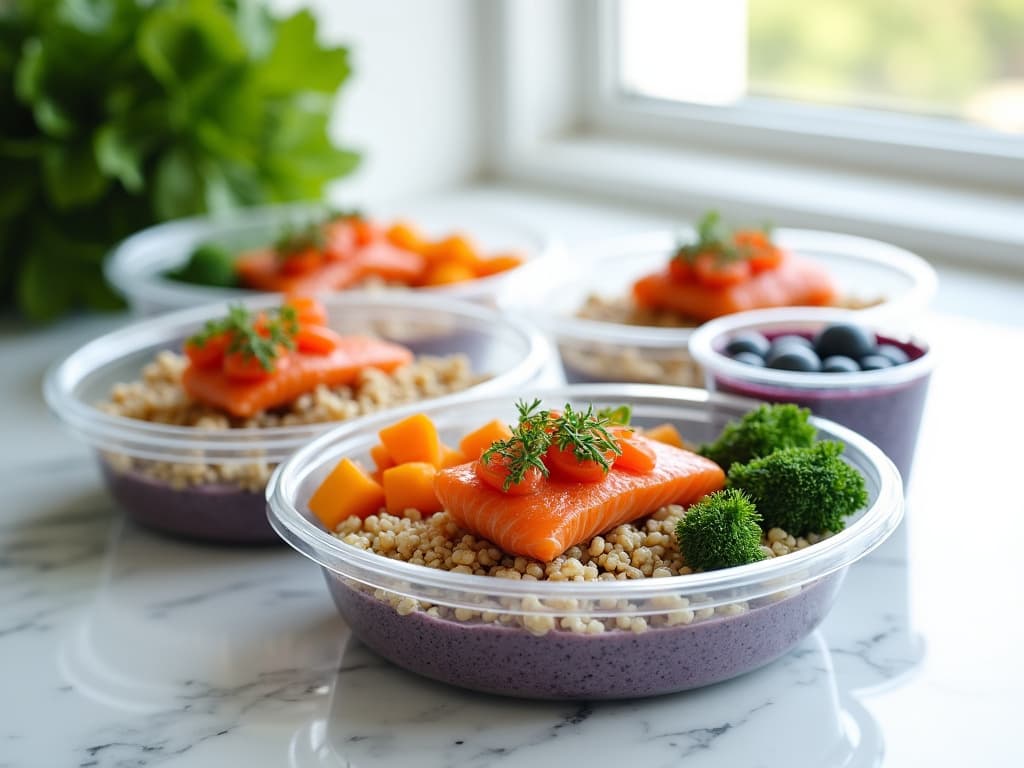
The most common reason people fall off an anti-inflammatory diet is simple: they get hungry and there's nothing ready to eat. Meal prep solves that directly. When your fridge is stocked with ready-to-assemble food that scores low on the Dietary Inflammatory Index, the default choice becomes the anti-inflammatory choice.
This guide gives you a complete weekly system, not just a recipe list. You'll find a shopping list, a cooking order that minimizes total prep time, inflammation scores for every major ingredient, and 12 meal combinations you can mix and match through the week.
What Makes a Meal Genuinely Anti-Inflammatory?
Before we get to logistics, it helps to understand what you're actually building. The Dietary Inflammatory Index (DII) rates foods based on their effect on six key inflammatory biomarkers: IL-1β, IL-4, IL-6, IL-10, TNF-α, and CRP.
Foods with strong anti-inflammatory profiles share a few traits:
- High in omega-3 fatty acids (fatty fish, walnuts, flaxseed) — these directly suppress NF-κB, the master switch for inflammatory signaling
- Rich in polyphenols (berries, turmeric, olive oil, leafy greens) — polyphenols block the COX-2 enzyme that produces pro-inflammatory prostaglandins
- High in fiber (legumes, whole grains, vegetables) — soluble fiber feeds Lactobacillus and Bifidobacterium strains that produce short-chain fatty acids, which reduce gut permeability and systemic inflammation
- Low in refined carbohydrates and industrial seed oils — these drive blood sugar spikes and omega-6 overload, two major triggers for chronic inflammation
Your meal prep goal: build a pantry of these components so every meal you assemble hits multiple anti-inflammatory pathways at once.
The Core Inflammation Scores for Meal Prep Staples
Here's how key meal prep ingredients score on the DII (negative = anti-inflammatory, positive = pro-inflammatory):
| Ingredient | DII Score | Notes | |---|---|---| | Wild salmon | -1.2 | Highest omega-3 density of any common protein | | Olive oil | -1.1 | Oleocanthal acts like a natural ibuprofen | | Blueberries | -0.9 | Anthocyanins reduce CRP by up to 35% in studies | | Turmeric | -0.8 | Curcumin blocks NF-κB directly | | Lentils | -0.7 | Resistant starch + fiber + polyphenols | | Kale/Spinach | -0.7 | Kaempferol and quercetin reduce IL-6 | | Quinoa | -0.5 | Complete protein with anti-inflammatory saponins removed in rinsing | | Brown rice | -0.3 | Lower glycemic than white rice, more fiber | | Grilled chicken | -0.2 | Neutral to mildly anti-inflammatory when grilled, not fried | | Sweet potato | -0.4 | Beta-carotene converts to antioxidant vitamin A |
The Weekly Meal Prep System
Step 1: Shop on Sunday Morning (30 minutes)
Buy for the full week. Here's a shopping list built around maximum anti-inflammatory density per dollar:
Proteins:
- 1.5 lbs wild salmon fillets (or 2 cans wild-caught salmon + 1 lb fresh)
- 1 lb boneless chicken thighs or breasts
- 2 cans chickpeas
- 1 lb dry red lentils
- 1 dozen eggs
Grains and legumes:
- 2 cups dry quinoa
- 1 cup dry brown rice
- 1 bag old-fashioned oats
Vegetables (buy whole, not pre-cut):
- 1 large bunch kale or 2 bags pre-washed spinach
- 1 head broccoli + 1 head cauliflower
- 1 bag cherry tomatoes
- 3 bell peppers (any color)
- 1 bag carrots
- 2-3 medium sweet potatoes
- 1 head garlic, 2-inch piece fresh ginger
Fruit:
- 2 bags frozen blueberries (cheaper than fresh, identical nutrition)
- 3-4 ripe bananas (for smoothies and oatmeal)
Fats and flavor:
- 1 bottle extra-virgin olive oil (if not stocked)
- 1 avocado per day, or buy a bag and ripen as needed
- 1 can full-fat coconut milk
- Walnuts, pumpkin seeds, or almonds (1 bag)
Anti-inflammatory spice rack (stock once, use for months):
- Turmeric, black pepper (always pair these — piperine increases curcumin absorption by 2,000%), ginger powder, cinnamon, cumin, smoked paprika
Step 2: Batch Cook on Sunday Afternoon (2 hours, active time ~45 minutes)
The trick to fast meal prep is running everything in parallel. Here's the exact order:
0:00 — Start the oven at 425°F
0:05 — Get grains cooking (takes the longest)
- Pot 1: 2 cups quinoa + 4 cups water, bring to boil, reduce, cover, simmer 15 minutes
- Pot 2: 1 cup brown rice + 2.5 cups water, same process, simmer 40-45 minutes
- Pot 3: 1 cup red lentils + 3 cups water or broth, add 1 tsp turmeric + 1 tsp cumin, simmer 20 minutes
0:10 — Prep and roast vegetables
- Chop broccoli, cauliflower, bell peppers, carrots into similar-sized pieces
- Toss with olive oil, salt, smoked paprika, garlic powder
- Spread on 2 sheet pans, roast at 425°F for 25-30 minutes (no stirring needed)
0:15 — Prep proteins
- Season salmon with olive oil, lemon juice, garlic, black pepper
- Season chicken with olive oil, turmeric, cumin, black pepper, salt
- Bake salmon at 400°F for 12-15 minutes on a separate rack
- Roast chicken thighs at 425°F alongside vegetables, 25-30 minutes until internal temp hits 165°F
0:30 — Prep cold components while everything cooks
- Wash and dry kale, massage with a drizzle of olive oil and lemon (this breaks down the tough fibers and removes bitterness)
- Prep a big batch of tahini-lemon dressing: 3 tbsp tahini, juice of 2 lemons, 2 tbsp olive oil, 1 clove garlic (minced), water to thin, salt
- Hard-boil 6-8 eggs if using for the week
1:00 — Pull everything from the oven and cool
1:15 — Portion and store
- Grains in separate containers (quinoa, rice, lentils)
- Roasted vegetables in one large container (they'll mix flavors and that's fine)
- Salmon in one container, chicken in another
- Kale separate from other greens so it doesn't wilt
- Dressing in a jar
Total active time: about 45 minutes. Passive time: 75 minutes while things cook.
12 Anti-Inflammatory Meal Combos From One Prep Session
This is the payoff. Every combo below takes under 5 minutes to assemble:
Breakfasts:
- Turmeric oatmeal bowl — oats + frozen blueberries + 1 tsp turmeric + black pepper + walnuts + drizzle of honey
- Savory egg bowl — 2 hard-boiled eggs + roasted vegetables + quinoa + tahini drizzle
- Green smoothie — frozen blueberries + spinach + 1 banana + walnuts + almond milk (blend)
Lunches: 4. Salmon power bowl — quinoa + kale + roasted vegetables + salmon flakes + tahini dressing + cherry tomatoes 5. Turmeric lentil bowl — lentils + brown rice + spinach + olive oil + lemon + hard-boiled egg 6. Chickpea grain bowl — canned chickpeas (drained, rinsed) + quinoa + roasted vegetables + avocado
Dinners: 7. Sheet pan chicken and vegetables — chicken + roasted vegetables over brown rice + tahini 8. Lentil soup upgrade — leftover lentils + canned diced tomatoes + coconut milk + ginger + spinach, simmer 10 minutes 9. Salmon and kale — warm salmon + massaged kale + quinoa + olive oil + lemon + pumpkin seeds
Snacks: 10. Anti-inflammatory trail mix — walnuts + pumpkin seeds + dark chocolate chips (70%+) + dried tart cherries 11. Veggie dip plate — raw carrots + bell pepper strips + tahini or hummus 12. Blueberry chia pudding — chia seeds soaked overnight in coconut milk + frozen blueberries + cinnamon
Prepping Specifically for Inflammation Flare Days
If you're managing a condition like rheumatoid arthritis, PCOS, or IBD, prep a separate "high-DII-negative" batch with even more targeted foods:
- Ginger-turmeric salmon — salmon baked with a paste of fresh ginger, turmeric, black pepper, and olive oil (the three most studied anti-inflammatory compounds combined)
- Tart cherry smoothie base — frozen tart cherries + blueberries + spinach, portioned into freezer bags, just add liquid
- Omega-3 chia pudding — 3 tbsp chia seeds + almond milk overnight, top with walnuts and blueberries
These combinations hit the highest DII-negative scores available from food alone.
Storage Timeline and Food Safety
| Component | Fridge (days) | Freezer | |---|---|---| | Cooked grains | 5 | 3 months | | Roasted vegetables | 5 | Not recommended (texture) | | Cooked salmon | 3 | 2 months | | Cooked chicken | 4 | 3 months | | Cooked lentils | 5 | 3 months | | Hard-boiled eggs | 7 (in shell) | Not recommended | | Dressings and sauces | 7 | Not recommended | | Massaged kale | 4 | Not recommended |
Label containers with the date you prepped them. When in doubt, smell it and use your judgment.
What to Add to the Next Week's Rotation
Variety matters both for nutrition (different phytonutrients from different plant foods) and for actually sticking with the habit. Rotate these in:
- Proteins: sardines (highest DII-negative fish per dollar), tempeh, black beans
- Grains: farro, millet, buckwheat
- Vegetables: beets (betalain pigments reduce CRP), fennel (anethole suppresses NF-κB), artichokes (prebiotic fiber)
- Dressings: miso-ginger, walnut oil and lemon, pomegranate molasses and olive oil
The anti-inflammatory smoothie guide has more ideas for quick no-cook prep options. For snack-specific prep, the anti-inflammatory snacks list covers another set of easy options.
Tracking Your Progress With the Inflamous App
Once you've built your weekly system, the Inflamous app helps you see exactly how your meal choices are affecting your overall inflammatory load. Scan individual ingredients as you prep, build a custom meal in the app, and get an overall DII score for your day. Over time you'll see patterns: which meals leave you feeling best, which ingredients make the biggest DII difference, and where there's room to improve.
Most users who meal prep consistently see their daily DII score drop by 30-50% within the first two weeks, simply by replacing convenience food with prepped anti-inflammatory components.
The Bottom Line
Anti-inflammatory meal prep works because it removes friction. You're not relying on willpower at 6:30 PM when you're tired and hungry. Instead, you're making the easy choice also the good choice. Two hours on Sunday, and you've set up your entire week for success.
Start with the base system, get comfortable with the flow, then rotate in new ingredients and combinations as the weeks go on. Your gut microbiome, your joints, and your energy levels will all respond.
Download the Inflamous app to score your meals and track your DII over time. Available for iOS and Android.
Information here is educational and not a substitute for medical advice. If you're managing a specific condition, work with a healthcare provider on your dietary approach.