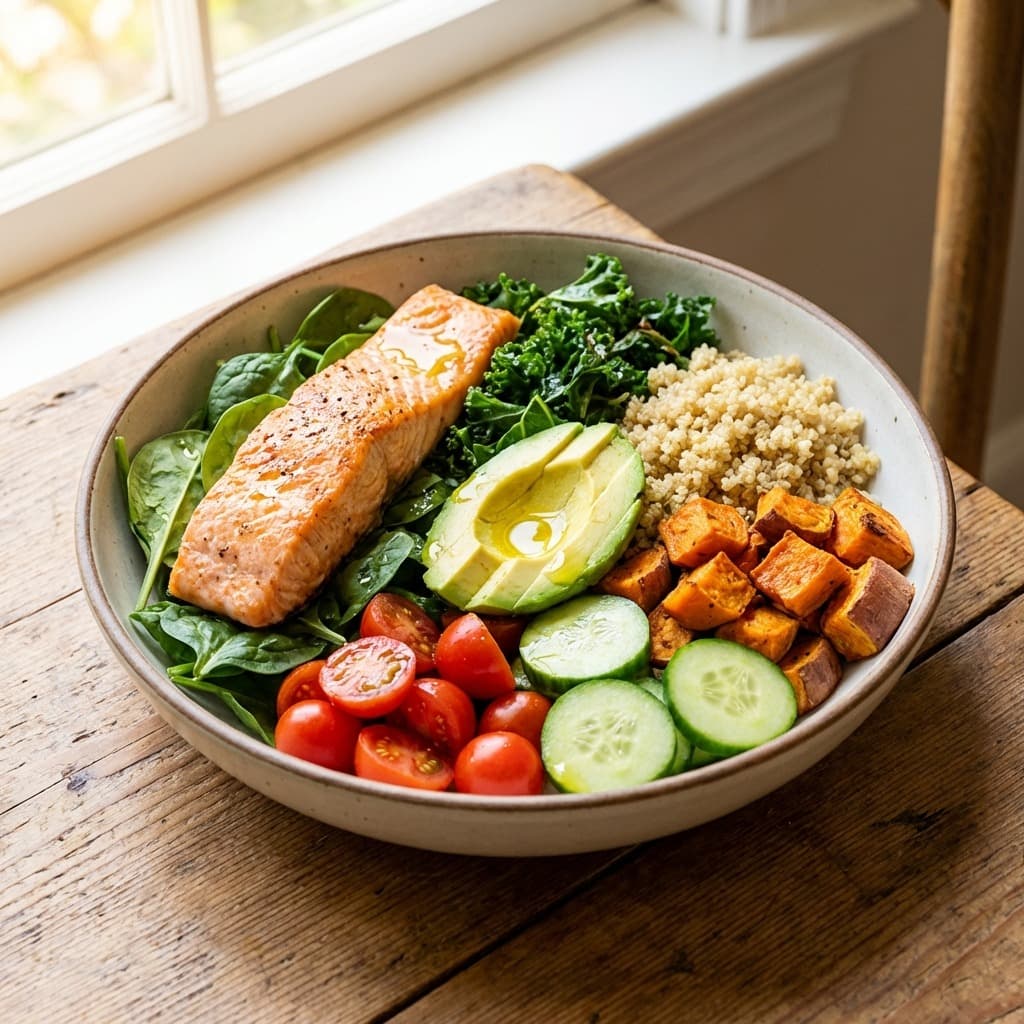
Lunch is the meal most people get wrong when it comes to inflammation. Breakfast often gets healthy attention. Dinner is usually cooked at home. But lunch, especially at work or on a busy day, defaults to whatever is fast and convenient: sandwiches on refined bread, fast food, processed soups, grain bowls drowning in inflammatory dressings.
The good news is that anti-inflammatory lunches do not require cooking from scratch every day. Most of the meals below take 10-20 minutes to prep, store well, and use ingredients that are easy to keep on hand.
Why Lunch Matters for Inflammation
Midday is when most people's food choices are least intentional. A study in the American Journal of Clinical Nutrition found that meals high in refined carbohydrates and saturated fat produced measurable spikes in inflammatory markers within 2-4 hours. That inflammatory pulse in the afternoon affects energy, focus, and cumulative inflammation load.
The Dietary Inflammatory Index (DII) measures how food combinations affect systemic inflammation. Lunches that score well on the DII tend to share a few common traits: plenty of vegetables, a quality protein source, healthy fats, minimal refined carbohydrates, and anti-inflammatory spices.
15 Anti-Inflammatory Lunch Ideas
1. Wild Salmon Salad with Mixed Greens
Open a can of wild-caught salmon. Mix with a spoonful of Greek yogurt, lemon juice, capers, and fresh dill. Serve over arugula, spinach, or mixed greens with olive oil and lemon dressing.
Why it works: Salmon delivers high EPA and DHA. Leafy greens provide magnesium and polyphenols. Olive oil contributes oleocanthal. This is one of the highest anti-inflammatory DII scores of any lunch you can put together.
Prep time: 8 minutes. Storage: Salmon mixture keeps in the fridge for 2 days.
2. Mediterranean Grain Bowl
Cooked farro, barley, or brown rice as the base. Top with chopped cucumber, cherry tomatoes, kalamata olives, chickpeas, red onion, and crumbled feta. Dress with olive oil, lemon, and dried oregano.
Why it works: Whole grains provide fiber that feeds anti-inflammatory gut bacteria. Legumes score strongly on the DII. Olive oil is one of the most anti-inflammatory fats in the food supply. Oregano has its own anti-inflammatory phenols.
Prep time: 10 minutes (use pre-cooked grains). Storage: Keeps well for 3 days.
3. Turmeric Lentil Soup
Cook red lentils with onion, garlic, turmeric, cumin, and black pepper in broth. Finish with a squeeze of lemon. Batch-cook on Sunday and it's 4 lunches.
Why it works: Lentils are among the most anti-inflammatory legumes on the DII. Turmeric with black pepper (for piperine absorption) adds curcumin. This soup consistently scores strongly negative on inflammation indices.
Prep time: 5 minutes once made. Storage: Keeps 5 days in the fridge, freezes well.
4. Avocado and Sardine Toast
Whole grain sourdough toast with mashed avocado, canned sardines (drained), sliced tomato, and a pinch of red pepper flakes.
Why it works: Sardines have even more omega-3s per ounce than salmon. Avocado provides monounsaturated fat and oleic acid. Sourdough's fermentation creates acids that lower its glycemic impact compared to regular bread.
Prep time: 5 minutes. Storage: Prep avocado fresh; sardines straight from the can.
5. Asian-Style Edamame Bowl
Brown rice or soba noodles topped with steamed edamame, shredded carrots, cucumber, and sliced scallions. Dressing: sesame oil, rice vinegar, tamari, grated ginger, and a touch of honey.
Why it works: Edamame provides isoflavones with mild anti-inflammatory properties. Ginger inhibits the same COX enzymes as ibuprofen. Sesame oil contains sesamin, a lignan with anti-inflammatory activity.
Prep time: 10 minutes with pre-cooked grains.
6. Kale and White Bean Salad
Massaged kale (squeeze out bitterness) with cannellini beans, sun-dried tomatoes, toasted walnuts, and Parmesan. Dress with olive oil, garlic, and lemon.
Why it works: Kale is among the most nutrient-dense, anti-inflammatory leafy greens available. White beans score well on the DII. Walnuts provide plant-based omega-3s (ALA). See anti-inflammatory foods for gut health for why beans also support the microbiome.
Prep time: 12 minutes.
7. Turkey and Vegetable Lettuce Wraps
Use butter lettuce leaves as wraps. Fill with sliced turkey breast, matchstick carrots, cucumber, avocado slices, fresh mint, and a drizzle of almond butter thinned with lime juice.
Why it works: Lean turkey is lower in arachidonic acid than red meat. Avocado and nut butter add anti-inflammatory fats. Fresh herbs like mint contain polyphenols that modulate inflammatory pathways.
Prep time: 8 minutes.
8. Quinoa and Roasted Vegetable Bowl
Roasted vegetables (broccoli, bell peppers, zucchini, sweet potato) over quinoa, with tahini-lemon dressing and a sprinkle of hemp seeds.
Why it works: Quinoa is a complete protein with a low glycemic index. Cruciferous vegetables like broccoli contain sulforaphane, which activates anti-inflammatory genes. Hemp seeds add omega-3 ALA and gamma-linolenic acid (GLA), an anti-inflammatory omega-6.
Prep time: 10 minutes using batch-roasted vegetables.
9. Miso Soup with Tofu and Seaweed
A proper miso soup is a complete anti-inflammatory lunch. Use a good miso paste (unpasteurized for live cultures), silken tofu, wakame seaweed, scallions, and mushrooms.
Why it works: Fermented miso contains beneficial bacteria and bioactive peptides. Seaweed provides fucoidan, a sulfated polysaccharide with significant anti-inflammatory activity in research. Mushrooms contribute beta-glucans that modulate immune function. See fermented foods and inflammation for the microbiome connection.
Prep time: 8 minutes.
10. Smoked Salmon and Cream Cheese Cucumber Bites
Slice English cucumber into thick rounds. Top with a thin layer of cream cheese, smoked salmon, capers, and fresh dill.
Why it works: Low-carb, high omega-3, satisfying without any blood sugar spike. A great option for people following anti-inflammatory keto or lower-carb protocols.
Prep time: 8 minutes.
11. Chickpea and Spinach Curry
Canned chickpeas in a quick sauce of crushed tomatoes, garlic, ginger, turmeric, cumin, and garam masala over wilted spinach. Serve with a small portion of brown rice.
Why it works: Chickpeas score strongly on the DII via fiber and legume polyphenols. This is the full absorption-optimized turmeric preparation (oil, black pepper in garam masala). A powerhouse anti-inflammatory combination.
Prep time: 15 minutes.
12. Tuna Nicoise Salad
Mixed greens with canned wild tuna, hard-boiled egg, green beans, olives, cherry tomatoes, and anchovies. Dress with Dijon mustard, olive oil, and red wine vinegar.
Why it works: A classic anti-inflammatory combination. Olive oil, fatty fish, and leafy greens hit multiple anti-inflammatory pathways. Anchovies are exceptionally high in omega-3s relative to their size.
Prep time: 12 minutes.
13. Stuffed Bell Pepper Bowl
Deconstructed: halved roasted bell peppers over a mix of ground turkey (or black beans), brown rice, diced tomatoes, cumin, and fresh cilantro.
Why it works: Bell peppers are one of the highest vitamin C foods available, and vitamin C is essential for collagen synthesis and immune regulation. Vitamin C also scores negatively on the DII, meaning it's directly anti-inflammatory.
Prep time: 15 minutes with pre-cooked rice.
14. Walnut and Apple Arugula Salad
Baby arugula with sliced apple, toasted walnuts, pumpkin seeds, dried cranberries (unsweetened), and goat cheese. Dress with apple cider vinegar and olive oil.
Why it works: Arugula contains glucosinolates with anti-inflammatory activity. Walnuts are the richest plant source of ALA omega-3s. Apple polyphenols, particularly quercetin, have anti-inflammatory properties. This is a seasonal anti-inflammatory eating staple.
Prep time: 8 minutes.
15. Black Bean and Sweet Potato Burrito Bowl
Roasted sweet potato cubes, black beans, brown rice, salsa, sliced avocado, and shredded cabbage. A dollop of Greek yogurt instead of sour cream.
Why it works: Black beans have the highest antioxidant content of any common bean. Sweet potato provides beta-carotene. Avocado adds anti-inflammatory monounsaturated fat. The high fiber content from three different plant sources feeds beneficial gut bacteria.
Prep time: 12 minutes with batch-cooked grains.
Lunches to Avoid (High Inflammatory DII Score)
For context, these common lunch choices score poorly on inflammatory indices:
- Deli sandwiches on white bread: Refined flour spikes blood sugar and lacks fiber. Processed deli meats contain nitrates and high sodium.
- Fast food combo meals: Fried in omega-6 vegetable oils, high in refined carbs, low in anti-inflammatory micronutrients.
- Premade pasta salads with mayonnaise: Mayonnaise made from soybean or canola oil adds omega-6s. Refined pasta elevates blood sugar.
- Packaged chips and "healthy" crackers: Marketing aside, most are made from refined grains and omega-6-heavy oils.
- Sugary smoothie bowls: Acai bowls from commercial chains often have 50-70g of sugar from honey, granola, and sweetened toppings.
Meal Prep Tips for Anti-Inflammatory Lunches
The biggest barrier to eating well at lunch is having nothing ready when you are hungry. These prep strategies make it easy:
Sunday grain cook: Prepare a large batch of brown rice, farro, or quinoa. Store in the fridge for the week. It takes 30 minutes and is the foundation for bowls and salads.
Batch legumes: Cook or open a few cans of chickpeas, black beans, and lentils. Rinse, drain, and keep them ready to add to any meal.
Wash and prep greens: A big bowl of washed and dried mixed greens in the fridge means a salad is always 5 minutes away.
Portion proteins: Pre-portion canned fish into containers. Hard-boil a batch of eggs. Slice roasted chicken breast. Having protein ready eliminates the most time-consuming element.
Dressings in advance: Make a large jar of olive oil and lemon dressing. It keeps for a week and makes everything taste better.
For more structured planning, see the 7-day anti-inflammatory meal plan and meal prep for anti-inflammatory lunches.
FAQ
What is the most anti-inflammatory lunch for work? Canned salmon or sardines over greens with olive oil dressing is hard to beat. It requires zero cooking, is portable, and combines two of the strongest anti-inflammatory foods (fatty fish and olive oil).
Can a sandwich be anti-inflammatory? Yes, if built intentionally. Use whole grain or sourdough bread, quality protein like grilled chicken or sardines, plenty of vegetables, avocado or olive oil instead of mayo, and add leafy greens and herbs.
Are salads always anti-inflammatory? Not automatically. A salad drowning in creamy dressing, candied nuts, dried fruit with added sugar, croutons, and processed meat can be quite inflammatory. The components matter, not just the format.
What should I avoid at lunch for inflammation? Refined flour products, processed meats, foods fried in vegetable oils, high-sugar dressings and sauces, and anything with a long list of additives and preservatives.
How quickly can diet changes reduce inflammation? Research shows measurable improvements in CRP and other inflammatory markers within 2-4 weeks of consistent dietary changes. Lunch alone won't do it, but it is one third of your daily eating and worth getting right.
Bottom Line
Anti-inflammatory lunches are not complicated. They come down to a few consistent patterns: some form of fatty fish or quality protein, plenty of colorful vegetables, whole grains or legumes, and olive oil rather than inflammatory dressing.
The 15 ideas above are a rotation worth building into your week. They work, they taste good, and most take under 20 minutes to prepare.
Curious how your current lunch habits score on the inflammation index? Download the Inflamous app to log your meals and see your DII score in real time.