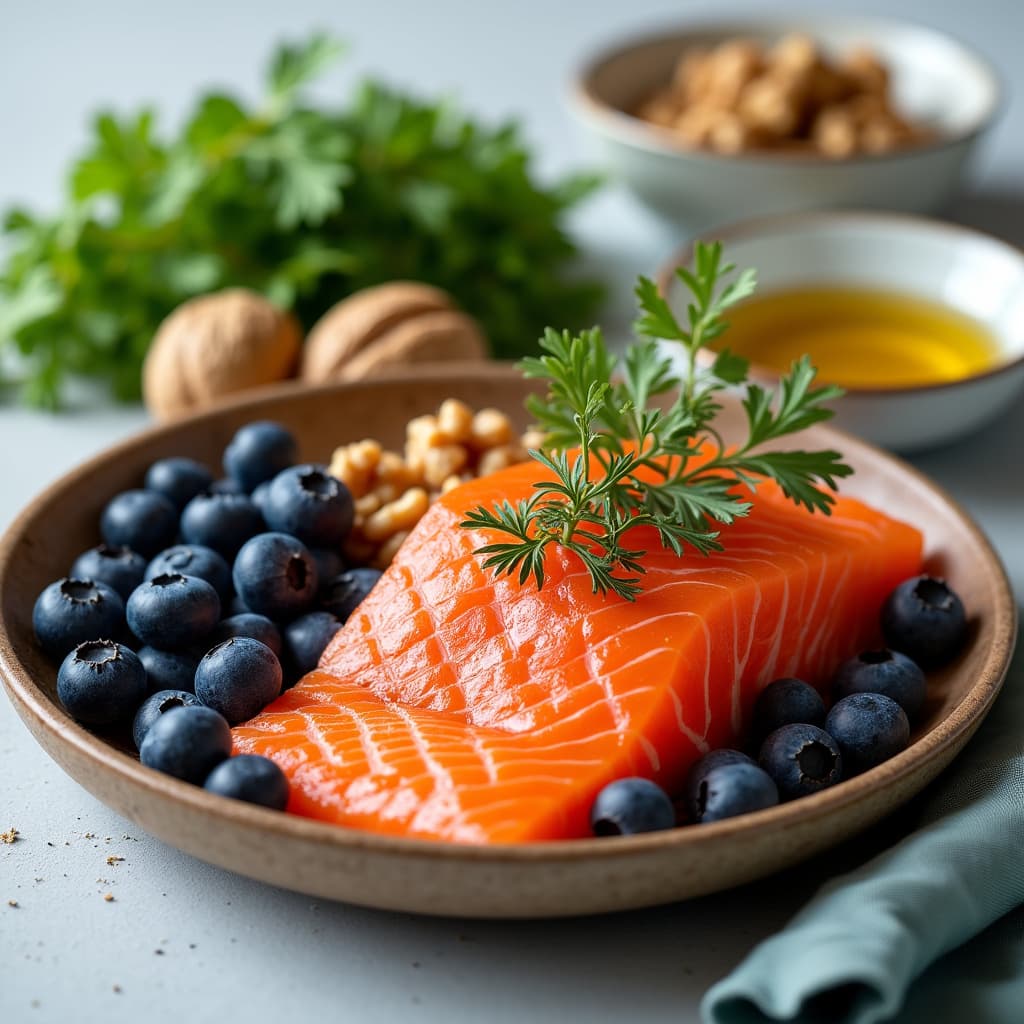
Neuroinflammation, inflammation in the brain and central nervous system, is no longer considered a minor footnote in cognitive health research. It is now recognized as a central driver of depression, anxiety, cognitive decline, and neurodegenerative diseases including Alzheimer's and Parkinson's.
What you eat directly affects the level of inflammation in your brain. The blood-brain barrier is not as impermeable as once thought, and systemic inflammation from poor diet creates measurable changes in brain chemistry, neural signaling, and neuroplasticity.
The research on diet and brain inflammation has grown significantly in the last decade. These are the foods with the strongest evidence.
Why the Brain Is Especially Vulnerable to Inflammation
The brain consumes roughly 20% of the body's total oxygen and energy despite representing only 2% of body weight. This intense metabolic activity makes it particularly susceptible to oxidative stress, which drives inflammation.
Microglia, the brain's resident immune cells, are in a state of constant surveillance. When they detect threats, whether from infection, toxins, or systemic inflammatory signals, they activate and release pro-inflammatory cytokines. Normally this is protective. When it becomes chronic, driven by poor diet, sedentary behavior, sleep deprivation, or gut dysbiosis, these same microglia begin damaging healthy neural tissue.
The Dietary Inflammatory Index (DII) measures how diet affects systemic inflammation. High-DII diets (lots of processed foods, refined carbs, trans fats) are associated with worse cognitive test scores, higher rates of depression, and faster cognitive aging in large population studies.
Conversely, low-DII diets rich in polyphenols, omega-3s, and fiber are associated with lower CRP in cerebrospinal fluid, preserved hippocampal volume, and slower progression of cognitive decline.
Top Anti-Inflammatory Foods for Brain Health
1. Fatty Fish (Salmon, Sardines, Mackerel)
The brain is about 60% fat by dry weight, and DHA is the dominant structural fat in neural tissue. Every neuron's membrane is partially made of DHA. Without adequate DHA, membranes become rigid, signaling becomes less efficient, and inflammatory responses increase.
Is salmon anti-inflammatory? The short answer is yes, and particularly for brain health. DHA from fatty fish directly reduces microglial activation and neuroinflammation. A 2021 study in Neurology found that people with higher blood DHA levels had significantly larger hippocampal volume, the brain region most affected by early Alzheimer's pathology.
Target: 2-3 servings of fatty fish per week, or a DHA-focused fish oil supplement for those who do not eat fish.
2. Blueberries and Berries
Blueberries contain some of the highest concentrations of anthocyanins of any commonly eaten food. Anthocyanins cross the blood-brain barrier (unlike many polyphenols) and accumulate in regions critical to learning and memory, particularly the hippocampus and cerebral cortex.
A landmark study at Tufts University gave older adults with mild cognitive impairment blueberry powder equivalent to one cup of fresh blueberries per day. After 16 weeks, the blueberry group showed significantly improved memory test scores and faster neural processing compared to placebo.
The mechanism is primarily anti-inflammatory: anthocyanins suppress microglial NF-kB activation and reduce levels of IL-1 and TNF-alpha in neural tissue.
Daily consumption of any dark berries (blueberries, blackberries, strawberries, raspberries, cherries) is one of the most evidence-supported dietary strategies for brain health.
3. Extra Virgin Olive Oil
Oleocanthal, the phenolic compound that gives fresh olive oil its characteristic throat sting, inhibits COX-1 and COX-2 enzymes in the brain, the same targets as ibuprofen. Oleocanthal also appears to enhance the brain's clearance of amyloid-beta, the protein aggregate central to Alzheimer's disease.
A 2019 study at Temple University found that mice on an oleocanthal-rich diet showed significantly lower neuroinflammation and fewer amyloid plaques than controls. Human observational data consistently shows Mediterranean diet adherents (high olive oil consumption) have lower rates of cognitive decline and dementia.
Critically, oleocanthal is found only in unfiltered extra virgin olive oil, not refined olive oil or most commercial blends. Look for oils with a clear harvest date and a peppery finish when tasting, which indicates high oleocanthal content.
4. Turmeric and Curcumin
Curcumin's anti-inflammatory effects extend specifically to the brain. It crosses the blood-brain barrier, reduces beta-amyloid aggregation, and suppresses microglial activation. A 2018 UCLA study found that people taking bioavailable curcumin for 18 months showed significantly less amyloid and tau accumulation in brain scans and better memory test performance than placebo.
The bioavailability issue discussed in is turmeric anti-inflammatory is especially important here. Standard turmeric powder with poor absorption does not deliver enough curcumin to the brain. A bioavailable formulation (or consistent consumption with fat and black pepper) is needed for neurological benefit.
5. Dark Leafy Greens
Spinach, kale, arugula, collards, and chard provide a constellation of brain-protective compounds: vitamin K (essential for sphingolipid synthesis in brain tissue), folate (critical for methylation and neurotransmitter production), lutein, and zeaxanthin.
A Rush University study tracking older adults found that eating one serving of leafy greens daily was associated with cognitive aging equivalent to being 11 years younger, compared to those eating no leafy greens. The effect was attributed to vitamin K, lutein, and beta-carotene's combined anti-inflammatory and neuroprotective activity.
6. Walnuts
Walnuts contain the plant omega-3 ALA along with polyphenols and vitamin E. Among tree nuts, walnuts have the highest total antioxidant content. They specifically reduce oxidative stress in the hippocampus, the region governing memory formation.
UCLA research found that adults who reported eating walnuts scored higher on cognitive function tests across all age and demographic groups. A separate analysis of over 15,000 adults found walnut consumption associated with lower depression scores, consistent with the brain inflammation connection.
7. Green Tea
Is green tea anti-inflammatory? Yes, through several distinct mechanisms. EGCG (epigallocatechin gallate), the primary catechin in green tea, reduces oxidative stress in brain tissue, suppresses microglial activation, and appears to protect dopaminergic neurons relevant to Parkinson's disease.
L-theanine, the amino acid unique to green tea, modulates neurotransmitter activity and has shown direct anxiolytic and anti-inflammatory effects in brain research. Unlike caffeine alone, the combination of caffeine and L-theanine in green tea produces focused alertness without the cortisol spike that drives neuroinflammation.
2-3 cups of green tea daily appears to be the effective range in observational studies.
8. Fermented Foods
The gut-brain axis is a bidirectional communication system, and gut dysbiosis (imbalanced gut bacteria) is now recognized as a driver of neuroinflammation through increased intestinal permeability and systemic inflammatory signaling reaching the brain.
Fermented foods including kefir, yogurt, kimchi, sauerkraut, and miso contain live bacteria that support a diverse microbiome. Research shows microbiome diversity correlates inversely with brain inflammatory markers in humans.
A 2021 Stanford study found that a high-fermented food diet over 10 weeks increased microbiome diversity and significantly reduced 19 inflammatory cytokines including IL-6, compared to a high-fiber control group.
9. Dark Chocolate (70% or Higher Cocoa)
Cacao contains flavanols that improve cerebral blood flow, reduce neuroinflammation, and support BDNF (brain-derived neurotrophic factor) production. BDNF is the primary growth factor for neurons and is suppressed by chronic inflammation.
A 2017 study in Nature Neuroscience found that cocoa flavanols improved memory and hippocampal function in older adults over 3 months. The effect was not seen with low-flavanol chocolate.
The is dark chocolate anti-inflammatory article covers the full evidence base.
10. Eggs
Egg yolks are the richest dietary source of choline, a nutrient that is a precursor to acetylcholine, a neurotransmitter critical for memory and learning. Choline deficiency accelerates brain aging and is common in people who avoid eggs.
Eggs also contain lutein and zeaxanthin (same as leafy greens, just in the yolk), phospholipids that support neural membrane integrity, and DHA in modest amounts. The inflammation question around eggs is nuanced (see is eggs inflammatory) but in the context of brain health, the benefits clearly outweigh concerns for most people.
Foods That Cause Brain Inflammation
Just as important as what to eat is what to avoid. These foods consistently score high on inflammatory indices and are specifically associated with poor brain health outcomes:
Refined sugar and high-fructose corn syrup: Dietary sugar is among the strongest drivers of neuroinflammation in animal studies. The sugar and inflammation breakdown covers the mechanisms in detail.
Trans fats and industrial seed oils: Found in processed foods and many fast food items. Trans fats impair neuronal membrane function. Seed oils and inflammation covers the omega-6 problem.
Ultra-processed foods: The link between ultra-processed food consumption and depression risk, cognitive decline, and neuroinflammation appears in multiple large cohort studies. How ultra-processed foods drive chronic inflammation has the full breakdown.
Excessive alcohol: Alcohol is directly neurotoxic at high doses and drives neuroinflammation via gut permeability and cytokine production. See alcohol and inflammation.
A Sample Day of Brain Anti-Inflammatory Eating
Breakfast: Scrambled eggs with spinach and turmeric (fat + black pepper for absorption), a handful of blueberries, green tea.
Lunch: Salmon salad over arugula with olive oil and lemon, walnuts on top.
Snack: Dark chocolate (1-2 squares, 85% cocoa) and a handful of mixed berries.
Dinner: Sardines over whole grain pasta with olive oil, garlic, kale, and cherry tomatoes. Small serving of kefir or yogurt as dessert.
This day consistently scores strongly negative on the DII, covers all the key brain-protective compounds, and requires no exotic ingredients.
FAQ
Does diet actually affect mental health through inflammation? Yes. A 2019 meta-analysis in Molecular Psychiatry found that high-DII diets (pro-inflammatory eating patterns) were significantly associated with depression risk across 11 large cohort studies. The mechanism runs through neuroinflammation, microbiome disruption, and tryptophan metabolism.
Which foods are worst for brain inflammation? Refined sugar, trans fats, ultra-processed foods, and excess alcohol cause the most consistent neuroinflammation in research. These impair the blood-brain barrier, activate microglia, and suppress BDNF production.
Does the MIND diet help brain inflammation? Yes. The MIND diet (Mediterranean-DASH Intervention for Neurodegenerative Delay) specifically targets brain health through anti-inflammatory food patterns. A Rush University trial found that strong MIND diet adherence reduced Alzheimer's risk by up to 53%.
How quickly do brain benefits from diet appear? Cognitive benefits from polyphenol-rich diets show up in controlled trials at 12-16 weeks. Structural changes (BDNF, hippocampal volume) require longer sustained dietary changes, typically 6-18 months.
Is fish oil as good as eating fish for brain health? Fish oil supplements can be effective, especially for DHA, but whole fish also provides astaxanthin, protein, selenium, and other cofactors not in supplements. The most complete benefits come from 2-3 servings of fatty fish per week plus a DHA supplement if needed.
Bottom Line
The brain is uniquely vulnerable to chronic inflammation, and diet is one of the most modifiable factors controlling neuroinflammation. Fatty fish for DHA, berries for anthocyanins, extra virgin olive oil for oleocanthal, leafy greens for vitamin K and lutein, and fermented foods for microbiome health are the foundation of a brain-protective eating pattern.
These are not exotic or expensive foods. They are the staples of what researchers consistently identify as the healthiest dietary patterns for long-term cognitive function.
Track how your daily food choices score for brain inflammation with the Inflamous app for personalized daily feedback on your diet's impact.