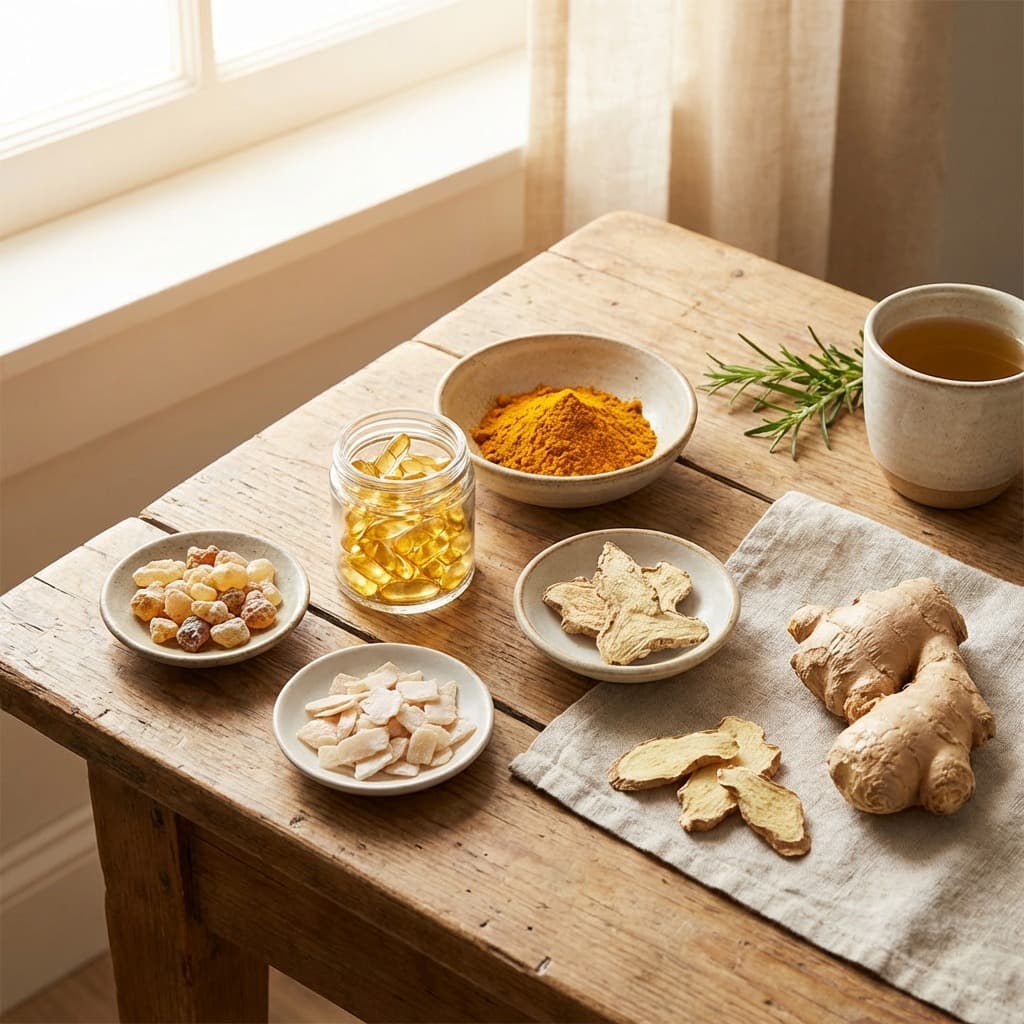
Back pain is one of the most common reasons people seek out natural alternatives to NSAIDs. Whether it's lower back pain from sitting all day, disc-related pain, muscle spasms, or inflammatory arthritis of the spine, the right supplements can meaningfully reduce inflammation at the source.
This guide ranks the best anti inflammatory supplements for back pain by the quality and quantity of the evidence — not by marketing claims.
Why Inflammation Is Central to Back Pain
Most back pain has an inflammatory component, even when it starts mechanically. A muscle tear triggers an immune response. A herniated disc releases inflammatory chemicals that irritate nearby nerves. Arthritis of the facet joints involves chronic NF-kB-driven inflammation. Ankylosing spondylitis is a full inflammatory disease affecting the spine.
Anti inflammatory interventions — whether dietary, supplemental, or pharmaceutical — address this inflammatory driver. The question is how effectively each supplement does it.
The Best Anti Inflammatory Supplements for Back Pain
1. Fish Oil (Omega-3 Fatty Acids)
Fish oil is the most evidence-backed natural anti inflammatory supplement overall, and it has specific relevance for back pain.
How it works: EPA and DHA (the active omega-3s in fish oil) compete with arachidonic acid for inflammatory enzyme pathways. Higher omega-3 status means the body produces less prostaglandin E2 and leukotriene B4 — key mediators of back pain and nerve pain.
The research:
- A 2006 study in the journal Surgical Neurology had 250 patients with non-surgical neck or back pain take 1200mg/day of omega-3s. After 75 days, 59% stopped their prescription NSAIDs, and 60% reported significant pain improvement.
- Multiple meta-analyses confirm omega-3 supplementation reduces CRP, IL-6, and TNF-alpha — the key inflammatory cytokines in musculoskeletal pain.
- The benefit is dose-dependent. Higher EPA+DHA (2-4g/day) shows stronger effects than low-dose products.
Dose for back pain: 2-4g EPA+DHA per day. Look at the EPA+DHA content on the label, not the total fish oil gram count (a 1000mg fish oil capsule might contain only 300mg EPA+DHA).
Best forms: Triglyceride form fish oil absorbs 70% better than ethyl ester form. Look for rTG (re-esterified triglyceride) products, or eat fatty fish (salmon, mackerel, sardines) 3-4x per week.
Timeline: 6-12 weeks for meaningful effects on inflammatory markers.
Inflamous inflammation score: -3 (strongly anti inflammatory)
2. Turmeric/Curcumin
Curcumin targets NF-kB — the master switch that activates hundreds of inflammatory genes involved in back pain, disc degeneration, and spinal arthritis.
How it works: Curcumin simultaneously inhibits NF-kB activation, COX-2 enzyme activity, and 5-LOX (lipoxygenase) — three parallel inflammatory pathways. This multi-target approach is one reason it performs well across different types of back pain.
The research:
- A 2021 systematic review found curcumin supplementation significantly reduced pain and improved function in musculoskeletal disorders including low back pain and OA.
- A 2016 RCT comparing curcumin to ibuprofen in knee OA found comparable outcomes on pain scores and function — suggesting real-world relevance for joint-adjacent inflammation.
- Disc degeneration research: curcumin reduces the inflammatory cytokines (IL-1β, TNF-α) specifically implicated in nucleus pulposus degeneration — the core mechanism of degenerative disc disease.
Dose: 400-600mg curcumin 3x/day (1200-1800mg total) from a bioavailable formulation. Standard turmeric powder without piperine delivers negligible amounts.
Best forms for back pain:
- Curcumin with piperine (BioPerine): 2000% increase in absorption
- Phospholipid-bound curcumin (Meriva, CurcuWIN): superior absorption without piperine
- Nano-formulated curcumin: highest bioavailability, emerging category
Timeline: 4-8 weeks for consistent effect.
Inflamous inflammation score: -3 (strongly anti inflammatory with proper formulation)
3. Boswellia Serrata
Boswellia deserves special attention for back pain because it targets 5-LOX — a pathway that specifically drives spinal nerve inflammation — rather than COX-2 like most other supplements and NSAIDs.
How it works: The active compound AKBA (acetyl-11-keto-beta-boswellic acid) inhibits 5-LOX, which reduces leukotriene production. Leukotrienes are particularly important mediators of nerve root inflammation — which is a major mechanism in sciatica and radiculopathy (nerve pain radiating from the spine).
The research:
- A 2011 RCT found 100mg/day of Boswellia extract reduced knee OA pain and stiffness within 7 days — faster onset than most supplements.
- A 2020 review of 13 RCTs found Boswellia significantly improved both pain and function in OA patients.
- Anecdotal and preliminary evidence suggests particular benefit for nerve-adjacent back pain (sciatica pattern) given its 5-LOX mechanism.
Dose: 300-500mg standardized extract (65%+ boswellic acids) 2-3x daily.
Best forms: Products standardized to AKBA content (typically 10-30% AKBA) are more reliable than generic boswellia. AprèsFlex (Aflapin) is a patented form with enhanced AKBA delivery.
Timeline: Can show early effects within 7-14 days; optimal results at 4-8 weeks.
4. Magnesium
Magnesium is often overlooked in back pain discussions but has a meaningful role in both muscle inflammation and nerve signal regulation.
How it works:
- Magnesium is a cofactor for over 300 enzymatic reactions, including those that regulate muscle contraction and relaxation
- Magnesium deficiency amplifies pain signaling via NMDA receptor hypersensitivity — which makes nerve-related back pain feel worse
- It also supports ATP production, which is necessary for muscle recovery after strain
The research:
- Studies consistently show lower magnesium levels in people with chronic pain conditions
- A 2017 review found magnesium supplementation reduced pain intensity in various chronic pain conditions
- For back pain specifically, magnesium's muscle-relaxing properties may reduce paraspinal muscle spasm, a common contributor to acute low back pain
Dose: 300-400mg/day elemental magnesium. Timing matters — take at night (also supports sleep, which is critical for pain recovery).
Best forms:
- Magnesium glycinate: best absorbed, least GI side effects
- Magnesium malate: good for muscle pain specifically
- Avoid magnesium oxide: poorly absorbed (~4% bioavailability)
Timeline: 3-4 weeks for consistent effect; some people notice improved muscle recovery within days.
5. Vitamin D
Vitamin D deficiency is epidemic (estimates suggest 41% of US adults are deficient) and strongly associated with chronic back pain in multiple large population studies.
How it works:
- Vitamin D receptors are present in muscle cells, bone cells, and immune cells throughout the spine
- Deficiency impairs bone density (vertebral and facet joint health), muscle strength, and immune regulation
- Vitamin D modulates several inflammatory pathways, including reducing IL-17 production — an inflammatory cytokine elevated in ankylosing spondylitis and other spinal inflammatory diseases
The research:
- A 2019 meta-analysis found significant correlation between vitamin D deficiency and low back pain
- RCTs show supplementation improves back pain outcomes in deficient patients — the effect is largest in those who start with very low levels
- Particularly important for anyone with inflammatory spinal disease (ankylosing spondylitis, psoriatic arthritis)
Dose: Get tested first (25-OH vitamin D blood test). Target range is 40-60 ng/mL. Typical deficient people need 2000-4000 IU/day to normalize; severe deficiency may require 5000+ IU temporarily.
Always pair with: Vitamin K2 (MK-7 form), which directs calcium to bones rather than arteries. D3 + K2 is the standard combination.
Timeline: 8-12 weeks to meaningfully increase serum levels.
6. Collagen (Type II)
Undenatured type II collagen (UC-II) has an interesting mechanism for reducing joint-driven back pain — it works through immune tolerance rather than direct anti inflammatory effects.
How it works: Small amounts of undenatured collagen, when taken orally, interact with immune cells in the gut lining. This appears to "train" the immune system to reduce its attack on cartilage tissue — relevant for spinal facet joint arthritis and disc degeneration.
The research:
- A 2012 multi-center trial found UC-II outperformed glucosamine + chondroitin for joint pain and mobility
- Effects are most pronounced in osteoarthritic and inflammatory joint conditions
- Research is more limited for disc-related back pain specifically
Dose: 40mg/day undenatured type II collagen (UC-II form). Note: hydrolyzed collagen peptides (the common type in collagen powders) work through a different mechanism — they provide amino acid building blocks, not immune tolerance.
Best form: UC-II at 40mg/day for joint-specific back pain. Hydrolyzed collagen at 10-15g/day for general connective tissue support.
7. White Willow Bark
White willow bark was the original aspirin — it contains salicin, which the body converts to salicylic acid, the active anti inflammatory compound. It has documented use for back pain stretching back to ancient Egypt.
How it works: Salicylate compounds inhibit COX enzymes (same mechanism as aspirin), reducing prostaglandin production and associated pain and inflammation.
The research:
- A 2000 RCT found white willow bark extract (120mg salicin/day) significantly reduced low back pain compared to placebo — with effects comparable to low-dose rofecoxib (a COX-2 inhibitor pharmaceutical, since withdrawn from market)
- Another RCT found 240mg/day salicin outperformed placebo for acute low back pain
Dose: 120-240mg salicin per day from standardized extract.
Caution: Similar contraindications to aspirin — avoid if taking blood thinners, have aspirin sensitivity, or active GI ulcers. Not for children (Reye's syndrome risk).
8. Devil's Claw
Devil's claw (Harpagophytum procumbens) is an African plant with specific traditional use for back pain and arthritis. Its active compound, harpagoside, inhibits both COX-2 and 5-LOX.
The research:
- A 2004 systematic review found devil's claw extract significantly reduced low back pain compared to placebo in three RCTs
- A 2003 trial comparing devil's claw to rofecoxib found comparable analgesic effects for lower back pain
- A 2007 European herbal monograph affirmed its evidence for back pain
Dose: 50-100mg harpagoside per day (look for this standardized content on the label).
Caution: May interact with blood thinners and some cardiac medications. Avoid with peptic ulcers (stimulates gastric acid).
What to Avoid
Some popular products have weak or no evidence for back pain:
- Glucosamine alone: Evidence is inconsistent; benefits appear limited to people already showing benefit at 3 months
- Chondroitin alone: Similar inconsistency; combination with glucosamine performs better in some trials
- Generic "inflammation blend" products: Often underdosed across many compounds; better to pick 2-3 well-dosed specific supplements
- High-dose antioxidant combinations post-exercise: Paradoxically, very high-dose vitamin C and E can blunt the adaptive inflammatory response needed for muscle repair
How to Stack for Back Pain
A practical two-supplement starting stack for inflammatory back pain:
Core stack (months 1-3):
- Fish oil: 2-4g EPA+DHA daily
- Curcumin: 400-600mg 3x/day (bioavailable form with piperine or phospholipid complex)
Add if needed:
- Boswellia: 300-500mg 2-3x/day (especially for nerve-adjacent pain or sciatica)
- Magnesium glycinate: 300-400mg at night (especially if muscle spasm or poor sleep)
- Vitamin D: get tested and supplement to 40-60 ng/mL range
Diet foundation: Supplements work best alongside an anti inflammatory diet. See anti inflammatory foods for back pain for specific dietary recommendations.
The Dietary Inflammatory Index is the underlying framework — your overall diet quality matters as much as any single supplement.
FAQ
Q: What is the fastest-acting anti inflammatory supplement for back pain? Boswellia has shown the fastest onset in clinical trials — some studies show pain reduction within 7 days. White willow bark and high-dose fish oil can also provide relatively quick effects (days to 2 weeks for acute flares).
Q: Can I take anti inflammatory supplements with ibuprofen or naproxen? Some supplements have additive blood-thinning effects (fish oil, turmeric, white willow bark). Avoid combining high doses of these with NSAIDs without medical supervision. Boswellia and magnesium are generally safe to combine with NSAIDs.
Q: How long should I take anti inflammatory supplements for back pain? For chronic back pain, consistent use over 3-6 months typically produces the best results. These are not fast-acting pain medications — they work by shifting the inflammatory environment over time.
Q: Are anti inflammatory supplements safe for long-term use? Fish oil, curcumin, magnesium, and vitamin D are all well-tolerated for long-term use at therapeutic doses. Boswellia and devil's claw have been used for years in studies without major safety signals. Always inform your doctor about supplements, especially if on medications.
Q: What's the best supplement for sciatica specifically? Boswellia's 5-LOX inhibition is theoretically most relevant for nerve-adjacent inflammation like sciatica. Fish oil also has specific evidence for neuropathic pain pathways. Magnesium helps with nerve hypersensitivity. These three together form a targeted sciatica-focused stack.
Bottom Line
The evidence supports fish oil, curcumin, and boswellia as the strongest starting trio for inflammatory back pain. Magnesium addresses the muscle and nerve components. Vitamin D addresses the foundational deficiency most back pain sufferers have. White willow bark and devil's claw are evidence-backed herbal options for those who prefer plant-based approaches.
None of these replace medical care for serious back conditions. But as part of an anti inflammatory lifestyle — combined with the right foods, movement, and sleep — they can meaningfully reduce the inflammatory load driving your pain.
See the Inflamous app to track how your diet's Dietary Inflammatory Index score correlates with your inflammation symptoms over time.
Also see: