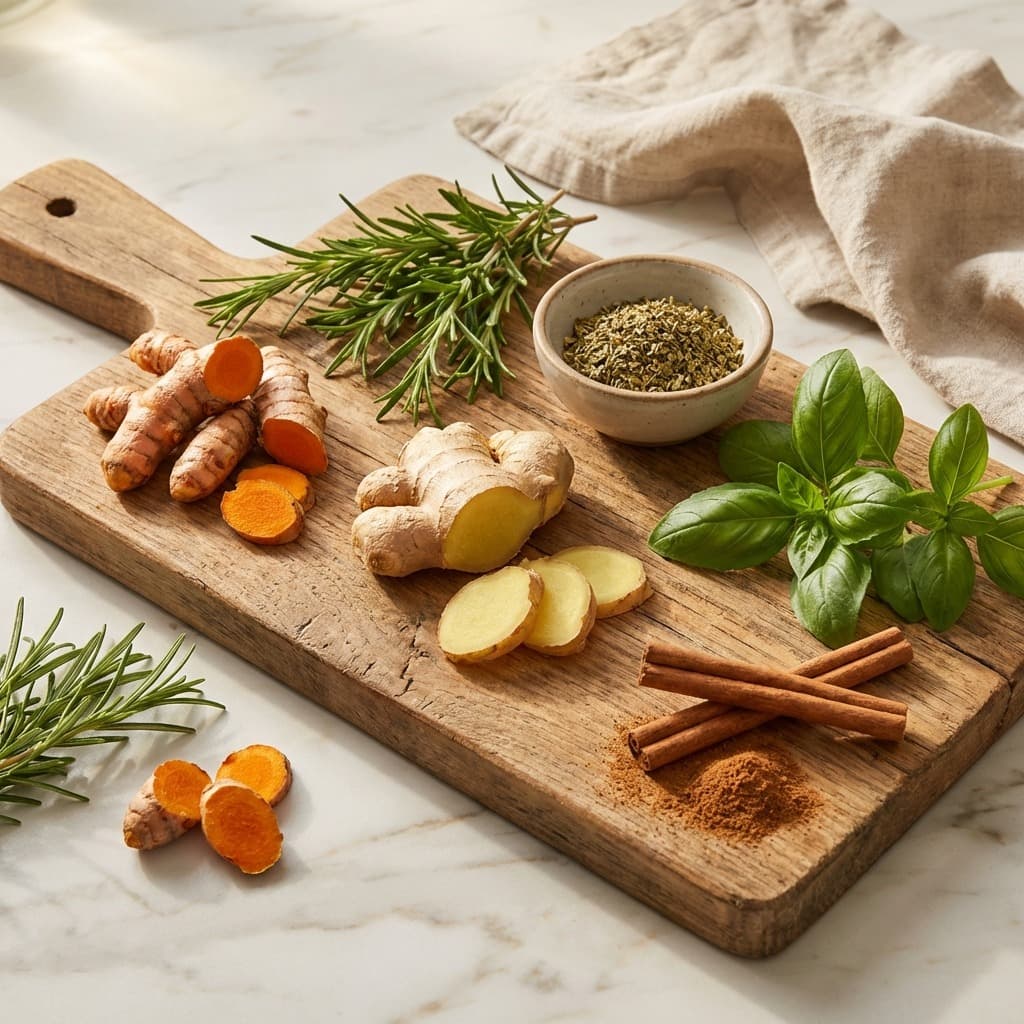
Herbs have been used to manage inflammation for thousands of years, but not all of them have the science to back up the tradition. Some are genuinely powerful — comparable to low-dose NSAIDs in specific contexts. Others are mostly folklore.
This guide ranks the 10 best anti inflammatory herbs by the strength and quality of the evidence, explains what each one actually does in the body, and gives you practical ways to use them.
How Anti Inflammatory Herbs Work
Herbs fight inflammation through several distinct mechanisms:
- NF-kB inhibition: Blocking the "master switch" that turns on hundreds of inflammatory genes (turmeric, boswellia, rosemary)
- COX-2 inhibition: Blocking the enzyme that produces pain-causing prostaglandins — the same target as ibuprofen (ginger, cloves, holy basil)
- Free radical neutralization: Stopping oxidative stress before it triggers immune responses (oregano, thyme, rosemary)
- Gut microbiome modulation: Feeding beneficial bacteria that produce short-chain fatty acids, which reduce systemic inflammation (garlic, fenugreek)
The most powerful anti inflammatory herbs hit multiple pathways at once. Turmeric and ginger, for example, work on both NF-kB and COX-2.
The 10 Best Anti Inflammatory Herbs, Ranked
1. Turmeric (Curcuma longa)
Turmeric is the most researched natural anti inflammatory compound in existence. Its active compound, curcumin, has over 3,000 published studies, and it consistently outperforms placebo across a wide range of inflammatory conditions.
What the science shows:
- A 2022 meta-analysis of 50 RCTs found curcumin significantly reduced CRP, IL-6, TNF-alpha, and MDA (oxidative stress marker)
- In knee osteoarthritis, curcumin matched ibuprofen for pain and function in a 2016 RCT — with fewer GI side effects
- Evidence for benefit in rheumatoid arthritis, inflammatory bowel disease, metabolic syndrome, and depression (inflammation-related)
The bioavailability problem and how to solve it: Curcumin alone is poorly absorbed. Standard turmeric powder from your spice rack delivers less than 1% absorption. To fix this:
- Always pair with black pepper (piperine increases absorption by 2000%)
- Consume with dietary fat (curcumin is fat-soluble)
- Use supplements with phospholipid complexes (Meriva, CurcuWIN) for targeted use
Best culinary uses: Golden milk, curries, soups, anti inflammatory smoothies, eggs scrambled with turmeric and pepper
Inflamous inflammation score: -3 (strongly anti inflammatory when prepared correctly)
2. Ginger (Zingiber officinale)
Ginger contains gingerols (fresh ginger) and shogaols (dried or heated ginger) that inhibit both COX-1 and COX-2 — a broader target than many pharmaceutical anti-inflammatories.
What the science shows:
- A 2015 systematic review found ginger supplementation significantly reduced CRP
- In a 2020 double-blind RCT, 1.5g of ginger daily for 12 weeks significantly improved inflammatory markers in rheumatoid arthritis patients
- Shows promising effects on exercise-induced muscle damage and delayed onset muscle soreness (DOMS)
- May reduce nausea, which has an inflammatory component via gut mast cell activation
Fresh vs. dried vs. supplement: Fresh gingerols have higher anti-nausea activity. Shogaols (from dried/heated ginger) may have stronger systemic anti inflammatory effects. Supplements with standardized gingerol content are most reliable for therapeutic use.
Best culinary uses: Ginger tea, stir-fries, anti inflammatory smoothies, marinades, curries
Inflamous inflammation score: -2 (anti inflammatory)
3. Boswellia (Boswellia serrata)
Boswellia — also called Indian frankincense — is one of the most compelling herbs for joint inflammation specifically. Unlike turmeric, its mechanism is primarily through 5-LOX inhibition (blocking leukotrienes) rather than COX-2.
What the science shows:
- Multiple RCTs in knee osteoarthritis show significant reductions in pain, stiffness, and walking distance impairment
- A 2011 Phytomedicine study found boswellia extract (100mg/day) produced clinically meaningful improvements in OA pain within 7 days
- Shows promise in inflammatory bowel disease (Crohn's, ulcerative colitis)
- The compound AKBA (acetyl-11-keto-beta-boswellic acid) is considered the most potent anti inflammatory component
Important note: Boswellia is rarely used as a food herb. It's primarily taken as a supplement (300-500mg standardized extract, 2-3x daily). You'll occasionally see it in teas or herbal blends.
Best use: Supplement form for joint inflammation. Look for products standardized to 65%+ boswellic acids.
Inflamous inflammation score: N/A as a food (supplement-only)
4. Rosemary (Rosmarinus officinalis)
Rosemary is one of the most potent antioxidant herbs by ORAC score, and its anti inflammatory activity comes from rosmarinic acid and carnosic acid — compounds that suppress NF-kB and protect cell membranes from oxidative damage.
What the science shows:
- Rosemary extract reduces inflammatory markers in cell and animal studies
- Human trials show improved antioxidant status and reduced lipid oxidation with regular consumption
- Particularly relevant to neuroinflammation — early research suggests rosemary compounds may protect against age-related cognitive inflammation
Best culinary uses: Roasted meats, anti inflammatory cooking with olive oil, focaccia, roasted vegetables, herb-marinated fish
Special consideration: Rosemary is also one of the most antioxidant-rich herbs you can add to oils and fats during high-heat cooking — it prevents lipid oxidation that would otherwise generate pro-inflammatory compounds.
Inflamous inflammation score: -1 (anti inflammatory, especially valuable in cooking fats)
5. Oregano (Origanum vulgare)
Oregano is extraordinarily high in polyphenols — higher than most fruits and vegetables. Its primary anti inflammatory compounds are carvacrol and thymol, which inhibit multiple inflammatory pathways.
What the science shows:
- Oregano oil and extract show strong antimicrobial and anti-biofilm activity, reducing infection-driven inflammation
- Carvacrol inhibits COX-2 in cell studies at concentrations achievable through dietary use
- High ORAC score (much higher than blueberries, per gram) suggests significant free radical scavenging capacity
Culinary uses: Pizza sauce, tomato-based dishes, grilled meats, salad dressings, olive oil infusions
Pro tip: Dried oregano is actually more potent than fresh per gram because the drying process concentrates polyphenols. Use generously.
Inflamous inflammation score: -1 (mildly anti inflammatory)
6. Cloves (Syzygium aromaticum)
Cloves have one of the highest antioxidant capacities of any food per gram. Their primary compound, eugenol, is a potent COX-2 inhibitor with analgesic properties.
What the science shows:
- Eugenol shows COX-2 inhibition in vitro and in animal models
- Dental applications of clove oil are validated by strong clinical evidence for pain reduction
- Human dietary studies are limited, but regular consumption associates with lower oxidative stress markers
Culinary uses: Warming spices in chai, holiday baking, curries, pickling brines, rice dishes (1-2 cloves during cooking)
Important: A little goes a long way. Cloves are very strong-flavored. You don't need much for both culinary and anti inflammatory effect.
Inflamous inflammation score: -2 (anti inflammatory)
7. Holy Basil / Tulsi (Ocimum tenuiflorum)
Holy basil is distinct from culinary basil. In Ayurvedic medicine, it's considered an adaptogen — something that helps the body regulate stress responses. Its anti inflammatory properties come from ursolic acid and eugenol.
What the science shows:
- Human RCTs show tulsi reduces cortisol, blood sugar, and inflammatory markers
- A 2012 study found holy basil extract significantly reduced IgE (an immune marker elevated in allergic inflammation)
- The adaptogenic compounds may specifically target stress-driven inflammation — elevated cortisol is a major driver of chronic inflammatory dysregulation
Best culinary uses: Tulsi tea (most common), fresh in Asian dishes, pesto blends
Inflamous inflammation score: -1 (anti inflammatory, especially stress-pathway)
8. Thyme (Thymus vulgaris)
Thyme shares many of oregano's anti inflammatory compounds, including thymol and carvacrol. It's also one of the best herb sources of vitamin K, which plays a role in regulating inflammatory pathways.
What the science shows:
- Thymol inhibits COX-2 and shows antimicrobial activity that reduces infectious inflammation
- Thyme extract shows bronchodilatory and anti inflammatory effects in the respiratory tract — one of the few herbs with clinical evidence specifically for lung inflammation
Culinary uses: Roasted poultry, soups, stews, braised meats, herb blends
Inflamous inflammation score: -1 (mildly anti inflammatory)
9. Garlic (Allium sativum)
Garlic straddles the line between herb and food. Its active compound, allicin, only forms when garlic is crushed or chopped — not when cooked whole.
What the science shows:
- A 2020 meta-analysis confirmed that garlic supplementation significantly reduces CRP and TNF-alpha
- Regular garlic consumption associates with lower cardiovascular inflammation markers in large observational studies
- The prebiotic fibers in garlic feed beneficial gut bacteria (specifically Lactobacillus and Bifidobacterium), which produce short-chain fatty acids that reduce intestinal inflammation
Critical preparation note: Crush or mince garlic and let it sit 10 minutes before cooking. This allows the allicin-producing enzymatic reaction to complete. Heat kills the enzyme before allicin forms if garlic goes directly into a hot pan unchopped.
Inflamous inflammation score: -2 (anti inflammatory)
See also: Is olive oil anti inflammatory? — garlic-infused olive oil is a powerful combination
10. Cinnamon (Cinnamomum verum)
Cinnamon — specifically Ceylon cinnamon (true cinnamon), not Cassia cinnamon — contains cinnamaldehyde and proanthocyanidins that show anti inflammatory effects, particularly relevant to blood sugar-driven inflammation.
What the science shows:
- Multiple meta-analyses confirm cinnamon reduces fasting blood glucose and insulin resistance
- Since post-meal blood sugar spikes trigger inflammatory cytokines, cinnamon's blood sugar effect translates to reduced inflammation
- Cinnamaldehyde inhibits arachidonic acid metabolism, reducing prostaglandin production
Important distinction: Ceylon cinnamon is what you want. Cassia cinnamon (the common type sold in most US stores) is high in coumarin, which can be hepatotoxic at high doses. Ceylon has negligible coumarin.
Culinary uses: Oatmeal, apple dishes, anti inflammatory smoothies, coffee, warm breakfast bowls
Inflamous inflammation score: -1 (anti inflammatory, particularly for metabolic inflammation)
How These Herbs Fit Your Daily Diet
The most powerful anti inflammatory herb strategy is integration, not supplementation. Using these herbs in daily cooking compounds their effects:
Anti-inflammatory spice baseline (use daily):
- Turmeric + black pepper in eggs, soups, rice
- Ginger in tea, stir-fries, smoothies
- Garlic in almost everything savory
- Rosemary and thyme in roasted dishes
Weekly additions:
- Oregano on roasted vegetables and sauces
- Cloves in warming beverages and grain dishes
- Cinnamon in breakfast foods and smoothies
- Holy basil as tulsi tea 2-3x per week
For deeper reading on the anti inflammatory spice guide with recipes, we have a full breakdown with meal pairings. Also see the 15 inflammatory foods to cut to understand what to reduce while increasing these herbs.
Supplements vs. Food Sources
For most herbs, food sources are sufficient for general anti inflammatory support. However, therapeutic doses for specific conditions often require supplementation:
| Herb | Food Form | Supplement Dose | When to Supplement | |------|-----------|-----------------|-------------------| | Turmeric | 1-2 tsp/day (with pepper) | 400-600mg curcumin 3x/day | Arthritis, IBD, metabolic disease | | Ginger | 1-2 inches fresh/day | 500-2000mg/day | Joint pain, nausea, post-exercise | | Boswellia | N/A (not a culinary herb) | 300-500mg 2-3x/day | Joint inflammation, IBD | | Garlic | 2-4 cloves/day | 600-1200mg aged extract | Cardiovascular inflammation | | Cinnamon | 1-2 tsp/day (Ceylon) | 500-2000mg/day | Blood sugar-driven inflammation |
Always use food as your foundation. Supplements fill specific therapeutic gaps.
FAQ
Q: What is the strongest natural anti inflammatory herb? Turmeric (curcumin) has the most research supporting its anti inflammatory effects across the widest range of conditions. For joint-specific inflammation, boswellia is particularly strong. For gut inflammation, ginger and garlic are most evidence-backed.
Q: Can herbs replace ibuprofen or other NSAIDs? For mild chronic inflammation (dietary), herbs are highly effective preventive tools. For acute pain and flares, pharmaceutical NSAIDs still have stronger immediate effects. Some herbs (turmeric, ginger, boswellia) have shown equivalent effects to low-dose NSAIDs in chronic OA when used consistently — but don't stop prescribed medications without medical guidance.
Q: How long do anti inflammatory herbs take to work? Turmeric studies typically show measurable effects at 8-12 weeks of consistent use. Ginger shows faster effects on acute muscle soreness (2-3 days). Garlic's effects on blood markers appear within 4-6 weeks.
Q: Are there any herbs that cause inflammation? Some herbs in excessive doses can stress the liver or kidneys, triggering inflammatory responses. Cassia cinnamon (high coumarin), pennyroyal, comfrey, and kava at high doses have documented hepatotoxic effects. Stick to culinary amounts of the herbs on this list.
Q: Which anti inflammatory herb is best for arthritis? The three with the most evidence specifically for arthritis are: turmeric (curcumin) for both OA and RA, boswellia for OA, and ginger for both. Using all three addresses complementary mechanisms.
Bottom Line
The best anti inflammatory herbs aren't exotic or expensive. Turmeric, ginger, garlic, rosemary, and oregano are in most kitchens already. The key is using them consistently, preparing them correctly (turmeric with pepper, garlic crushed before cooking), and integrating them into your daily meals rather than treating them as occasional additions.
Combined with a broader anti inflammatory diet, these herbs can meaningfully shift your inflammatory baseline over weeks and months.
Track your Dietary Inflammatory Index score with the Inflamous app to see how your herb and food choices affect your personal inflammation score in real time.
Also see: