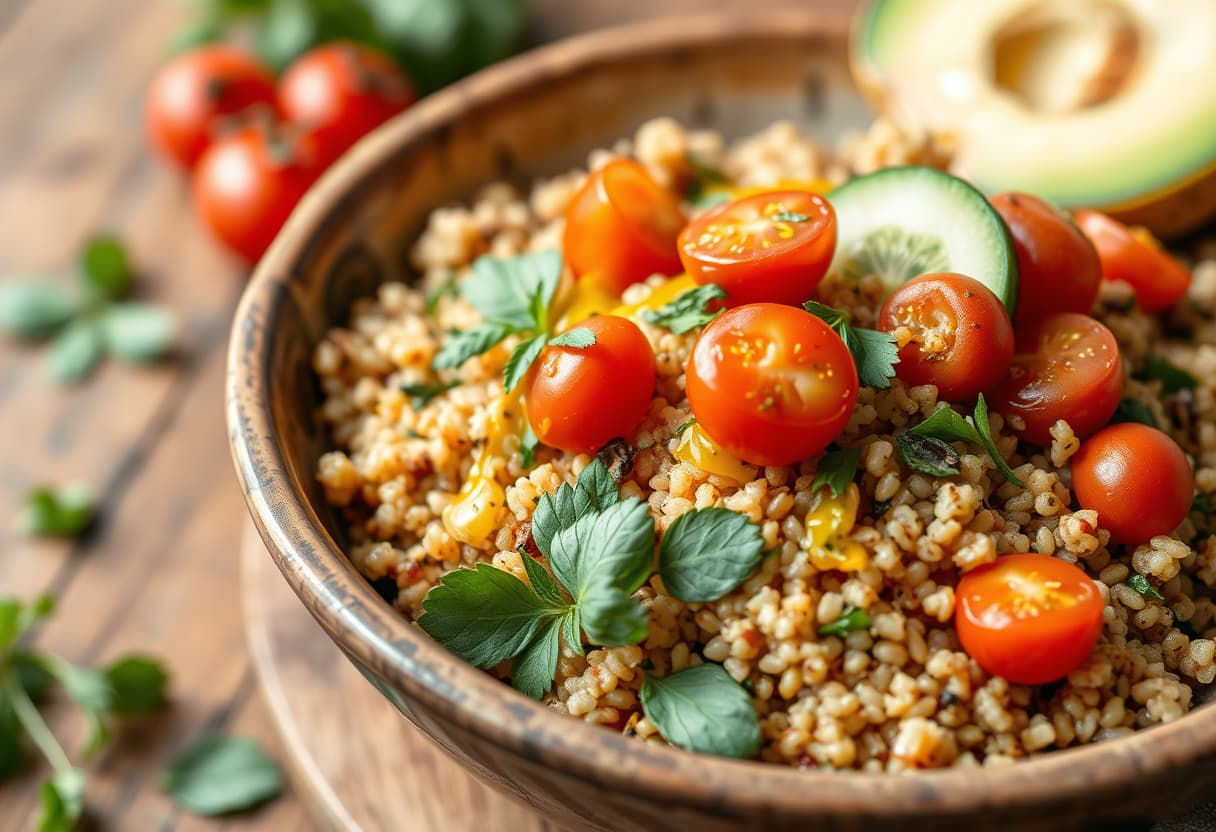
Quinoa earns its status as an anti-inflammatory food through a combination of factors most grains simply cannot match: complete plant protein, high fiber, quercetin, and kaempferol, two flavonoids with potent documented anti-inflammatory activity. It is also naturally gluten-free, which matters for people whose inflammation is aggravated by gluten sensitivity.
The direct answer: yes, quinoa is anti-inflammatory. Its Dietary Inflammatory Index (DII) score is negative (anti-inflammatory), driven by its phytochemical content, fiber, and favorable macronutrient profile. For people replacing refined grains like white rice or white bread, the shift to quinoa can meaningfully reduce daily DII scores.
What Makes Quinoa Anti-Inflammatory?
Quercetin and Kaempferol
These two flavonoids set quinoa apart from most other grains. Quinoa contains roughly 1.36 mg/g of kaempferol and 1.09 mg/g of quercetin on a dry weight basis, concentrations that are competitive with berries and other high-flavonoid foods.
Both compounds work through multiple anti-inflammatory mechanisms:
- Inhibiting the NF-κB signaling pathway, the central regulator of inflammatory gene expression
- Reducing prostaglandin synthesis through COX-2 inhibition, similar to how NSAIDs work but through food
- Scavenging free radicals that trigger oxidative stress-related inflammation
- Suppressing mast cell degranulation, which drives histamine release and allergic inflammation
A 2014 study in Nutrients confirmed that the quercetin content in quinoa is bioavailable, meaning it survives cooking and reaches the bloodstream in meaningful concentrations. This is not always the case with plant flavonoids, making quinoa a particularly reliable source.
Fiber and Gut Health
One cup of cooked quinoa contains about 5 grams of dietary fiber, a combination of soluble and insoluble types. Soluble fiber ferments in the colon to produce short-chain fatty acids (SCFAs) like butyrate, propionate, and acetate. These SCFAs are the gut microbiome's preferred fuel source and have direct anti-inflammatory effects on the intestinal lining.
Butyrate in particular suppresses NF-κB activation in colonocytes and reduces intestinal permeability, the "leaky gut" mechanism that allows bacterial fragments to enter the bloodstream and trigger systemic inflammation. A higher-fiber diet is one of the most consistent dietary predictors of lower circulating CRP and IL-6 in population studies.
See how fiber fits into the bigger inflammation picture in our guide on fiber and inflammation.
Complete Protein
Quinoa is one of the few plant foods containing all nine essential amino acids, including adequate amounts of lysine and methionine, which most plant proteins lack. One cup cooked provides about 8 grams of complete protein.
Adequate protein intake is necessary for producing anti-inflammatory signaling molecules and maintaining immune function. Protein deficiency is associated with elevated inflammatory markers. For vegetarians and vegans trying to reduce inflammation, quinoa's complete protein profile makes it significantly more valuable than incomplete plant proteins like most grains and many legumes.
Magnesium and Manganese
Quinoa is a solid source of magnesium (118 mg per cooked cup, about 30% of daily value) and manganese (1.2 mg per cup). Both minerals play roles in the anti-inflammatory response:
Magnesium deficiency is strongly correlated with elevated CRP and IL-6. Studies in populations with low magnesium intake consistently show higher levels of inflammatory markers. Getting magnesium through whole foods like quinoa rather than supplements appears to have a more reliable anti-inflammatory effect, possibly because of cofactors that improve absorption.
Manganese is a component of manganese superoxide dismutase (MnSOD), the primary antioxidant enzyme inside mitochondria. Adequate manganese intake supports the cell's ability to neutralize reactive oxygen species before they trigger inflammatory cascades.
The DII Score for Quinoa
The Dietary Inflammatory Index (DII) assigns values to foods and nutrients based on their relationship to six inflammatory biomarkers: IL-1β, IL-4, IL-6, IL-10, TNF-α, and CRP.
Quinoa's negative DII score is driven by:
| Component | DII Direction | |-----------|--------------| | Fiber | Anti-inflammatory (-) | | Plant protein | Anti-inflammatory (-) | | Quercetin | Anti-inflammatory (-) | | Kaempferol | Anti-inflammatory (-) | | Magnesium | Anti-inflammatory (-) | | Low glycemic load | Anti-inflammatory (-) |
Compared to white rice (essentially neutral to slightly positive DII) or white bread (positive/pro-inflammatory DII due to refined starch), quinoa is a clear upgrade for anyone tracking their inflammatory load. Visit our science page for a deeper look at how the DII is calculated and what it means practically.
Quinoa vs Other Grains for Inflammation
Quinoa vs White Rice
White rice has had most of its fiber and phytochemicals removed during processing. It has a higher glycemic index than quinoa, and its DII contribution is roughly neutral to slightly positive. Replacing white rice with quinoa lowers both the glycemic response (less insulin spike, less inflammatory signaling) and adds meaningful fiber, flavonoids, and complete protein. This swap has practical significance for people managing metabolic inflammation or type 2 diabetes risk. More on rice in our is rice inflammatory guide.
Quinoa vs Brown Rice
Brown rice is considerably better than white rice and also has an anti-inflammatory DII profile. Quinoa still edges it out on protein quality, quercetin/kaempferol content, and magnesium density, but the difference is smaller. Both are good choices for an anti-inflammatory diet.
Quinoa vs Gluten-Containing Grains
For people with celiac disease or non-celiac gluten sensitivity, any gluten-containing grain is a direct inflammatory trigger. Quinoa being naturally gluten-free makes it a safe anchor grain for these individuals. For people without gluten issues, whole wheat also has anti-inflammatory properties from its fiber content, and the quinoa-over-wheat advantage is modest for those people specifically.
How to Get the Most Anti-Inflammatory Benefit from Quinoa
Rinse It Thoroughly
Quinoa has a natural coating of saponins, bitter compounds that can cause mild digestive irritation in some people. Saponins may also slightly impair mineral absorption. Rinsing quinoa in cold water for 1-2 minutes before cooking removes most saponins and improves its nutritional profile.
Pair It Strategically
Quinoa's anti-inflammatory properties stack well with other anti-inflammatory foods:
Mediterranean quinoa bowl: Cooked quinoa, cucumber, cherry tomatoes, kalamata olives, fresh herbs, and olive oil dressing. This combination covers multiple anti-inflammatory food groups simultaneously.
Breakfast porridge: Cook quinoa with almond milk, top with mixed berries, a tablespoon of ground flaxseed, and a pinch of cinnamon. The berries add additional quercetin and anthocyanins, the flax adds omega-3 ALA, and cinnamon has its own anti-inflammatory properties.
Soup thickener: Add cooked quinoa to lentil or vegetable soups. Thickens the soup while adding protein and fiber.
Cooking for Lower Glycemic Impact
Quinoa cooked to a slight firmness (not mushy) has a lower glycemic index than well-cooked, soft quinoa. Cooling cooked quinoa in the refrigerator for several hours before eating increases its resistant starch content, which further reduces glycemic impact and feeds beneficial gut bacteria.
Quinoa and Specific Conditions
Gut Health and IBS
Quinoa is classified as low-FODMAP, meaning it doesn't contain the fermentable fibers that trigger IBS symptoms. This makes it one of the safest grain options for people with IBS who want to eat more fiber without flares. In the anti-inflammatory eating for IBS framework, quinoa serves as a reliable staple. For more, see our anti-inflammatory eating for IBS guide.
Autoimmune Conditions
For people managing autoimmune inflammation, quinoa's combination of complete protein, gluten-free status, and high flavonoid content makes it one of the most recommended grains on elimination protocols like AIP (Autoimmune Protocol). While AIP purists exclude all grains, many practitioners now distinguish quinoa as tolerated by most people even during the elimination phase. Our autoimmune conditions guide covers this in more detail.
Type 2 Diabetes and Metabolic Inflammation
Quinoa's lower glycemic index (around 53, compared to white rice at 72) and complete protein content help moderate post-meal blood sugar responses. Chronic hyperglycemia is itself a driver of systemic inflammation through advanced glycation end products (AGEs). Using quinoa as a substitute for higher-glycemic grains can reduce this pathway of inflammation for people with prediabetes or type 2 diabetes.
Practical Serving Guide
How much? One cup of cooked quinoa (about 185g) per serving. This delivers the fiber and flavonoid content where the research shows benefit.
How often? Daily or near-daily use as a grain substitute is reasonable. There's no evidence of diminishing returns with quinoa at normal food servings.
Best time? Anytime. Quinoa works equally well as a breakfast base, lunch grain bowl ingredient, or dinner side. The resistant starch benefit is greater from cooled quinoa, making leftovers particularly good.
FAQ
Is quinoa more anti-inflammatory than brown rice? Quinoa has a stronger anti-inflammatory profile than brown rice due to its higher quercetin and kaempferol content, complete protein, and greater magnesium density. Brown rice is also anti-inflammatory, but quinoa wins on most relevant metrics.
Can quinoa cause inflammation in some people? Saponins can cause mild gut irritation in sensitive individuals, but thorough rinsing eliminates most of this risk. A small number of people have quinoa-specific sensitivities, but it's not a common inflammatory trigger. If you notice consistent digestive symptoms from quinoa even after rinsing, try a short elimination to see if it's a personal trigger.
Is quinoa a grain or a seed? Botanically, quinoa is a seed (technically a pseudocereal), not a true grain. This is why it has a complete amino acid profile unlike true grains. For practical purposes, it's used as a grain and provides similar culinary function.
Does cooking destroy quinoa's anti-inflammatory compounds? Cooking does reduce some quercetin and kaempferol content (studies show 10-20% losses), but meaningful concentrations survive. Pressure cooking or long boiling times cause greater losses than steaming or standard stovetop cooking with a 2:1 water-to-quinoa ratio.
Is quinoa okay on an anti-inflammatory keto diet? Quinoa is too high in carbohydrates for strict ketogenic diets (about 39g net carbs per cup cooked). If you're doing anti-inflammatory keto, lower-carb options like leafy greens and non-starchy vegetables would replace quinoa. See our anti-inflammatory keto guide for alternatives.
Bottom Line
Quinoa is a genuinely anti-inflammatory food backed by solid evidence. Its combination of quercetin, kaempferol, fiber, complete protein, and magnesium puts it in a different category from most grains. If you're looking to shift your diet toward lower inflammation, using quinoa as your primary grain while reducing white rice and refined grains is one of the higher-leverage switches you can make.
Use the Inflamous app to calculate your daily DII score and see exactly how food swaps like white rice to quinoa change your inflammatory load over time.
This article is for informational purposes only and does not constitute medical advice.