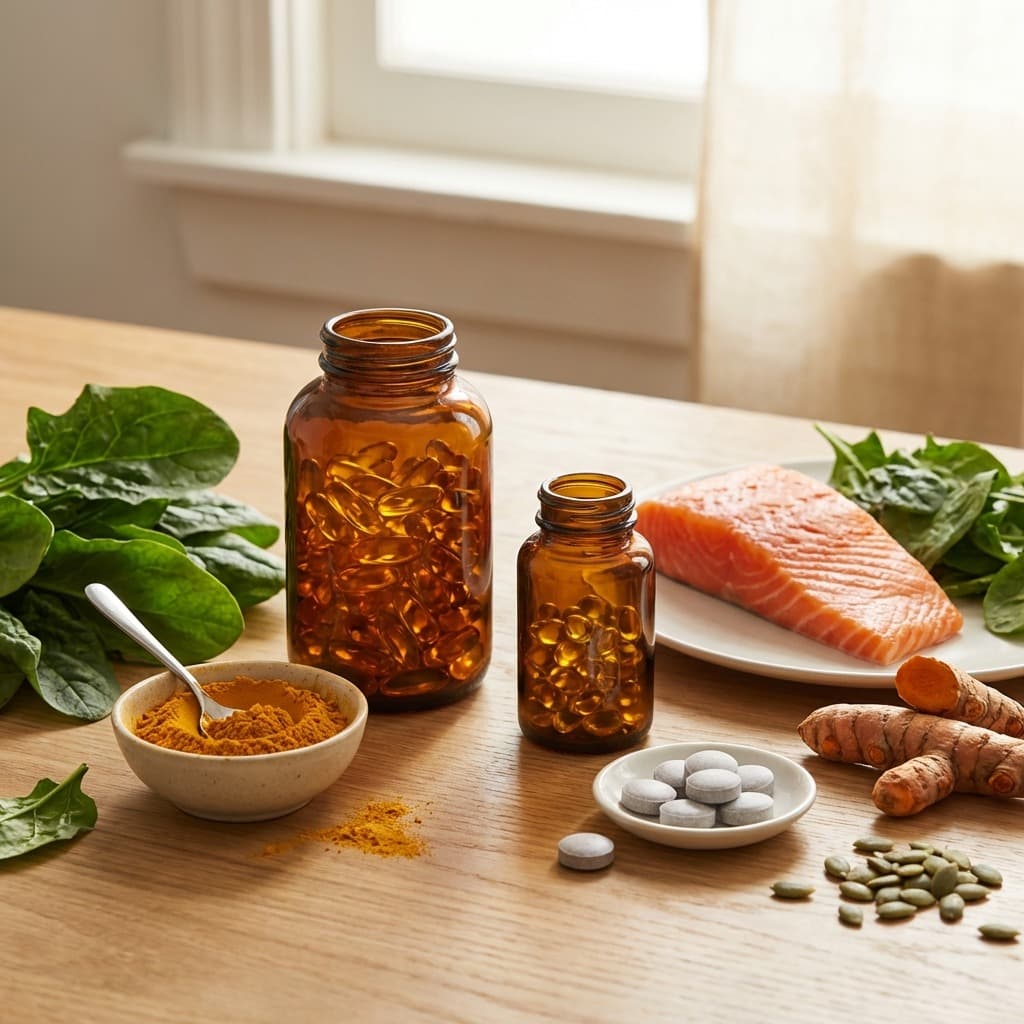
Psoriasis is one of the most visible inflammatory diseases. The plaques on your skin are the surface symptom — underneath, there's chronic immune activation, elevated TNF-alpha, IL-17, and IL-23, and significant systemic inflammation that raises risk for cardiovascular disease, metabolic syndrome, and depression.
Diet and supplements don't replace biologic medications for severe psoriasis. But the research is clear that anti inflammatory interventions — the right supplements, in the right doses — can meaningfully reduce flare frequency, severity, and the inflammatory markers that drive the condition.
This guide ranks the best options by evidence.
Understanding Psoriasis Inflammation
Psoriasis involves overactive T-cells (specifically Th17 cells) that mistakenly attack skin cells, driving rapid keratinocyte proliferation. The key inflammatory mediators are:
- TNF-alpha: A master inflammatory cytokine (also the target of biologic drugs like Humira)
- IL-17A: Drives the keratinocyte proliferation and skin barrier breakdown
- IL-23: Activates Th17 cells
- NF-kB: The transcription factor that turns on inflammatory genes in skin cells
The most effective anti inflammatory supplements for psoriasis target one or more of these pathways.
The Best Supplements, Ranked
1. Fish Oil (Omega-3 Fatty Acids)
Fish oil has more high-quality clinical evidence for psoriasis than any other supplement.
How it works: EPA competes with arachidonic acid (the omega-6 fatty acid that feeds inflammatory cascade) for the same enzymes. Higher EPA:arachidonic acid ratio means less prostaglandin E2 and leukotriene B4 production — both key mediators in psoriatic skin inflammation.
The research:
- A 2014 Cochrane review identified multiple RCTs showing fish oil supplementation reduced psoriasis severity scores (PASI)
- A 2022 systematic review of 15 RCTs found omega-3 supplementation significantly reduced PASI, erythema, and scaling
- Intravenous EPA infusion studies showed dramatic short-term improvements — suggesting the systemic omega-3 ratio matters enormously
- The benefit appears additive with conventional treatments — patients on topicals plus fish oil showed better outcomes than topicals alone
Dose: 3-5g EPA+DHA per day. Higher end of dosing (4-5g EPA specifically) performs better in psoriasis trials than lower doses. Read labels carefully — "4000mg fish oil" may contain only 1200mg EPA+DHA.
Best forms: Triglyceride-form fish oil for better absorption. Liquid fish oil makes it easier to hit higher doses. Alternatively, eat fatty fish like salmon 4-5x per week alongside supplementation.
Timeline: 8-12 weeks for visible skin improvement.
Inflamous inflammation score: -3 (strongly anti inflammatory)
2. Vitamin D
Vitamin D deficiency is dramatically overrepresented in psoriasis patients. And it's not just correlation — vitamin D directly modulates the Th17 immune pathway that drives psoriasis.
How it works:
- Vitamin D receptors are abundant in skin cells (keratinocytes) and immune cells
- Vitamin D suppresses IL-17 and IL-23 production — the key cytokines in psoriasis pathogenesis
- It promotes regulatory T-cells that keep the autoimmune response in check
- Topical vitamin D analogs (like calcipotriol) are FDA-approved psoriasis treatments — the oral form works systemically
The research:
- Multiple studies find psoriasis patients have lower vitamin D levels than controls, with severity inversely correlating with vitamin D status
- An RCT found that optimizing vitamin D levels (to >40 ng/mL) reduced PASI scores and improved quality of life measures
- A 2021 meta-analysis found significant inverse association between vitamin D levels and psoriasis severity
Dose: Test first. Psoriasis patients often need higher supplementation to achieve optimal levels (4000-6000 IU/day until levels reach 50-70 ng/mL, then maintenance dose).
Critical note: Pair with vitamin K2 (MK-7, 100-200mcg/day) to direct calcium to bones and away from arteries. This is especially important at higher D3 doses.
Timeline: 3-4 months to reach optimal serum levels and see immune modulation effects.
3. Curcumin (Turmeric)
Curcumin is uniquely positioned for psoriasis because it directly inhibits NF-kB — which is constitutively activated in psoriatic skin cells.
How it works:
- Inhibits NF-kB activation in keratinocytes, reducing inflammatory gene expression
- Suppresses TNF-alpha, IL-1β, and IL-6 production
- Activates Nrf2 (antioxidant pathway), reducing oxidative stress in skin cells
- Shown to inhibit keratinocyte proliferation in cell studies — directly addressing the rapid skin cell turnover of psoriasis
The research:
- A 2016 RCT found oral curcumin supplementation (2g/day) as adjuvant therapy reduced PASI scores more than placebo over 16 weeks
- A 2021 systematic review found curcumin reduced PASI, DLQI (quality of life), and inflammatory markers in psoriasis patients
- Topical curcumin formulations also show benefit in localized plaques
- The IL-17/IL-23 axis is also partially suppressed by curcumin in cell studies
Dose: 1000-2000mg curcumin per day from a bioavailable formulation. Standard turmeric powder is insufficient — use products with piperine (BioPerine) or phospholipid formulations (Meriva, CurcuWIN).
Timeline: 8-16 weeks for meaningful skin score improvement.
Inflamous inflammation score: -3 (strongly anti inflammatory with proper formulation)
4. Zinc
Zinc plays a specific role in immune regulation that's relevant to psoriasis, and zinc deficiency is more common in psoriasis patients than the general population.
How it works:
- Zinc regulates T-cell activity and suppresses overactive inflammatory responses
- It's a cofactor for superoxide dismutase, the body's primary antioxidant enzyme in skin
- Zinc deficiency amplifies Th17 polarization — the exact immune skew that drives psoriasis
- Topical zinc oxide has mild anti inflammatory and barrier-protective effects
The research:
- Lower serum zinc levels consistently found in psoriasis patients vs. controls, correlating with disease severity
- Small RCTs show mixed results — some showing improvement with zinc supplementation, others not. Effect appears largest in deficient patients.
- A 2020 review concluded zinc supplementation may benefit psoriasis, particularly when deficiency is present
Dose: 15-30mg zinc per day (zinc picolinate, bisglycinate, or gluconate for best absorption). Don't exceed 40mg/day long-term without copper supplementation — zinc depletes copper.
Important: Take 2mg copper for every 15-20mg zinc taken long-term.
Timeline: 8-12 weeks.
5. Probiotics
The gut-skin axis is a real phenomenon in psoriasis. Gut dysbiosis (imbalanced gut bacteria) drives systemic inflammation that manifests in the skin, and psoriasis patients show consistent differences in gut microbiome composition versus healthy controls.
How it works:
- Certain gut bacteria produce short-chain fatty acids (SCFAs) like butyrate, which suppress systemic inflammation and Th17 activation
- An intact gut barrier prevents bacterial endotoxins (LPS) from entering circulation — LPS is a potent NF-kB activator
- Lactobacillus and Bifidobacterium strains shift the immune balance toward regulatory pathways
The research:
- A 2019 RCT found Bifidobacterium longum supplementation reduced PASI scores and inflammatory markers versus placebo
- Multiple studies show differences in gut microbiome between psoriasis patients and controls — less Akkermansia, less Faecalibacterium prausnitzii, more pro-inflammatory species
- A 2021 systematic review found probiotic supplementation improved both PASI and quality of life in psoriasis
Best strains: Lactobacillus acidophilus, Bifidobacterium longum, and Lactobacillus rhamnosus have the most evidence. Multi-strain products (4-8 strains) with 10-50 billion CFUs are a reasonable starting point.
Also important: Fermented foods like kefir, yogurt, kimchi, and sauerkraut add live bacteria and prebiotic fiber that supports microbiome diversity.
Timeline: 8-12 weeks for gut microbiome shifts to impact skin inflammation.
6. Selenium
Selenium is an often-overlooked micronutrient with specific relevance to autoimmune skin conditions.
How it works:
- Selenium is essential for glutathione peroxidase — the enzyme that neutralizes lipid peroxides in skin cells
- Regulates T-cell differentiation; deficiency promotes Th17 polarization
- Psoriasis patients show higher markers of oxidative stress than controls, and selenium directly addresses this
The research:
- Psoriasis patients consistently show lower plasma selenium levels than healthy controls
- Small trials show selenium supplementation reduces skin inflammation markers
- Evidence is less robust than fish oil or vitamin D, but the deficiency correlation is strong
Dose: 100-200mcg/day selenium from selenomethionine (most bioavailable form). Don't exceed 400mcg/day — selenium toxicity is a real risk at high doses.
Food sources: 2 Brazil nuts per day provide approximately 200mcg selenium — the simplest dietary source.
7. Aloe Vera (Topical + Oral)
Aloe vera occupies an unusual position — it has some evidence for psoriasis both topically and orally, but the mechanisms are different.
How it works:
- Topical: acemannan and aloesin in aloe gel reduce prostaglandin production in skin, inhibit histamine release, and reduce keratinocyte proliferation
- Oral: aloe modulates gut immunity and has mild anti inflammatory effects
The research:
- A 1996 double-blind RCT found topical 0.5% aloe vera cream cleared psoriasis plaques in 83% of patients vs. 7% for placebo over 16 weeks
- Oral aloe vera studies are smaller but show reductions in inflammatory markers
Practical use: Fragrance-free 99%+ pure aloe vera gel applied directly to plaques. For oral use, standardized aloe vera capsules (200mg/day aloin-free extract).
Anti Inflammatory Diet as Foundation
Supplements work best when layered onto an anti inflammatory diet. For psoriasis specifically, the key dietary shifts are:
Add more:
- Fatty fish (salmon, mackerel, sardines) 3-4x/week — natural EPA/DHA
- Colorful vegetables (especially cruciferous) — sulforaphane and quercetin target NF-kB
- Berries — anthocyanins reduce TNF-alpha
- Extra virgin olive oil — oleocanthal is a natural COX-2 inhibitor
Reduce:
- Processed sugar — spikes IL-6 and TNF-alpha post-meal
- Alcohol — directly triggers psoriasis flares in many patients; lowers medication effectiveness
- Processed/fried foods — oxidized fats amplify skin inflammation
- Gluten (in those with psoriasis + gluten sensitivity) — evidence suggests subset of psoriasis patients improve on gluten-free diet
See the complete guide on 15 inflammatory foods to cut for the broader picture, and dairy and inflammation for the dairy-psoriasis connection.
A Practical Supplement Stack for Psoriasis
Tier 1 (start here):
- Fish oil: 3-5g EPA+DHA daily (with a meal containing fat)
- Vitamin D3: 4000 IU daily + Vitamin K2 100mcg (get blood levels tested at 3 months)
- Curcumin: 500mg 2-3x/day from bioavailable form with piperine or phospholipid
Tier 2 (add after 8 weeks if partial response):
- Zinc picolinate: 25mg daily + 2mg copper
- Multi-strain probiotic: 20-50 billion CFU, 4+ strains
- Selenium: 100-200mcg daily (or 2 Brazil nuts/day)
Topical add-on:
- Pure aloe vera gel (99%+) on active plaques
FAQ
Q: Can supplements clear psoriasis completely? For mild-to-moderate psoriasis, some people achieve significant clearance through anti inflammatory diet and supplements alone. For moderate-to-severe psoriasis, supplements work best as adjuncts to medical treatment, not replacements. Never stop prescribed medications without discussing with your dermatologist.
Q: How long do supplements take to improve psoriasis? Fish oil and vitamin D optimization typically show meaningful skin effects at 8-12 weeks. Curcumin studies show benefit at 8-16 weeks. Probiotic effects on gut-skin axis may take 10-12 weeks. Patience is required — these are not fast-acting treatments.
Q: Is fish oil safe with psoriasis medications like methotrexate? Fish oil is generally considered safe alongside most psoriasis medications. However, it has mild blood-thinning properties — inform your dermatologist before combining high-dose fish oil (3g+ EPA+DHA) with any medication.
Q: Does gluten cause psoriasis flares? Evidence supports gluten as a trigger for a subset of psoriasis patients — particularly those with elevated anti-gliadin antibodies or diagnosed celiac disease. A 3-month elimination trial is reasonable if you suspect gluten sensitivity.
Q: What supplements should I avoid with psoriasis? High-dose vitamins A and E can occasionally worsen autoimmune activity in some individuals. Echinacea (immune stimulant) is theoretically contraindicated in autoimmune conditions — it stimulates the immune system, which is already overactive in psoriasis.
Bottom Line
The strongest evidence for anti inflammatory supplements in psoriasis points to fish oil (EPA/DHA), vitamin D3, and curcumin as the core trio. Zinc, probiotics, and selenium fill specific gaps. All of these work best on top of an anti inflammatory diet that reduces the inflammatory load from food.
Track your dietary inflammatory index and symptom patterns with the Inflamous app to identify which foods trigger your flares and build a personalized anti inflammatory protocol.
Also see: