Parkinson's disease (PD) affects roughly one million Americans and is the second most common neurodegenerative disease after Alzheimer's. It is caused by the progressive loss of dopamine-producing neurons in the substantia nigra, a small region deep in the brain. The primary driver of this neuronal loss is chronic neuroinflammation.
For decades, treatment has focused almost entirely on replacing dopamine through medication. But a growing body of research shows that what you eat influences the neuroinflammatory processes at the core of Parkinson's progression. An anti-inflammatory diet for Parkinson's does not replace levodopa or other medications. What it does is address the underlying inflammation that accelerates neuronal death, potentially slowing the disease course and improving symptoms that medication alone cannot fully manage.
Neuroinflammation: The Engine of Parkinson's Progression
The hallmark of Parkinson's is the death of dopaminergic neurons and the accumulation of misfolded alpha-synuclein protein (Lewy bodies). What drives this process forward is neuroinflammation.
Activated microglia (the brain's resident immune cells) release inflammatory cytokines, including TNF-alpha, IL-1-beta, and IL-6, that damage nearby neurons. Post-mortem studies consistently show intense microglial activation in the substantia nigra of Parkinson's patients. PET imaging studies have confirmed that this neuroinflammation is present from the earliest stages of the disease and intensifies over time.
A 2023 study in Brain found that blood levels of inflammatory markers predicted the rate of motor decline in Parkinson's patients over a 5-year period. Patients with the highest CRP and IL-6 levels progressed roughly twice as fast as those with the lowest levels. This means peripheral (whole-body) inflammation does not stay peripheral. It crosses into the brain and amplifies the neurodegenerative process.
The Dietary Inflammatory Index (DII) has been studied in Parkinson's populations specifically. A 2022 case-control study in Movement Disorders found that individuals with the most pro-inflammatory diets had 44% higher odds of developing Parkinson's compared to those eating the most anti-inflammatory diets.
The Gut-Brain Axis in Parkinson's
Parkinson's may actually begin in the gut. This hypothesis, first proposed by Dr. Heiko Braak in 2003, has gained substantial evidence:
- Alpha-synuclein pathology appears in the enteric nervous system (gut) before it shows up in the brain
- Parkinson's patients have distinct gut microbiome compositions compared to healthy controls
- Constipation often precedes motor symptoms by 10-20 years
- Vagotomy (cutting the vagus nerve connecting gut to brain) was associated with reduced Parkinson's risk in a large Danish epidemiological study
A 2023 study in Nature Communications identified specific gut bacteria that are depleted in Parkinson's (particularly butyrate-producing species like Roseburia and Faecalibacterium) and species that are overrepresented (pro-inflammatory Enterobacteriaceae). Butyrate is a short-chain fatty acid that maintains gut barrier integrity, reduces intestinal inflammation, and has direct neuroprotective properties.
Diet is the single strongest modulator of gut microbiome composition. This makes dietary intervention uniquely relevant to Parkinson's compared to many other neurological conditions.
Foods That Support Brain Health in Parkinson's
Berries and Polyphenol-Rich Fruits
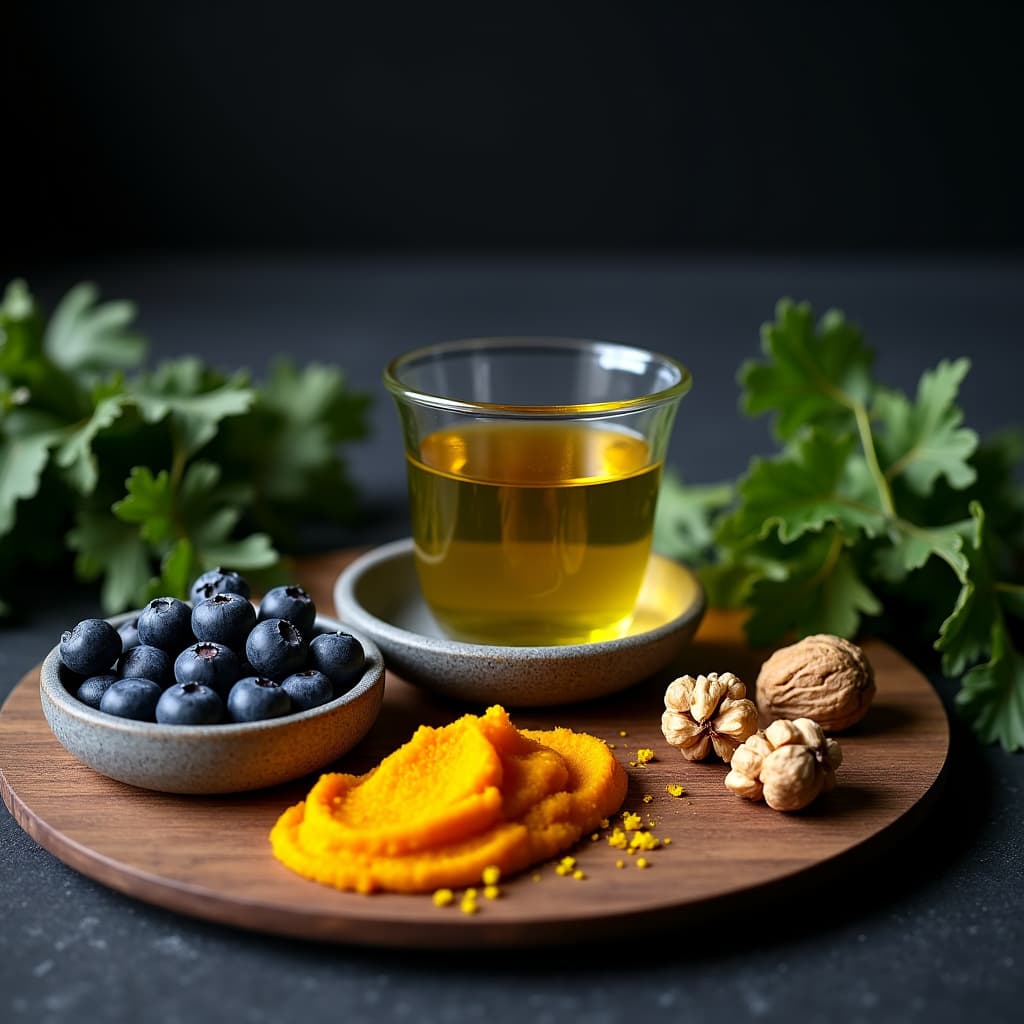
Berries are among the most studied foods for neuroprotection. Anthocyanins (the pigments that make berries blue, red, and purple) cross the blood-brain barrier, reduce microglial activation, and protect dopaminergic neurons from oxidative damage.
A 2022 prospective study in Neurology followed over 100,000 participants for 20 years and found that those consuming the most flavonoid-rich foods (particularly berries and citrus) had 40% lower risk of developing Parkinson's. Among those already diagnosed, higher flavonoid intake was associated with slower disease progression.
Best sources:
- Blueberries (highest anthocyanin density)
- Strawberries, blackberries, raspberries
- Cherries
- Red grapes
- Pomegranate
Fatty Fish and Omega-3s
DHA, the primary omega-3 in the brain, is a major structural component of neuronal cell membranes. It reduces neuroinflammation, supports dopamine receptor function, and promotes production of neuroprotectin D1, a compound that protects neurons from inflammatory damage.
A 2021 meta-analysis in Nutritional Neuroscience found that higher fish consumption and omega-3 blood levels were associated with significantly reduced Parkinson's risk and slower motor decline in diagnosed patients.
Best sources:
- Salmon, mackerel, sardines, anchovies (aim for 3 servings per week)
- Walnuts
- Flaxseed and chia seeds
- Algae-based DHA supplements
Green Tea
Epigallocatechin gallate (EGCG), the primary polyphenol in green tea, has been studied extensively for Parkinson's neuroprotection. EGCG inhibits alpha-synuclein aggregation (the protein clumping that forms Lewy bodies), reduces microglial activation, and chelates excess iron in the substantia nigra (iron accumulation accelerates oxidative damage).
A 2023 randomized trial in Parkinsonism and Related Disorders found that green tea extract supplementation (400mg EGCG daily) for 12 months was associated with less motor decline compared to placebo, though the differences did not reach statistical significance in this small study. Epidemiological data is stronger: multiple studies show that regular green tea consumption is associated with 25-40% reduced Parkinson's risk.
Drink 2-3 cups daily, or consider matcha for higher EGCG concentration.
Coffee
Coffee drinkers have consistently lower rates of Parkinson's in epidemiological studies. A 2022 dose-response meta-analysis in Movement Disorders found that 3 cups of coffee daily was associated with approximately 30% lower risk. The mechanism involves caffeine's action on adenosine A2A receptors, which modulate neuroinflammation and dopamine signaling.
For people already diagnosed with Parkinson's, caffeine may improve motor symptoms. However, it can interact with levodopa absorption (caffeine slows gastric emptying), so timing matters. Discuss with your neurologist.
Turmeric and Curcumin
Curcumin, the active compound in turmeric, is one of the most potent natural anti-inflammatory and neuroprotective compounds studied for Parkinson's. It reduces NF-kB activation (a master inflammatory pathway), inhibits alpha-synuclein aggregation, protects dopaminergic neurons in animal models, and chelates excess copper and iron.
The challenge is bioavailability. Curcumin is poorly absorbed on its own. Pairing it with black pepper (piperine increases absorption by 2,000%) and fat significantly improves uptake. Use turmeric generously in cooking, or consider a curcumin supplement formulated with piperine or phospholipids.
Fiber-Rich Foods
Given the gut-brain axis connection in Parkinson's, dietary fiber is critically important. Fiber feeds the butyrate-producing bacteria that are depleted in Parkinson's patients, supports regular bowel movements (constipation is both a symptom and an aggravating factor), and reduces systemic inflammation.
Best sources: legumes (beans, lentils, chickpeas), whole grains (oats, brown rice, quinoa), vegetables, fruits, ground flaxseed
Extra Virgin Olive Oil
The Mediterranean diet, with olive oil as its primary fat, has been consistently associated with reduced Parkinson's risk and slower progression. Oleocanthal in EVOO has anti-inflammatory effects comparable to low-dose ibuprofen, and hydroxytyrosol is a potent antioxidant that protects neurons from oxidative stress.
Foods to Limit
Ultra-Processed Foods
A 2023 study in JAMA Neurology found that ultra-processed food consumption was associated with increased Parkinson's risk in a cohort of 178,000 adults followed for 12 years. The combination of refined oils, additives, emulsifiers, and excess sugar creates a pro-inflammatory environment that damages both gut and brain.
Excess Dairy
This is one of the more surprising findings in Parkinson's research. Multiple large epidemiological studies have found an association between high dairy consumption and increased Parkinson's risk, particularly in men. A 2023 meta-analysis in Parkinsonism and Related Disorders found that high dairy intake (3+ servings daily) was associated with 40% increased risk.
The mechanism is not fully understood. Hypotheses include pesticide contamination of dairy products, casein-triggered inflammatory responses, and calcium-related effects on dopaminergic neurons. This does not mean you need to eliminate dairy entirely. But reducing from multiple daily servings to occasional consumption may be prudent.
Excess Red and Processed Meat
High heme iron intake from red meat contributes to iron accumulation in the brain, which accelerates oxidative damage in the substantia nigra. Processed meats add nitrites and advanced glycation end products (AGEs) that are independently pro-inflammatory.
Excess Sugar
High sugar intake drives insulin resistance, which has been directly linked to Parkinson's progression. A 2022 study in Diabetes Care found that type 2 diabetes was associated with 36% increased risk of Parkinson's and faster motor decline in those already diagnosed. Sugar also disrupts gut microbiome balance.
Medication-Diet Interactions
Levodopa and Protein Timing
This is the most important dietary consideration for Parkinson's patients on levodopa. Levodopa competes with dietary protein (specifically large neutral amino acids) for absorption across the gut and blood-brain barrier. High-protein meals can significantly reduce levodopa effectiveness.
Two common strategies:
Protein redistribution: Eat most of your daily protein at dinner (when motor function matters less for many people) and keep breakfast and lunch lower in protein. This can improve medication response during the day.
Even distribution: Spread protein evenly across meals and take levodopa 30-60 minutes before meals to allow absorption before protein arrives.
Work with your neurologist and a dietitian familiar with Parkinson's to find the approach that works best for your medication schedule.
Fiber and Medication Absorption
High-fiber meals can slow absorption of Parkinson's medications. This is usually manageable by taking medications 30 minutes before high-fiber meals. The long-term gut health benefits of fiber outweigh the short-term absorption considerations for most patients.
Tracking Dietary Inflammation with Inflamous
The Inflamous app tracks your daily Dietary Inflammatory Index score, giving you an objective measure of how pro- or anti-inflammatory your diet is over time. For Parkinson's patients, this can help identify patterns between dietary inflammation and symptom severity.
Pair the app with a simple motor symptom diary (tremor, stiffness, and energy ratings) to see correlations between what you eat and how you feel. Over weeks, these patterns become actionable insights.
FAQ
Can an anti-inflammatory diet slow Parkinson's progression?
The evidence is promising but not definitive. Large epidemiological studies consistently show that anti-inflammatory dietary patterns are associated with slower motor decline and better cognitive outcomes in Parkinson's patients. Randomized controlled trials are ongoing. The risk of eating well is zero, and the potential benefit is meaningful.
How much fish should I eat with Parkinson's?
Aim for at least 2-3 servings of fatty fish per week (salmon, mackerel, sardines). If you do not eat fish, consider an algae-based omega-3 supplement providing at least 1g of DHA daily. Some neurologists recommend higher doses (2-4g combined EPA/DHA), so discuss with your doctor.
Is the Mediterranean diet the best option for Parkinson's?
It has the strongest overall evidence base among named dietary patterns for Parkinson's. The MIND diet (Mediterranean-DASH Intervention for Neurodegenerative Delay) is specifically designed for brain health and combines elements of Mediterranean and DASH diets with extra emphasis on berries, leafy greens, and fish. Either is an excellent framework.
Should I avoid all dairy with Parkinson's?
Complete elimination is not necessary based on current evidence. The association is strongest with high intake (3+ servings daily). Moderate consumption (a serving of yogurt or cheese per day) is unlikely to be harmful and provides calcium, vitamin D, and probiotics. If you reduce dairy, ensure adequate calcium from other sources.
Does caffeine interact with Parkinson's medications?
Caffeine can affect levodopa absorption by slowing gastric emptying. Some patients find coffee helps their motor symptoms, while others notice medication becomes less predictable. Start with moderate amounts (1-2 cups) and observe how it affects your "on" and "off" periods. Always discuss with your neurologist.
The Bottom Line
Parkinson's disease is driven by neuroinflammation, and the food you eat directly influences the intensity of that inflammation. An anti-inflammatory diet rich in berries, fatty fish, green tea, olive oil, and fiber, while reducing processed foods, excess dairy, and sugar, addresses both the gut-brain axis dysfunction and the systemic inflammation that accelerate disease progression.
This is not about a perfect diet. It is about consistent patterns that give your brain the best possible environment to resist the inflammatory damage that defines Parkinson's. Combined with exercise, adequate sleep, and proper medication management, dietary changes are one of the most impactful things you can do for your long-term outcomes.
Download the Inflamous app to start tracking how your diet affects your neurological health.