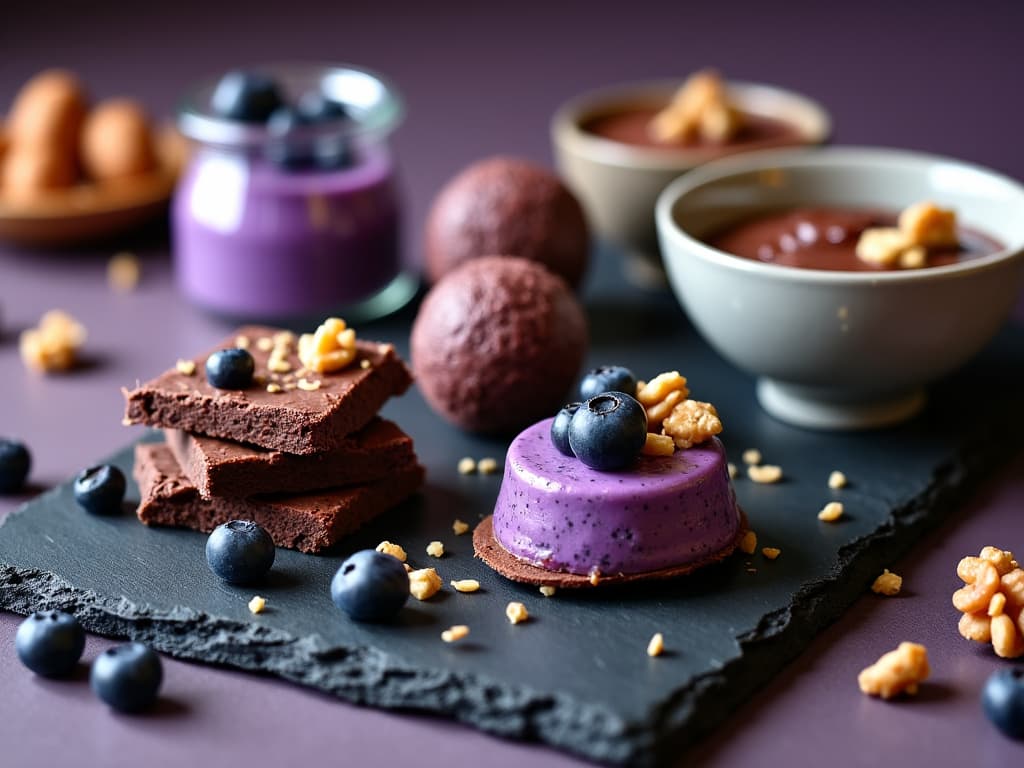
The biggest myth about anti-inflammatory eating is that dessert is off the table. It isn't. What's off the table is dessert built from refined sugar, white flour, industrial seed oils, and milk chocolate. Swap those out for ingredients that score well on the Dietary Inflammatory Index (DII), and you get desserts that taste genuinely good and actively work against chronic inflammation.
This isn't about sad "healthy" substitutes. These recipes are built around ingredients that happen to be both delicious and anti-inflammatory: dark chocolate, berries, walnuts, tahini, turmeric, honey, and coconut.
Why Most Desserts Cause Inflammation
Standard desserts hit three inflammation triggers at once:
Refined sugar — A single slice of cake can spike blood glucose 60-80 mg/dL above baseline. That spike triggers insulin release and the production of advanced glycation end-products (AGEs), which activate inflammatory signaling through the RAGE receptor pathway.
White flour — Low fiber, high glycemic, stripped of the polyphenols in whole wheat. Spikes blood sugar almost as fast as pure glucose.
Industrial seed oils — Canola, soybean, and corn oils used in commercial baking have an omega-6:omega-3 ratio of 20:1 or higher. The optimal ratio for suppressing inflammation is roughly 4:1. High omega-6 excess provides substrate for arachidonic acid, a direct precursor to pro-inflammatory prostaglandins and leukotrienes.
Anti-inflammatory desserts swap these three ingredients without sacrificing flavor. Here's how each swap works:
- Almond flour or oat flour replaces white flour — more protein, fiber, and polyphenols, lower glycemic
- Dark chocolate (70%+) replaces milk chocolate — flavanols reduce CRP and IL-6; milk chocolate lacks the flavanol concentration
- Berries, dates, maple syrup replace refined sugar — natural sweetness plus fiber and polyphenols that blunt the glucose spike
- Coconut oil or olive oil replaces seed oils — saturated fat in coconut oil is metabolically neutral at moderate amounts; olive oil's oleocanthal acts like natural ibuprofen
The Anti-Inflammatory Dessert Pantry
Keep these stocked and you can make most of the recipes below without a special shopping trip:
- Dark chocolate (70%+ cacao), chips and bars
- Almond flour and/or oat flour
- Medjool dates
- Frozen blueberries, tart cherries, raspberries
- Raw honey or pure maple syrup
- Coconut oil
- Walnuts, almonds, pumpkin seeds
- Canned coconut milk (full fat)
- Vanilla extract
- Cinnamon, cardamom, turmeric
- Chia seeds and flaxseeds
15 Anti-Inflammatory Dessert Recipes
No-Bake Recipes (Under 15 Minutes)
1. Dark Chocolate Bark With Berries and Walnuts
Melt 1 cup dark chocolate chips over a double boiler or in 30-second microwave intervals, stirring between each. Pour onto parchment-lined pan to about 1/4-inch thick. Top with blueberries, crushed walnuts, and pumpkin seeds. Sprinkle with flaky sea salt. Refrigerate 30 minutes until firm, then break into pieces.
Why it works: Dark chocolate flavanols + blueberry anthocyanins + walnut ALA (plant omega-3) = strong DII-negative combination.
2. Blueberry Chia Pudding
Whisk together 1/3 cup chia seeds, 1.5 cups coconut milk, 1 tbsp maple syrup, and 1 tsp vanilla. Refrigerate 4+ hours or overnight. Top with 1/2 cup frozen blueberries (thawed) and a sprinkle of walnuts.
Why it works: Chia seeds are one of the richest plant sources of ALA omega-3 (5g per 2 tbsp). Blueberries rank among the most anti-inflammatory fruits tested.
3. Date and Walnut Energy Bites
In a food processor, blend 1 cup Medjool dates (pitted) + 1 cup walnuts + 2 tbsp cacao powder + 1/4 tsp cinnamon until the mixture clumps. Roll into 12-14 balls. Optional: roll in shredded coconut or cacao powder. Refrigerate 30 minutes.
Why it works: Dates provide fiber that slows sugar absorption. Walnuts are the best plant source of anti-inflammatory ALA. Cacao adds flavanol polyphenols.
4. Tart Cherry Nice Cream
Blend 2 frozen bananas + 1 cup frozen tart cherries + 1/4 tsp vanilla until smooth (high-powered blender or food processor). Eat immediately for soft-serve texture or freeze 1 hour for firmer scoops.
Why it works: Tart cherries contain anthocyanins and melatonin, and multiple RCTs show they reduce post-exercise inflammation and muscle soreness. Bananas add pectin fiber and potassium.
5. Tahini and Honey Stuffed Dates
Split 12 Medjool dates and remove pits. Fill each with 1/2 tsp tahini. Optionally add a small dark chocolate piece or a walnut half. Drizzle lightly with raw honey.
Why it works: Raw honey contains catalase and other enzymes that suppress NF-κB. Tahini provides sesamin and sesamolin, lignans with documented anti-inflammatory properties.
6. Turmeric Golden Milk Panna Cotta
Heat 2 cups coconut milk (don't boil) with 1 tsp turmeric, 1/2 tsp cinnamon, 1/4 tsp ginger, a pinch of black pepper, and 2 tbsp honey. Dissolve 1 packet unflavored gelatin in 2 tbsp cold water, then stir into warm milk. Pour into 4 small cups or ramekins. Refrigerate 4+ hours.
Why it works: Turmeric + black pepper increases curcumin bioavailability by up to 2,000%. Coconut milk's medium-chain triglycerides (MCTs) are metabolized differently from long-chain fats and don't drive the same inflammatory cascade.
Baked Recipes (30-60 Minutes)
7. Almond Flour Blueberry Muffins
Mix 2 cups almond flour, 1/2 tsp baking soda, 1/4 tsp salt, 1 tsp cinnamon. In another bowl whisk 3 eggs, 1/4 cup maple syrup, 1/4 cup melted coconut oil, 1 tsp vanilla. Combine wet and dry, fold in 1 cup blueberries. Fill 12 muffin cups, bake 350°F for 22-25 minutes.
Why it works: Almond flour has roughly 6x more fiber than white flour and is low glycemic. Blueberries baked whole still retain most of their anthocyanin content.
8. Oat and Dark Chocolate Chip Cookies
Blend 1.5 cups oats into rough flour. Mix with 1/2 cup almond flour, 1/2 tsp baking soda, 1/4 tsp salt. In another bowl mix 2 ripe mashed bananas, 3 tbsp maple syrup, 2 tbsp coconut oil (melted), 1 tsp vanilla. Combine, fold in 1/2 cup dark chocolate chips. Bake at 350°F for 12-14 minutes.
Why it works: Steel-cut oats and oat flour provide beta-glucan, a soluble fiber that reduces CRP by feeding anti-inflammatory gut bacteria. Banana adds resistant starch.
9. Baked Cinnamon Apples
Core 4 apples (leave 1/4 inch at bottom). Fill centers with a mix of 1/4 cup chopped walnuts, 2 tbsp maple syrup, 1 tsp cinnamon, 1 tbsp coconut oil, a pinch of cardamom. Bake at 375°F for 35-40 minutes until soft.
Why it works: Apple skins contain quercetin, a flavonoid that inhibits the NLRP3 inflammasome. Cinnamon has documented glucose-lowering effects that reduce the inflammatory spike from natural fruit sugars.
10. Dark Chocolate Avocado Mousse
Blend 2 ripe avocados + 1/3 cup cacao powder + 1/4 cup maple syrup + 1/4 cup coconut milk + 1 tsp vanilla + pinch of salt until completely smooth. Refrigerate 1 hour. Top with berries or cacao nibs.
Why it works: Avocado monounsaturated fat + cacao flavanols = a genuinely satisfying mousse that hits DII-negative on every ingredient.
11. Walnut and Oat Crumble With Berry Filling
Berry filling: Toss 3 cups mixed berries with 1 tbsp arrowroot starch, 2 tbsp maple syrup, and 1 tsp cinnamon in a baking dish. Crumble: Mix 1 cup oats, 1/2 cup chopped walnuts, 3 tbsp coconut oil (melted), 2 tbsp maple syrup, 1/2 tsp cinnamon. Spread crumble over berries. Bake 350°F for 30-35 minutes.
Why it works: Berry filling uses the most potent anti-inflammatory fruits. Oat-walnut crumble provides beta-glucan + ALA in a crunchy, caramelized format.
12. Coconut Turmeric Macaroons
Mix 2 cups unsweetened shredded coconut, 2 egg whites (whipped to stiff peaks), 3 tbsp honey, 1/2 tsp turmeric, 1/4 tsp vanilla, pinch of black pepper. Form into small domes on parchment. Bake 325°F for 15-18 minutes until just golden.
Why it works: Turmeric with black pepper in a sweet application is surprisingly good. Unsweetened coconut keeps sugar minimal.
Frozen Desserts
13. Mango Ginger Sorbet
Blend 3 cups frozen mango chunks + 1 tbsp fresh grated ginger + 2 tbsp lime juice + 1 tbsp honey until smooth. Serve immediately as soft sorbet or freeze 2 hours for firmer texture.
Why it works: Mango provides mangiferin, a xanthone polyphenol that reduces IL-1β and TNF-α in cell studies. Fresh ginger contains gingerols with COX-2 inhibiting activity similar to ibuprofen at high doses.
14. Blueberry Walnut Frozen Bark
Line a sheet pan with parchment. Spread a layer of Greek yogurt (plain, 2%) with 1 tbsp honey stirred in. Top with frozen blueberries and crushed walnuts. Freeze 3-4 hours, then break into pieces. Store in freezer bags.
Why it works: Greek yogurt provides probiotics that reduce gut permeability, a key driver of systemic inflammation. Combined with blueberries and walnuts, this is one of the highest DII-negative frozen treats possible.
15. Cinnamon Banana Soft Serve
Slice and freeze 3 ripe bananas for at least 6 hours. Blend in food processor with 1 tsp cinnamon and 1/4 tsp cardamom until completely creamy (takes 2-3 minutes of processing, scrape down sides). Serve immediately or freeze for 30 minutes.
Why it works: Cinnamon at 1-6g/day reduces fasting blood glucose in multiple RCTs. Banana provides resistant starch that feeds anti-inflammatory gut bacteria.
Ingredients to Avoid in Desserts
Some "healthier" dessert ingredients are still problematic for inflammation:
- Agave nectar — Higher in fructose than high-fructose corn syrup, which drives fatty liver and uric acid production, both inflammatory
- Vegetable oils (even cold-pressed canola) — High omega-6 content disrupts the omega ratio
- Whole wheat flour (if not sprouted) — Better than white but still higher glycemic than almond or oat flour
- Milk chocolate or white chocolate — Insufficient flavanol concentration to provide anti-inflammatory benefit
Portion Still Matters
Even DII-negative desserts contain calories and some natural sugars. A blueberry chia pudding is genuinely good for inflammation, but eating four servings spikes blood glucose the same as a smaller portion of conventional dessert would. The anti-inflammatory benefit of these ingredients is real, but "anti-inflammatory" doesn't mean "unlimited."
For most people, one to two servings of these desserts per day fits easily within an anti-inflammatory diet. Pair with the anti-inflammatory snacks guide for the full picture on between-meal eating, and check the anti-inflammatory diet for beginners if you're building your dietary foundation.
Track Your Sweet Treats With Inflamous
The Inflamous app lets you scan or log ingredients and see a real-time DII score for your dessert. It's an eye-opener: a dark chocolate bark with berries might score -0.7, while a standard brownie scores +1.4. That difference, compounded over hundreds of meals, is meaningful for chronic inflammation.
Download Inflamous to start making dessert choices that work with your health goals, not against them.
This content is for educational purposes. It is not medical advice. Consult a healthcare provider for guidance on managing a specific health condition with diet.