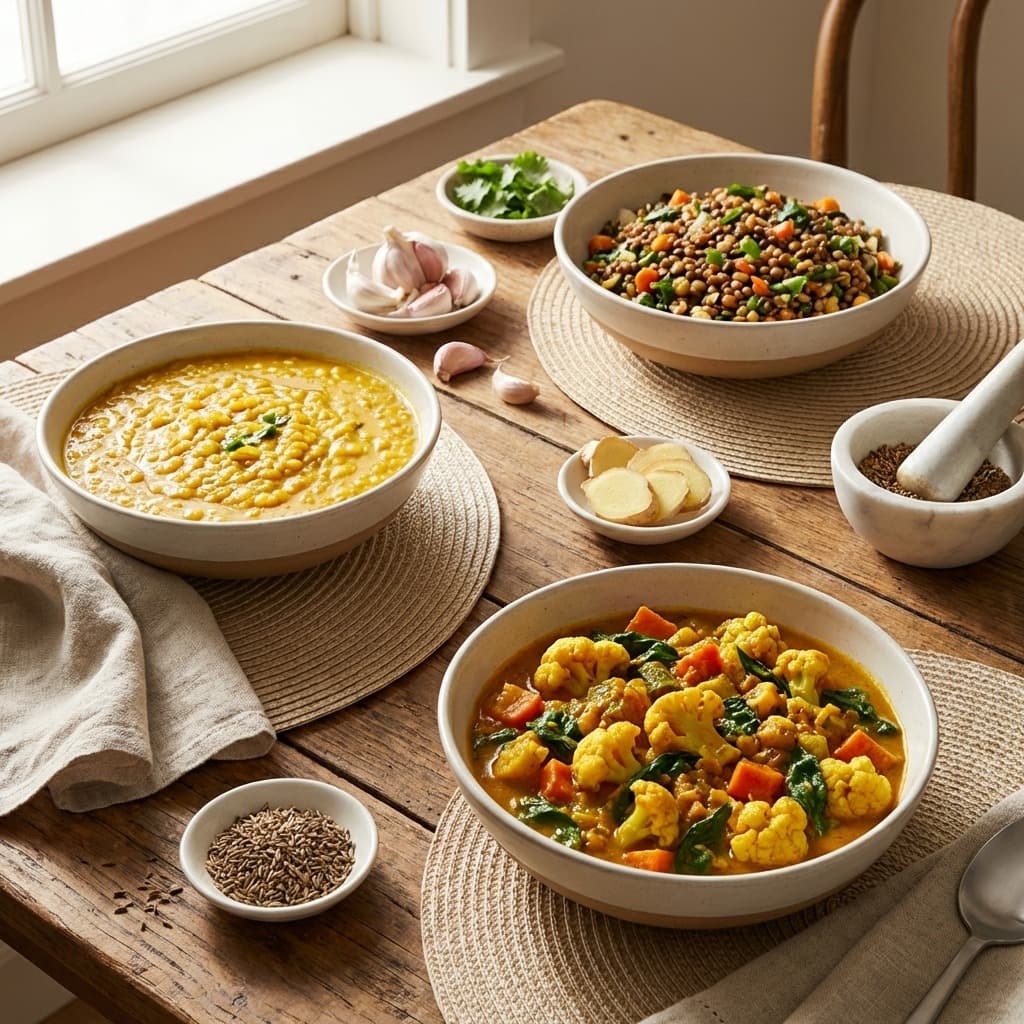
Anti inflammatory Indian food is not one specific dish. It is a style of eating that can work very well for inflammation when it centers on legumes, vegetables, fermented dairy, herbs, and spices such as turmeric, ginger, cumin, coriander, garlic, and mustard seed. Many traditional Indian meals naturally include fiber, plant diversity, and deeply flavored ingredients that support a better Dietary Inflammatory Index profile. The catch is that some restaurant versions can become heavy in refined flour, cream, fried foods, and oversized portions.
So yes, Indian food can absolutely be anti-inflammatory. In many cases, it is one of the easiest cuisines to adapt in that direction.
Why Indian cooking has anti-inflammatory potential
Several staples of Indian cooking align well with lower-inflammatory eating:
- Lentils, chickpeas, and beans
- Vegetable-rich sabzis and curries
- Yogurt-based dishes
- Herbs and spices instead of sugar-heavy sauces
- Moderate use of rice or whole grains alongside fiber-rich mains
This is one reason Indian-style meals can line up nicely with the principles in anti-inflammatory diet for beginners and the complete list of anti-inflammatory foods.
The spices that matter most
Turmeric
Turmeric is the obvious headliner because it contains curcumin, a compound studied for anti-inflammatory effects. In cooking, the absolute amount is not huge, but turmeric still adds value as part of a regular dietary pattern. It is especially useful in dal, vegetable curries, soups, and rice dishes.
Learn more on our turmeric food page.
Ginger
Ginger is widely used in Indian cooking and works well in curries, teas, lentils, and marinades. It adds flavor and contains compounds associated with lower inflammatory signaling.
Cumin and coriander
These are not usually sold as anti-inflammatory superstars, but they matter because they make high-fiber, plant-rich meals taste good enough to repeat. That matters in real life.
Garlic, onion, cinnamon, fenugreek, and cardamom
These ingredients also contribute plant compounds and flavor depth without relying on sugar-heavy bottled sauces.
The best Indian dishes for inflammation
Dal
Dal is one of the strongest anti-inflammatory Indian foods because lentils bring fiber and plant protein, while the spice base adds flavor without much downside. Moong dal, masoor dal, and toor dal can all fit well.
Chana masala
Chickpeas, tomatoes, onion, garlic, and spices make this a strong option for fiber and satiety. It works especially well with vegetables and a moderate portion of rice.
Rajma
Kidney bean curry can be another excellent choice, especially when paired with salad or vegetables instead of making rice the dominant part of the meal.
Vegetable sabzi
Dry-style vegetable dishes built with cauliflower, okra, cabbage, spinach, or mixed vegetables are often very favorable, especially when not heavily fried.
Tandoori-style fish or chicken
Marinated protein cooked with yogurt and spices is often a better choice than breaded or creamy dishes. If you can get salmon or another fatty fish in an Indian-inspired marinade, even better.
What Indian dishes are less helpful?
Not every Indian restaurant dish lands well from an inflammation perspective. Meals can become less favorable when they are built around:
- Deep-fried appetizers
- Large portions of naan plus rice plus rich curry in one meal
- Heavy cream-based sauces
- Sugary drinks or desserts alongside the meal
- Minimal vegetables and very large refined carb portions
That does not mean you need to avoid these foods forever. It means they should not define the routine if you are trying to lower inflammatory load.
The Inflammation Score Breakdown
Indian food can score extremely well when meals emphasize these components:
- Lentils and beans
- Vegetables, especially leafy greens and cruciferous vegetables
- Spices such as turmeric and ginger
- Yogurt-based marinades
- Moderate portions of rice
- Healthy fats instead of excessive ghee or fried elements
Meals can score worse when they include:
- Large amounts of refined flour
- Deep-fried starters
- Very heavy cream sauces
- Sugar-rich drinks and desserts
- Oversized starch portions without much fiber
This is similar to the distinction we make in mediterranean diet vs anti-inflammatory diet: the cuisine can be incredibly healthy, but the actual plate still matters.
How to order anti-inflammatory Indian food at a restaurant
A few easy strategies help:
- Start with dal or chana masala
- Add a vegetable dish
- Choose tandoori fish or chicken over fried starters
- Keep naan or rice moderate, not both in large amounts
- Skip sugary drinks
- Ask for extra vegetables when possible
You can also make your own anti-inflammatory Indian meals at home with lentils, onions, tomatoes, garlic, spinach, turmeric, cumin, and ginger. Home cooking makes it easier to control the oil and portion sizes.
FAQ
Is Indian food anti-inflammatory?
It can be. Indian food often uses legumes, vegetables, yogurt, and spice blends that fit very well in a lower-inflammatory diet.
What is the healthiest Indian dish for inflammation?
Dal, chana masala, and vegetable-based curries are among the best choices because they provide fiber, plant protein, and beneficial spices.
Is turmeric enough to make a dish anti-inflammatory?
No. Turmeric helps, but the overall meal still matters. A fried or sugar-heavy meal does not become ideal just because it contains turmeric.
Is naan inflammatory?
Naan is usually made with refined flour, so it is less favorable than higher-fiber options. It can still fit occasionally, especially if the rest of the meal is balanced.
Bottom line
Anti inflammatory Indian food is real, and it is often delicious. The strongest options are meals centered on lentils, chickpeas, vegetables, yogurt, and spice-rich cooking, not fried starters and cream-heavy sauces. Build around dal, chana masala, sabzi, and tandoori-style proteins, and the cuisine can be one of the easiest ways to eat for lower inflammation.
Use the Inflamous app to compare Indian dishes, track restaurant choices, and see which meals actually improve your inflammation score over time.
Home-cooked Indian meals often beat restaurant versions
One reason Indian food can be so helpful at home is control. You can use more lentils, more vegetables, less cream, and moderate amounts of oil without losing flavor. A pressure cooker or Instant Pot makes dal and bean dishes especially easy.
A simple home formula works well:
- Onion, garlic, and ginger base
- Tomato or yogurt for body
- Turmeric, cumin, coriander, and chili to taste
- Lentils, chickpeas, fish, or vegetables as the main component
- Rice or roti in a moderate portion, not the center of the meal
That structure gives you meals that are rich in flavor but still supportive of a lower-inflammatory pattern.
The best anti-inflammatory Indian pantry staples
If you want to cook this way more often, keep these around:
- Red lentils and chickpeas
- Canned tomatoes
- Turmeric, cumin, coriander, mustard seed, garam masala
- Fresh garlic and ginger
- Spinach or frozen mixed vegetables
- Plain yogurt
- Brown basmati rice or another whole-grain option
With just those staples, you can make several weeknight meals that score far better than most takeout defaults.
How rice, roti, and portion size affect the meal
Indian meals often get blamed for carbs, but the issue is usually proportion. A moderate amount of rice or roti can fit well, especially when the plate also includes dal, vegetables, yogurt, and protein. The problem starts when refined starch becomes most of the meal and the fiber-rich dishes become side notes.
Brown basmati rice or mixed grain options can improve the score somewhat, but the larger win is balancing the plate.
Indian breakfasts and snacks can be inflammation-friendly too
There are good options beyond dinner. Vegetable upma, besan chilla, poha with peanuts and vegetables, plain yogurt with fruit, or egg-based dishes can all work better than packaged breakfast foods and bakery items.
For snacks, roasted chana, fruit, yogurt, or nuts are often stronger choices than fried namkeen and sweets.
This matters because inflammation is shaped by the whole day, not just one dinner curry.
How Indian vegetarian diets can become especially powerful for inflammation
Indian vegetarian cooking has a real advantage here because it naturally leans on lentils, beans, yogurt, vegetables, herbs, and spices. When meals are built around dal, sabzi, raita, and a moderate amount of rice or roti, the result is often high in fiber and plant diversity.
That kind of pattern compares favorably with many Western convenience diets that rely on packaged snacks, sweetened drinks, and fast-food meals.
Common mistakes that make healthy Indian meals less healthy
A few issues show up often:
- Relying on restaurant food that uses more oil than you would at home
- Turning rice and naan into the main event instead of the supporting starch
- Treating fried snacks as everyday foods
- Using sweets and sweetened chai as default daily habits
None of that means the cuisine is the problem. It means routine and proportion still matter.
A sample lower-inflammatory Indian plate
A practical anti-inflammatory Indian dinner might look like this:
- Masoor dal with turmeric, cumin, garlic, and ginger
- Cabbage or spinach sabzi cooked with mustard seed and onion
- Plain yogurt with cucumber
- A modest serving of rice or one roti
- Fruit after dinner instead of a heavy dessert
That plate is flavorful, satisfying, and much more favorable than the takeout pattern many people imagine when they think of Indian food.