If you have ulcerative colitis, you know that food is rarely simple. Eating the wrong thing can send you straight into a flare. Eating too cautiously leaves you undernourished and exhausted. The challenge is finding the middle path: foods that calm your gut rather than provoke it.
An anti-inflammatory diet built around your UC needs can meaningfully reduce symptom burden, help extend remission, and support the gut lining repair process your body is constantly working on. This guide covers exactly what to eat, what to avoid, and how to adapt your approach depending on whether you're in remission or managing an active flare.
What Ulcerative Colitis Actually Does to Your Gut
Ulcerative colitis is a chronic inflammatory bowel disease (IBD) that causes persistent inflammation in the colon and rectum. Unlike Crohn's disease, UC is limited to the large intestine and produces continuous, rather than patchy, areas of inflammation. During active disease, the intestinal lining becomes ulcerated, bleeds, and struggles to absorb fluid properly, which explains the urgent, bloody diarrhea that characterizes flares.
The gut microbiome plays a central role in UC. Research consistently shows that people with UC have reduced microbial diversity, lower levels of beneficial Lactobacillus and Bifidobacterium species, and higher levels of pro-inflammatory bacteria. This is important because what you eat directly shapes your microbiome. An anti-inflammatory dietary pattern does not just reduce inflammatory signals in food; it actively feeds the bacteria that keep intestinal inflammation in check.
The Dietary Inflammatory Index (DII) provides a useful framework here. The DII scores foods and dietary patterns based on their measured effect on inflammatory biomarkers like C-reactive protein, interleukin-6, and tumor necrosis factor-alpha. Research published in the journal Nutrients has found that UC patients with higher DII scores (more pro-inflammatory diets) experience more frequent and severe flares than those eating lower DII diets.
The Anti-Inflammatory Diet Approach for UC
The goal with UC nutrition is threefold: reduce dietary inflammation, support gut barrier integrity, and maintain adequate nutrition when your intestine is absorbing less efficiently. This looks somewhat different during flares versus remission.
During Remission: Building Your Anti-Inflammatory Foundation
When UC is quiet, you have room to eat a broader range of anti-inflammatory foods. Think of remission as your investment period: the dietary choices you make now build the gut environment that determines how long remission lasts and how severe the next flare will be if one occurs.
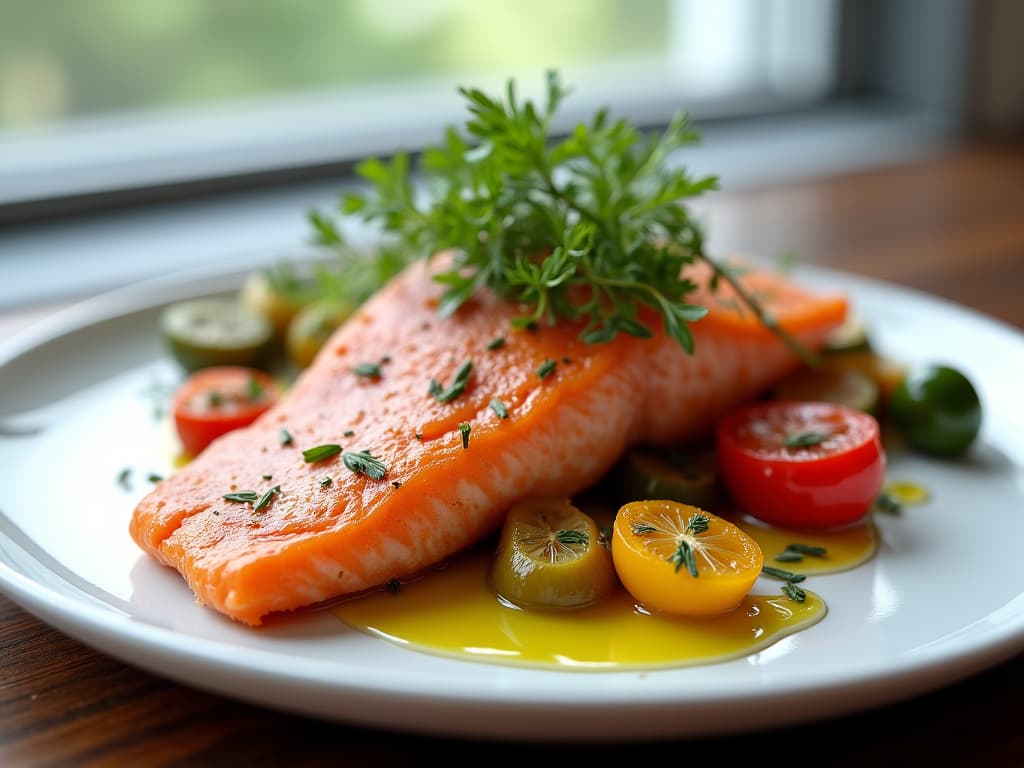
Prioritize omega-3 fatty acids. Fatty fish like salmon, sardines, and mackerel are among the most potent anti-inflammatory foods measurable by DII score. Omega-3s compete directly with arachidonic acid for inflammatory enzyme pathways and have been shown in multiple trials to reduce colonic inflammation markers in UC patients. Aim for two to three servings of fatty fish per week. Salmon earns a strong negative (anti-inflammatory) DII contribution. You can learn more about its inflammation score on the salmon page.
Eat plenty of cooked, lower-fiber vegetables. Raw vegetables can be mechanically irritating to an inflamed colon, but cooked vegetables are generally better tolerated and still deliver their phytonutrient and antioxidant benefits. Zucchini, carrots, sweet potatoes, and butternut squash are excellent starting points. As your tolerance grows, you can slowly expand your vegetable variety.
Use olive oil liberally. Extra virgin olive oil contains oleocanthal, a compound with COX-inhibiting properties similar to ibuprofen, and oleic acid, which reduces the inflammatory cytokine activity in gut tissue. It is one of the highest-scoring anti-inflammatory ingredients in the DII framework. Use it as your primary cooking fat and drizzle it on cooked vegetables and proteins. See the full olive oil inflammation breakdown.
Include fermented foods carefully. Plain, full-fat yogurt with live cultures and kefir can support microbiome diversity during remission. Many UC patients tolerate these well even if they have mild lactose sensitivity, because the fermentation process pre-digests much of the lactose. Start with small amounts and observe your response.
Lean into turmeric. Curcumin, the active compound in turmeric, has shown direct anti-inflammatory effects on colonic tissue in multiple small UC trials. A 2006 randomized controlled trial published in Clinical Gastroenterology and Hepatology found that curcumin supplementation significantly reduced relapse rates compared to placebo when added to maintenance therapy. Cooking with turmeric regularly adds meaningful anti-inflammatory value. Combine it with black pepper (which increases curcumin absorption by up to 2000%) for maximum benefit.
During a Flare: Protective Anti-Inflammatory Eating
During active UC flares, the priorities shift toward foods that are easy to absorb, low in mechanical irritation, and still deliver some anti-inflammatory support.
Shift to a low-residue approach. During flares, high-fiber foods create mechanical stress on an already-inflamed, bleeding colon. Switch to well-cooked, low-fiber options: white rice, oatmeal (cooked until very soft), peeled and cooked vegetables, eggs, and well-cooked fish. The goal is to rest the colon mechanically while keeping inflammation in check nutritionally.
Prioritize easily digestible protein. Protein needs increase during active inflammation because your body is actively repairing damaged tissue. Eggs, well-cooked chicken, and fish are your best options. They are easy to absorb, protein-dense, and free from the mechanical irritation that legumes and raw meats can cause during active disease.
Keep fat intake moderate. High-fat meals can stimulate colonic contractions and worsen urgency during flares. Focus on gentler fat sources: olive oil in small amounts, avocado if tolerated, and the natural fats in fish. Avoid fried foods entirely during active disease.
Stay hydrated with electrolytes. The inflamed colon loses its ability to properly absorb water and sodium. Diarrhea compounds this rapidly. Bone broth is an excellent choice: it is easy to absorb, provides sodium and trace minerals, and contains glycine and proline, which support intestinal lining repair. Coconut water in small amounts provides potassium without excess sugar.
The Inflammation Score Breakdown
Here is how key UC-relevant foods score on the anti-inflammatory spectrum:
Strongest anti-inflammatory choices:
- Salmon: Deep negative DII score, highest omega-3 density among common proteins
- Olive oil: Strong anti-inflammatory, oleocanthal inhibits COX-1 and COX-2
- Turmeric: One of the highest-scoring spices, direct curcumin activity on TNF-alpha
- Blueberries: Anthocyanins reduce oxidative stress in intestinal tissue
- Ginger: Gingerols inhibit NF-kB, a central inflammation-signaling pathway
Neutral to mildly anti-inflammatory (well-tolerated during flares):
- White rice: Low fiber, easy on inflamed mucosa, essentially neutral DII
- Eggs: Mildly anti-inflammatory, excellent protein, generally well-tolerated
- Sweet potato: Rich in beta-carotene, low-residue when well-cooked
- Banana: Soluble fiber, electrolytes, gut-soothing pectin content
Pro-inflammatory foods to minimize or eliminate:
- Ultra-processed foods with emulsifiers (polysorbate-80, carrageenan): These destabilize the gut mucosal layer and worsen intestinal permeability, a key UC driver
- Alcohol: Directly toxic to the intestinal epithelium and disrupts tight junction proteins
- Red meat in excess: Heme iron and saturated fat increase colonic oxidative stress
- Refined sugar and high-fructose corn syrup: Feeds pro-inflammatory bacteria, increases LPS translocation
- Seed oils high in omega-6 (soybean, corn, sunflower oils): Drive arachidonic acid cascade toward pro-inflammatory prostaglandins
Practical Meal Ideas for Ulcerative Colitis
Remission-phase breakfast: Smoothie with kefir, frozen blueberries, banana, a teaspoon of turmeric, and a tablespoon of ground flaxseed (ground is better absorbed than whole). Or soft scrambled eggs cooked in olive oil with well-cooked spinach.
Remission-phase lunch: Baked salmon over white rice with steamed zucchini drizzled with olive oil and a squeeze of lemon. Simple, high-protein, anti-inflammatory across every component.
Remission-phase dinner: Chicken thighs slow-cooked with turmeric, ginger, and low-sodium broth, served over mashed sweet potato. Bone broth base adds collagen for mucosal repair.
Flare-phase protocol: Plain white rice with well-cooked, peeled chicken, small amounts of olive oil, and a cup of bone broth. Soft scrambled eggs. Banana. Nothing fibrous, raw, spicy, or fried until the flare subsides.
Smart snacks: Plain yogurt with a drizzle of honey, ripe banana, or a small portion of peeled, cooked pear. Avoid raw nuts, raw vegetables, and acidic fruits during flares.
What the Research Says About Diet and UC
The connection between dietary patterns and UC outcomes has become much clearer in the last decade. A 2021 systematic review in Clinical Nutrition found that adherence to anti-inflammatory dietary patterns was consistently associated with lower rates of UC flare and longer remission periods, with the strongest effects coming from Mediterranean-style eating.
A 2020 study in Gut found that dietary emulsifiers, common in processed foods like salad dressings, ice cream, and packaged snacks, directly disrupted the intestinal mucus layer in ways that mirror early UC pathology. This is not a theoretical concern: it is a measurable gut biology effect happening in real time when people with UC eat ultra-processed foods.
The microbiome angle is equally compelling. Research shows that within three to four days of switching to an anti-inflammatory dietary pattern, measurable changes occur in gut bacteria composition. Species that produce short-chain fatty acids (SCFAs), particularly butyrate, increase. Butyrate is the primary fuel for colonocytes (the cells lining your colon) and has direct anti-inflammatory properties in intestinal tissue.
For broader context on how diet shapes systemic inflammation, the science behind the Dietary Inflammatory Index is essential reading. And if you want to understand how this applies to gut health more broadly, our anti-inflammatory foods for gut health guide covers the full picture.
Supplements Worth Discussing With Your Gastroenterologist
Several supplements show genuine promise for UC alongside a solid anti-inflammatory diet:
Omega-3 fish oil: Multiple trials show reduction in colonic inflammatory markers. Dose: 2-4g EPA+DHA daily. Look for a triglyceride-form product for better absorption.
Curcumin: The 2006 trial mentioned above used 1g twice daily in combination with maintenance therapy. Ensure the product contains piperine (black pepper extract) for absorption.
Vitamin D: UC patients frequently have low vitamin D, and deficiency correlates with worse disease outcomes. Supplementation to achieve 40-60 ng/mL serum levels is reasonable; discuss with your GI provider.
Probiotics: VSL#3 (now called Visbiome) has the strongest evidence base for UC remission maintenance. Lactobacillus GG is a reasonable alternative.
Always discuss supplements with your gastroenterologist before starting, as some can interact with UC medications or may need to be adjusted based on your current disease activity.
Bottom Line
An anti-inflammatory diet will not replace your UC medications, but it is one of the most powerful tools you have for extending remission and reducing flare severity. The core principles are straightforward: prioritize fatty fish, olive oil, cooked vegetables, and fermented foods; eliminate ultra-processed foods, emulsifiers, and alcohol; adjust texture and fiber based on your current disease activity.
The Inflamous app makes this much easier to execute. It scores the inflammation potential of your meals in real time, flags pro-inflammatory ingredients in packaged foods, and helps you build an eating pattern that supports your specific gut needs. Download Inflamous to see how your current diet scores and get personalized recommendations for eating with UC.
Your gut is worth the investment. Small, consistent dietary changes compound into real, measurable differences in how often you flare and how well you feel between episodes.