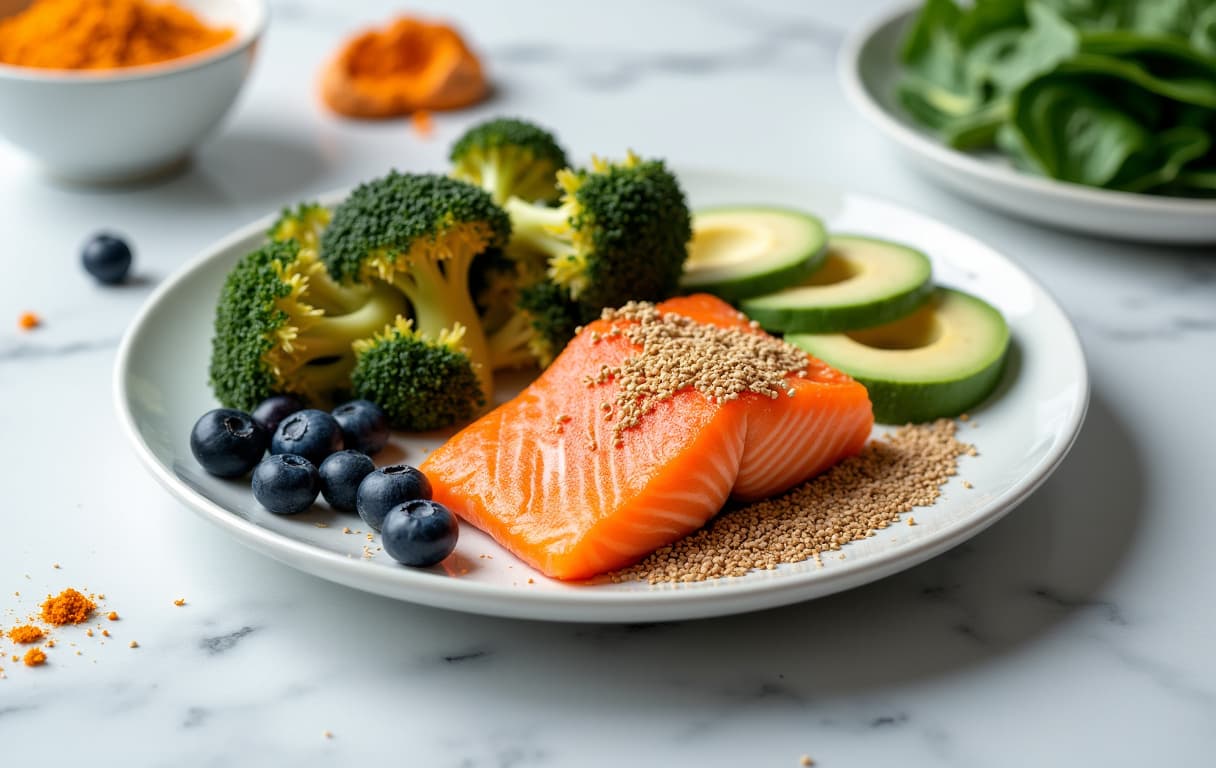
The short answer
An anti-inflammatory diet for endometriosis focuses on reducing two overlapping problems: systemic inflammation and excess estrogen activity. The core approach: eat fatty fish, fiber-rich vegetables, flaxseed, and cruciferous vegetables; cut red and processed meats, trans fats, alcohol, and refined sugar. This will not make lesions disappear, but it can meaningfully reduce the pain, bloating, and fatigue that endometriosis causes.
Endometriosis affects roughly 10% of people with a uterus during reproductive years. It is characterized by tissue similar to the uterine lining growing outside the uterus, causing inflammation, pain, and often severe hormonal disruption. Diet does not cause endometriosis, but it can influence how aggressively the condition expresses itself.
Why inflammation and estrogen are both targets
Endometriosis lesions are estrogen-dependent. They grow in response to estrogen and shrink in low-estrogen environments. At the same time, the lesions themselves produce prostaglandins (inflammatory compounds) that cause pain independently of hormone levels.
This means a well-designed dietary strategy for endometriosis needs to do two things simultaneously:
- Reduce systemic inflammation to lower prostaglandin burden
- Support estrogen metabolism and elimination to reduce estrogenic drive on lesion growth
Diet addresses both. Understanding how the Dietary Inflammatory Index (DII) measures your overall food-inflammation balance is worth reading first: the science behind the DII.
8 key foods for endometriosis
1. Fatty fish (salmon, sardines, mackerel)
Omega-3 fatty acids from fish suppress the production of prostaglandin E2, the specific prostaglandin most associated with endometriosis pain. A 2004 cohort study in Human Reproduction found that women with the highest omega-3 intake had a 22% lower risk of endometriosis diagnosis. Two to three servings per week is a practical target. Check salmon's inflammation score.
2. Cruciferous vegetables (broccoli, cauliflower, kale, Brussels sprouts)
Cruciferous vegetables are rich in indole-3-carbinol (I3C) and diindylmethane (DIM), compounds that support the liver's ability to metabolize and eliminate estrogen. They promote the 2-hydroxyestrone pathway (the "safer" estrogen metabolite) over the 16-alpha-hydroxyestrone pathway, which is more strongly estrogenic. Eating cruciferous vegetables 4 to 5 times per week is a meaningful estrogen-management strategy.
3. Flaxseed
Flaxseed is high in lignans, phytoestrogens that bind to estrogen receptors and have a weak, blocking effect on stronger endogenous estrogens. This can lower total estrogenic activity. Ground flaxseed is best (whole seeds pass through undigested). Adding one to two tablespoons to oatmeal, smoothies, or yogurt daily is an easy habit.
4. Leafy greens (spinach, Swiss chard, arugula)
Leafy greens provide iron (helpful since endometriosis often causes heavy periods and iron deficiency), magnesium (which reduces muscle cramping), and anti-inflammatory polyphenols. They are also high in fiber, which supports estrogen excretion via the gut. A daily serving is a foundational habit. See spinach's inflammation score.
5. Turmeric
Curcumin has been specifically studied for endometriosis. Research published in Gynecological Endocrinology found that curcumin inhibits estrogen synthesis by suppressing aromatase activity (the enzyme that produces estrogen) and reduces lesion growth in endometriosis cell studies. Taken with black pepper for absorption, turmeric is one of the most targeted dietary interventions for endometriosis. For more detail, see turmeric and anti-inflammatory compounds.
6. Fiber-rich foods (legumes, whole grains, vegetables)
Adequate fiber intake (25 to 35g daily) supports estrogen excretion. When the gut microbiome is healthy and fiber is high, estrogen bound for elimination stays bound. With low fiber and poor gut health, an enzyme called beta-glucuronidase can deconjugate estrogen in the gut, sending it back into circulation. This "estrogen recycling" is a real phenomenon and diet can influence it.
7. Green tea
EGCG from green tea has been shown in endometriosis cell studies to inhibit lesion growth and angiogenesis (the growth of new blood vessels that feed lesions). A few cups of green tea daily is a sensible, low-risk addition.
8. Extra virgin olive oil
EVOO is one of the highest-scoring anti-inflammatory foods available. Its combination of oleocanthal, oleic acid, and polyphenols supports COX pathway suppression (prostaglandin reduction) and gut microbiome health. Use it as your primary fat for both raw and cooked preparations.
Foods to reduce or avoid with endometriosis
Red and processed meat: multiple studies have linked high red meat intake to increased endometriosis risk and symptom severity. A Harvard Nurses Health Study analysis found women eating more than two servings of red meat per day had a significantly higher endometriosis risk. The mechanisms include iron overload, arachidonic acid (prostaglandin precursor), and pro-inflammatory AGEs.
Trans fats (partially hydrogenated oils): trans fat intake has been directly associated with higher endometriosis risk in observational research. Check labels on processed baked goods, margarines, and fried foods.
Alcohol: even moderate alcohol consumption elevates estradiol levels and impairs liver estrogen metabolism. It also directly increases gut permeability and inflammatory cytokines.
Refined sugar: promotes cytokine release and gut dysbiosis, both of which worsen endometriosis symptoms.
Non-organic, high-fat dairy: some research suggests the hormones and growth factors in conventional dairy, concentrated in fat, may promote estrogenic activity. Switching to organic or reducing high-fat dairy is a reasonable precaution for those with severe symptoms.
Caffeine in excess: high caffeine intake is associated with higher circulating estradiol levels in some research. Moderate consumption (one to two cups of coffee per day) appears to be fine for most people.
For a broader look at pro-inflammatory foods to reduce, see 15 inflammatory foods to cut from your diet.
A gluten note
A 2012 study in Fertility and Sterility followed 207 women with endometriosis on a gluten-free diet for 12 months. A striking 75% reported significant reductions in pain scores. This is observational and the mechanism is not fully clear, but several hypotheses exist: gluten may promote intestinal permeability in susceptible people, contribute to low-grade inflammation, or the dietary shift may simply eliminate many ultra-processed foods.
It is worth a structured 8 to 12 week trial. If cutting gluten meaningfully reduces your symptoms, continue. If not, there is no need to avoid it permanently.
Practical daily eating pattern for endometriosis
Breakfast: Ground flaxseed and blueberries mixed into oatmeal or Greek yogurt. Or two eggs in olive oil with sauteed spinach and a side of fresh berries.
Lunch: Large salad of arugula, roasted broccoli, chickpeas, and avocado with olive oil/lemon dressing. Or a lentil soup with turmeric, ginger, and kale.
Dinner: Baked salmon over roasted cauliflower and brown rice, dressed with olive oil and garlic. Or a stir-fry with tofu, Brussels sprouts, ginger, and sesame oil.
Snacks: Walnuts, a handful of berries, hummus with raw cucumber, green tea.
What to drink: Primarily water and green tea. Minimize alcohol. Moderate coffee.
The 7-day anti-inflammatory meal plan has full recipes that map well onto the endometriosis dietary approach.
How long before you notice a difference?
Hormonal and inflammatory changes from diet take time. Most people report some improvement in bloating and energy within 2 to 4 weeks of reducing sugar, alcohol, and processed meats. Pain improvements tied to prostaglandin reduction typically take 6 to 10 weeks of consistent omega-3-rich and low-arachidonic-acid eating.
Tracking matters. Without tracking, you are guessing at correlations. The Inflamous app scores your meals against the Dietary Inflammatory Index in real time so you can see exactly how your daily choices are adding up. Over time, patterns emerge between specific food choices and how your symptoms feel.
Download the Inflamous app to start tracking your anti-inflammatory eating and lower your daily inflammation load.
What research supports this approach
A 2018 meta-analysis published in the British Journal of Nutrition reviewed 11 studies on diet and endometriosis and found consistent associations between omega-3 intake and lower disease risk, and between trans fat and red meat intake and higher risk.
A 2020 systematic review in Reproductive BioMedicine Online concluded that Mediterranean-style dietary patterns were associated with reduced endometriosis symptom severity and higher fertility outcomes in women undergoing IVF.
Research into the gut microbiome and endometriosis (including a 2021 study in Cell Host and Microbe) suggests that gut dysbiosis may contribute to the estrogen recycling that feeds lesion growth, and that dietary fiber and probiotic-supporting foods can help correct it.
FAQs
Does diet help endometriosis? Yes, within limits. Diet cannot eliminate endometriosis lesions, but reducing dietary estrogen burden and systemic inflammation can ease symptom severity, reduce pain intensity, and improve quality of life for many people with the condition.
What foods make endometriosis worse? Red and processed meats, trans fats, refined sugar, alcohol, and high-estrogen foods like non-organic dairy are commonly associated with worse symptoms. Individual responses vary.
Do omega-3s help endometriosis? Yes. Multiple studies have shown that higher omega-3 intake, particularly from fatty fish, is associated with lower risk of endometriosis diagnosis and reduced pain in existing cases. Omega-3s suppress the prostaglandin E2 activity that drives much of the pain in endometriosis.
Should people with endometriosis avoid gluten? Evidence is mixed but a 2012 study in Fertility and Sterility found that 75% of endometriosis patients reported significant pain reduction after 12 months on a gluten-free diet. It may not work for everyone but is worth a structured trial.
Can the anti-inflammatory diet reduce endometriosis-related infertility? Some observational research suggests higher adherence to anti-inflammatory dietary patterns is associated with higher IVF success rates and lower endometriosis-related infertility, though the relationship is complex and dietary changes should be part of a broader care plan.
This article is for informational purposes only and does not constitute medical advice. Endometriosis requires professional medical care. Always consult your gynecologist or specialist before making significant dietary changes.